Table of Contents
- The Best Accent Chairs for Your Living Room — How to Choose
- How to Match Accent Chair Style to Your Living Room
- Scale and Proportion: Getting the Size Right
- The best material for your Accent Chairs- Leather, Fabric, or Original Upholstery
- Swivel Accent Chairs: Flexibility Meets Style
- Authentic vs. Reproduction: Why Provenance Matters
- How to Choose an Accent Chair That Holds Its Value
- Summary: Your Accent Chair Checklist
- FAQs
The Best Accent Chairs for Your Living Room — How to Choose
At Hobbs Modern, we obsess over accent chairs. How to choose them, however can be overwhelming. So we decided to compile a list of the best accent chairs for your living room and a guide to choose them, breaking it down.. Unlike seating chosen purely for everyday comfort, accent chairs are deliberately selected to layer personality, color, or texture into a room. They provide extra seating for guests, a quiet reading corner, or a moment of visual punctuation. The best accent chair is your a personality hire.
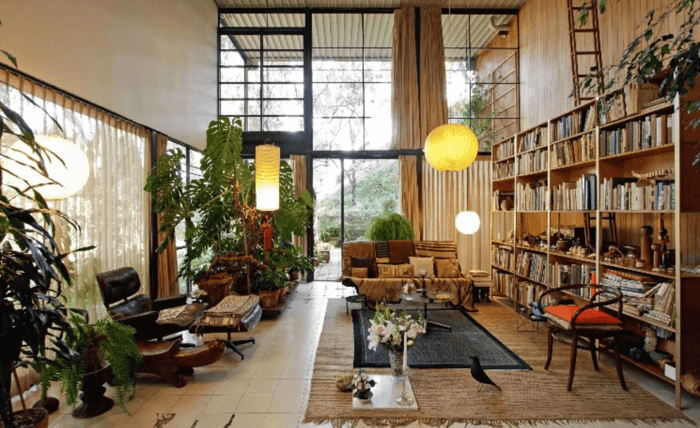
Choosing the best accent chairs for your living room is important. The best accent chairs can do a lot of visual heavy lifting. They can introduce contrast — a curve against a rectilinear sofa, a pop of color against neutrals, or a warm material alongside cool surfaces. In most of the interiors that we fawn over, the accent chair is the element that makes the room feel finished, considered, and alive.
In Process: Hans Olsen Fried Egg Chair

$8,495.00
In the Process of being restored. Contact us to customize upholstery. Designed in the 1950s by acclaimed Danish architect and designer Hans Olsen, the “Fried Egg” Lounge Chair is one of the most playful and recognizable creations of the Danish… read more
The Role of an Accent Chair in a Curated Space
In a curated living room, every element earns its place. An accent chair contributes to visual balance by occupying negative space without bulk, creating a counterweight to heavier furniture — a large sofa or entertainment console — without competing with it. Positioned thoughtfully, it anchors a focal point: beside a fireplace, flanking a console, or facing a window to complete a conversation grouping.
In open-plan spaces, accent chairs help define zones within a larger footprint. Two chairs angled toward each other can delineate a reading nook from a dining space, bringing human scale and intimacy to an otherwise sprawling floor plan. The intentional design of a curated home depends on this kind of thoughtful zoning — and the accent chair is one of its most versatile tools.
Ib Kofod-Larsen Penguin Chair — First Generation in Moss Green Leather

$1,795.00
This exceptional first-generation Penguin Chair by Ib Kofod Larsen is a masterclass in Danish Modern ergonomics and restraint. Designed in the early 1950s, the Penguin Chair is celebrated for its sculptural silhouette and surprisingly comfortable sit—proof that beauty and function… read more
How to Match Accent Chair Style to Your Living Room
Matching an accent chair to your existing décor begins with understanding your room's dominant style family. Is your space warm and organic, rooted in natural materials and rounded forms? Or is it more structured — clean lines, minimal ornamentation, and restrained color? Identifying this helps narrow the field considerably.
Once you know your style direction, apply three coordination principles:
- Echo, don't match. Choose a chair that shares a material or color note with existing pieces rather than duplicating them exactly. A walnut-legged chair in a room with a teak credenza creates coherence without monotony.
- Contrast intentionally. A tufted leather lounge chair in a room full of soft linens adds necessary tension. Contrast only works when it is deliberate.
- Scale before style. A chair that is visually beautiful but incorrectly proportioned will always feel wrong, no matter how well its style aligns with the room.
Mid-Century Modern Accent Chairs: Timeless and Versatile
Mid-century modern accent chairs occupy a unique position in interior design: they were designed for the living room as a distinct piece of furniture, not adapted from another tradition. The era — roughly 1945 to 1969 — produced some of the most iconic seating forms ever made, and authentic examples remain as relevant today as when they were first designed.
Designers such as Hans Wegner, Arne Jacobsen, Charles and Ray Eames, Pierre Paulin, and Finn Juhl approached seating with an engineer's rigor and a sculptor's eye. Authentic vintage mid-century modern accent chairs hold their value precisely because of this design integrity.
What makes MCM accent chairs so versatile is their neutrality of palette and clarity of line. A walnut-framed lounge chair in aged leather works equally well in a contemporary loft, a coastal California home, a Scandinavian-influenced apartment, or alongside traditional antiques.
Pair of Hans Wegner CH22 Lounge Chairs in Oak

$11,495.00
A beautiful and authentic pair of Hans J. Wegner CH22 lounge chairs, designed in 1950 for Carl Hansen & Søn — one of Wegner’s earliest lounge chair designs and a cornerstone of Danish Modern craftsmanship. Both chairs come from the… read more
Traditional vs. Modern Accent Chairs: Which Is Right for You?
Traditional accent chairs — wingbacks, club chairs, Chesterfield-style designs with turned legs and rolled arms — bring warmth, history, and a sense of permanence to a living room. They suit homes with ornate architectural details: crown molding, paneled walls, Persian rugs, and layered window treatments.
Modern accent chairs prioritize clarity of line over decoration. Their lower profiles and thinner proportions work in rooms where visual weight needs to stay minimal. Neither is inherently better — the question is which fits your living room aesthetic and your lifestyle.
For those drawn to the middle ground: mid-century modern accent chairs are often the ideal bridge. They carry the warmth and craft of traditional furniture with the clean lines of contemporary design.
In Process: Sergio Rodrigues “Mischievous” Chair and Ottoman, Brazil

$17,995.00
This sculptural Sergio Rodrigues Mischievous Chair and Ottoman is the very epitome of Brazilian modern design—bold, sensual, and unapologetically grounded in the natural beauty of Brazilian hardwoods. Crafted from solid rosewood, the frame showcases the richness and density that… read more
Scale and Proportion: Getting the Size Right
Scale is perhaps the most commonly misjudged factor when selecting the best accent chairs for your living room, The key measurements to cross-reference with your space:
- Seat height: 16–18 inches suits most living rooms. Higher seats read as more formal; lower seats (common in MCM lounge chairs) create a more relaxed posture.
- Overall height: In rooms with standard 8-foot ceilings, chairs that exceed 36–38 inches can feel oversized. Higher ceilings can accommodate — and benefit from — taller chair backs.
- Depth and width: Leave at least 30–36 inches of circulation space around any seating piece. In a small living room, a chair depth of 28–32 inches keeps the path clear without sacrificing comfort.
A useful test: cut a piece of kraft paper to the chair's footprint and lay it on the floor in position. Seeing the actual dimensions in situ reveals whether the scale works before you commit. Our team at Hobbs Modern is always happy to provide exact measurements and room-planning guidance for any piece in our collection.
The Best Accent Chairs for your Living Room - Small Spaces Edition
Small living rooms benefit most from accent chairs with a defined, edited silhouette. Look for:
- Sled-base or tapered-leg designs, which keep the floor plane visible and the room feeling open.
- Open arms or armless designs, which reduce visual weight considerably.
- Lighter upholstery colors or open-weave fabrics, which recede rather than advance in a small space.
- Petite lounge profiles — particularly common in Danish and Scandinavian mid-century modern design — which offer full comfort in a smaller footprint.
Pierre Paulin Butterfly Chair

$4,495.00
An icon of modernist design, the Pierre Paulin Butterfly Chair (also known as the F675) stands as one of the most elegant expressions of form and lightness of the 20th century. Its architectural wire frame and suspended sling seat create a… read more
When to Choose a Set of 2 Accent Chairs for your living room.
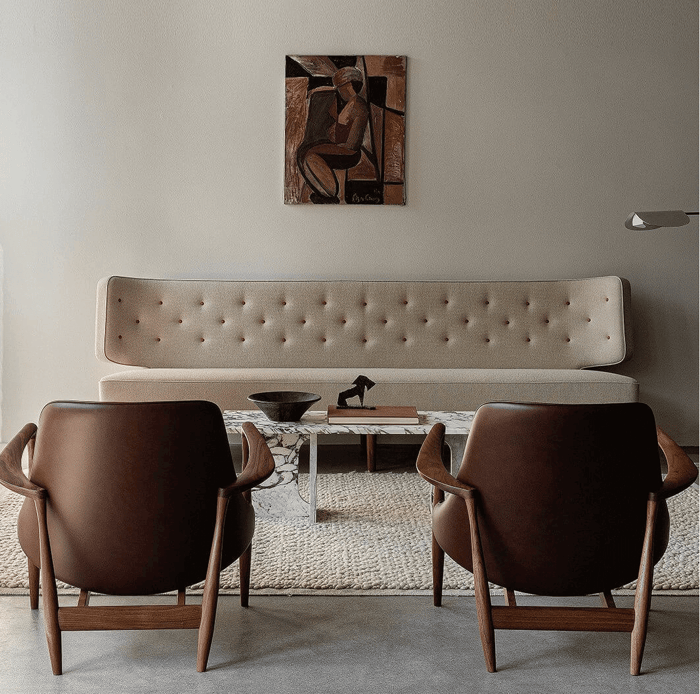
There are specific layout scenarios where two matching accent chairs outperform a single statement piece. The most common: facing a sofa across a coffee table in a symmetrical conversation grouping. Two chairs at this position create formality, balance, and a sense of occasion without requiring a loveseat or sectional.
A pair also works well in a bay window or alcove, where symmetry is built into the architecture. And in a large open-plan space, two chairs angled toward each other — with a side table between them — define a self-contained sitting area without the sofa.
When buying a pair, prioritize structural consistency. Upholstery can vary — indeed, two chairs in complementary but distinct fabrics can be more interesting than an identical pair — but the silhouette should read as a set.
The best material for your Accent Chairs- Leather, Fabric, or Original Upholstery
The upholstery material of an accent chair determines its appearance, longevity, maintenance requirements, and suitability for your household. The three primary categories:
- Leather offers unmatched durability and develops a rich patina over time. It is easy to clean, resistant to most spills, and becomes more characterful with age. Genuine leather — top-grain and full-grain in particular — is the preferred choice for investment-quality pieces.
- Fabric encompasses a vast range: performance weaves, linen, velvet, boucle, wool, and more. Fabric chairs tend to offer more color and texture options and can feel warmer and more inviting than leather in cool or minimal spaces.
- Vintage upholstery expertly restored adds historical integrity and is often worth preserving. Our in-house restoration team specializes in period-correct reupholstery using materials appropriate to the era.
Leather Accent Chairs: Durability, Luxury, and Patina
Few materials age as gracefully as genuine leather. A full-grain or top-grain leather accent chair purchased today will look better in twenty years than it does now — the oils from skin contact, the sun, and time work together to deepen color, soften the surface, and develop the unique character that defines a truly lived-in piece.
The best accent chairs for your living room often have practical advantages: leather repels pet hair, resists spills when treated, and cleans easily with a damp cloth. Vintage leather on an authentic mid-century modern lounge chair — a Danish easy chair in cognac or chocolate brown — is among the most collectible upholstery configurations in the market.
3rd Generation Eames Lounge Chair and Ottoman in Brazilian Rosewood and Moss Green Leather

$8,995.00
This is a beautiful 3rd-generation Eames Lounge Chair and Ottoman, presented in subtle and richly figured Brazilian rosewood and leather of your choice (Black, Moss Green, Oxblood, and Blue). Overall, this example shows rosewood shell that have a unique grain… read more
Fabric and Other Upholstery Options
- Boucle: A looped yarn weave with a warm, nubby surface — it has deep roots in mid-century modern design and pairs exceptionally well with walnut or teak frames.
- Velvet: Rich in color depth and light-responsive in a way no other fabric matches, velvet brings drama and luxury. Best in rooms with adequate natural light.
- Linen and performance weaves: For households with pets or children, a tightly woven performance fabric offers the visual warmth of natural fiber with the durability of synthetic construction.
- Wool and wool blends: Common in Scandinavian and Danish mid-century modern production. Vintage wool in original colorways — particularly Nordic geometric patterns — is among the most sought-after original upholstery configurations.
At Hobbs Modern, our restoration team works with clients to select period-appropriate upholstery for pieces currently in process, and can advise on materials that are both historically appropriate and practical for modern living.
Swivel Accent Chairs: Flexibility Meets Style
The swivel accent chair is one of mid-century modern design's most practical gifts to the contemporary living room. Combining a fixed pedestal base with a rotating seat, swivel chairs offer 360-degree adaptability without requiring the chair to be physically moved — a morning reading chair that faces the window, an evening conversation seat that rotates toward the sofa.
Authentic vintage swivel chairs — particularly Danish and American examples with compound-curved shells, architectural bases, and functioning original mechanisms — are increasingly difficult to find and correspondingly valuable.
Pair of Jens Risom Swivel Lounge Chairs in Cream Bouclé with Walnut Bases

$8,795.00
This pair of Jens Risom lounge chairs perfectly captures the elegance and comfort of mid-century modern design. Recently reupholstered in a soft, textured cream bouclé fabric, the chairs bring warmth, sophistication, and a touch of modern luxury to any interior. The… read more
Best Use Cases for Swivel Accent Chairs in a Living Room
- Open-plan spaces: A swivel chair allows its occupant to engage with whichever zone is active — cooking, dining, or conversation — without getting up.
- Media-centric rooms: Positioned off-axis from the main sofa, a swivel chair can orient toward the television without a permanent forward-facing position that crowds the room.
- Reading corners: Near a lamp and a side table, a swivel chair allows a reader to adjust toward the light source as it moves through the day without relocating the chair.
- High-traffic rooms: The swivel mechanism absorbs the wear of repositioning, protecting both the chair's base and the floor beneath it.
Authentic vs. Reproduction: Why Provenance Matters
The market for mid-century modern furniture includes a vast range of reproduction pieces — some clearly labeled as such, many less honestly presented. Authentic vintage pieces carry the marks of their era: construction methods specific to the period, hardware that predates mass production shortcuts, materials whose wear patterns reflect decades of actual use, and — in the best cases — documented provenance connecting the piece to its original maker or retailer.
The risks of purchasing reproductions presented as authentic are significant. Without professional authentication, a buyer may pay vintage prices for a piece with reproduction value. At Hobbs Modern, every accent chair we sell is authenticated through direct inspection, maker's mark verification, construction analysis, and — where available — documented ownership history.
Provenance is not sentimentality. It is the difference between a depreciating purchase and an appreciating one.How to Choose an Accent Chair That Holds Its Value
Not every accent chair is an investment — but the right vintage mid-century modern chair absolutely can be. The factors that determine long-term value retention:
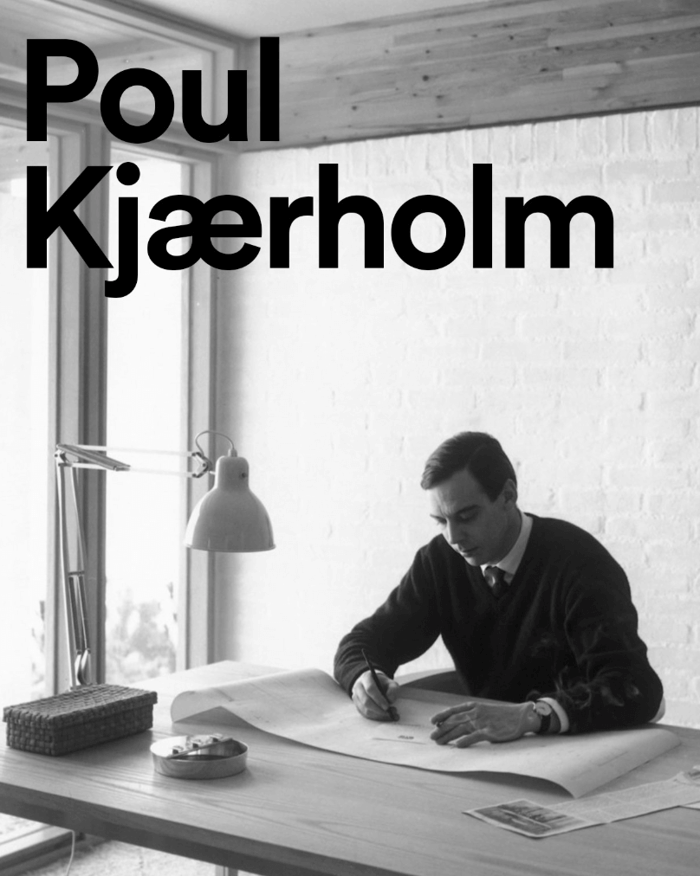
- Maker and designer: Chairs attributable to named designers — Wegner, Juhl, Kjærholm, Eames, Jacobsen, Jeaneret, Rodrigues — hold value more reliably than anonymous production pieces.
- Material integrity: Original upholstery in good condition, intact frame construction, and functioning hardware all protect and enhance value. Over-cleaned, poorly restored, or heavily modified pieces lose the authenticity collectors prize.
- Rarity: Limited production runs, early examples of iconic designs, or pieces with documentation command premiums that increase over time as the supply of authentic examples diminishes.
- Condition documentation: A chair with photographs, a receipt, an exhibition history, or a dealer provenance note will always sell for more than an otherwise identical piece without documentation.
Summary: Your Accent Chair Checklist
Before choosing the best accent chair for your living room, run through these key decision factors:
The right accent chair is one that earns its place every day — as a seat, as a focal point, and as a piece of design history worth living with. Browse our current inventory of authenticated vintage mid-century modern accent chairs at Hobbs Modern, or reach out to our team for personal guidance.
FAQs
How do I know if a vintage accent chair is authentic?
This one matters more than most people realize — especially if you're paying vintage prices. Authentic pieces have specific construction methods from the period, hardware that predates modern shortcuts, and wear patterns that reflect actual decades of use. Look for maker's marks, original upholstery, and documented provenance when possible. A receipt, an exhibition history, or a dealer note adds real value and protects your investment. At Hobbs Modern, every chair goes through direct inspection, maker's mark verification, and construction analysis before it's listed — because provenance isn't just sentimental, it's the difference between a piece that appreciates and one that doesn't.
Is leather or fabric better for an accent chair?
Depends on how you live. Leather is the long game — full-grain or top-grain leather gets better looking over time, it's easy to wipe down, and it repels pet hair. If you're buying a quality vintage MCM piece, leather in cognac or chocolate brown is one of the most collectible configurations out there. Fabric gives you more color and texture options and tends to feel warmer in minimal or cool spaces. Boucle and wool are both having a real moment right now and they're period-appropriate for mid-century modern pieces. For busy households with kids or pets, a tightly woven performance fabric gives you the look of natural fiber without the stress.
What size accent chair works in a small living room?
Go for chairs with tapered or sled-base legs — they keep the floor visible and the room feeling open. Armless or open-arm designs also help a lot since they cut down visual weight. Petite lounge profiles from Danish and Scandinavian mid-century modern designers are a great place to look — they were basically designed for this problem: full comfort, smaller footprint. And if you're not sure, cut a piece of kraft paper to the chair's dimensions and lay it on the floor first. Sounds low-tech, but it works every time.
Should I get one accent chair or a pair?
It depends on your layout. A single statement chair works best when you need one strong focal point — beside a fireplace, in a reading corner, or as a counterpoint to a sofa. A matching pair makes more sense when you're creating a symmetrical conversation grouping across from a sofa, or when you have a bay window or alcove where the architecture already suggests balance. Pro tip: two chairs don't have to be identical — same silhouette, different fabrics can actually be more interesting than a perfect match.
How do I choose an accent chair that fits my living room?
Start with scale — a beautiful chair in the wrong size will always feel off. Measure your space and leave at least 30–36 inches of walking clearance around any seating. Then match the chair's style to your room using this simple rule: echo, don't match. If you have a teak credenza, look for a chair with walnut legs. Same family, not a clone. Finally, think about what job the chair is doing — is it anchoring a reading corner, completing a conversation grouping, or just adding a pop of color? Once you know its role, the right choice gets a lot clearer.
What chair is best, a traditional or a Mid Century Modern accent chair?
Traditional accent chairs — wingbacks, club chairs, Chesterfield-style designs with turned legs and rolled arms — bring warmth, history, and a sense of permanence to a living room. They suit homes with ornate architectural details: crown molding, paneled walls, Persian rugs, and layered window treatments. Modern accent chairs prioritize clarity of line over decoration. Their lower profiles and thinner proportions work in rooms where visual weight needs to stay minimal. Neither is inherently better — the question is which fits your living room aesthetic and your lifestyle.
Mid Century Modern accent chairs are best when you are seeking a middle ground. eal bridge. They carry the warmth and craft of traditional furniture with the clean lines of contemporary design.
Q: What's the best accent chair for a living room?
A: Honestly, the best accent chair is the one that feels a little like a personality hire — it's not just extra seating, it's the piece that makes your room feel finished. The best accent chair for your living room is one that reflects your lifestyle and provides some color accent or contrast. Som e of the best accent chairs that tend to work in almost any living room are mid-century modern designs because of the wood frames, clean lines and beautiful construction. They're versatile enough to fit a contemporary loft, a coastal California home, or a Scandinavian-inspired apartment. The real key is getting the scale right first, then worrying about style.
Q: How do I choose an accent chair that fits my living room?
A: Start with scale — a beautiful chair in the wrong size will always feel off. Measure your space and leave at least 30–36 inches of walking clearance around any seating. Then match the chair's style to your room using this simple rule: echo, don't match. If you have a teak credenza, look for a chair with walnut legs. Same family, not a clone. Finally, think about what job the chair is doing — is it anchoring a reading corner, completing a conversation grouping, or just adding a pop of color? Once you know its role, the right choice gets a lot clearer.
Q: Should I get one accent chair or a pair?
A: It depends on your layout. A single statement chair works best when you need one strong focal point — beside a fireplace, in a reading corner, or as a counterpoint to a sofa. A matching pair makes more sense when you're creating a symmetrical conversation grouping across from a sofa, or when you have a bay window or alcove where the architecture already suggests balance. Pro tip: two chairs don't have to be identical — same silhouette, different fabrics can actually be more interesting than a perfect match.
Q: What size accent chair works in a small living room?
A: Go for chairs with tapered or sled-base legs — they keep the floor visible and the room feeling open. Armless or open-arm designs also help a lot since they cut down visual weight. Petite lounge profiles from Danish and Scandinavian mid-century modern designers are a great place to look — they were basically designed for this problem: full comfort, smaller footprint. And if you're not sure, cut a piece of kraft paper to the chair's dimensions and lay it on the floor first. Sounds low-tech, but it works every time.
Q: Is leather or fabric better for an accent chair?
A: This all depends on how you live. Leather is the long game — full-grain or top-grain leather gets better looking over time, it's easy to wipe down, and it repels pet hair. We love leather and right now are favouring greens and cognac. Fabric gives you more color and texture options and tends to feel warmer in minimal or cool spaces. Boucle and wool are period-appropriate for mid-century modern pieces. For busy households with kids or pets, a tightly woven performance fabric gives you the look of natural fiber without the stress.
Q: How do I know if a vintage accent chair is authentic?
A: This matters more than most people realize — especially if you're paying vintage prices. Authentic pieces have specific construction methods from the period, hardware that predates modern shortcuts, and wear patterns and patina that reflect decades of use. Look for maker's marks, original upholstery, and documented provenance when possible. A receipt, an exhibition history, or a dealer note adds real value and protects your investment. At Hobbs Modern, every chair goes through direct inspection, maker's mark verification, and construction analysis before it's listed — because provenance is the difference between a piece that appreciates and one that doesn't.