Table of Contents
- Gio Ponti: The Italian Visionary Who Made Modern Design Feel Human
- A designer of “total environments”
- From porcelain to publishing: launching a modern Italian design language
- What made Ponti uniquely “Ponti”
- Furniture: the genius of lightness
- Glass and light: Ponti’s brilliance in transparency
- Architecture: the Pirelli Tower and the postwar confidence of Italy
- The power of Domus: Ponti as Italy’s design storyteller
- Why Ponti still matters
- A Ponti mindset for collectors and modern interiors
- FAQs
Gio Ponti: The Italian Visionary Who Made Modern Design Feel Human
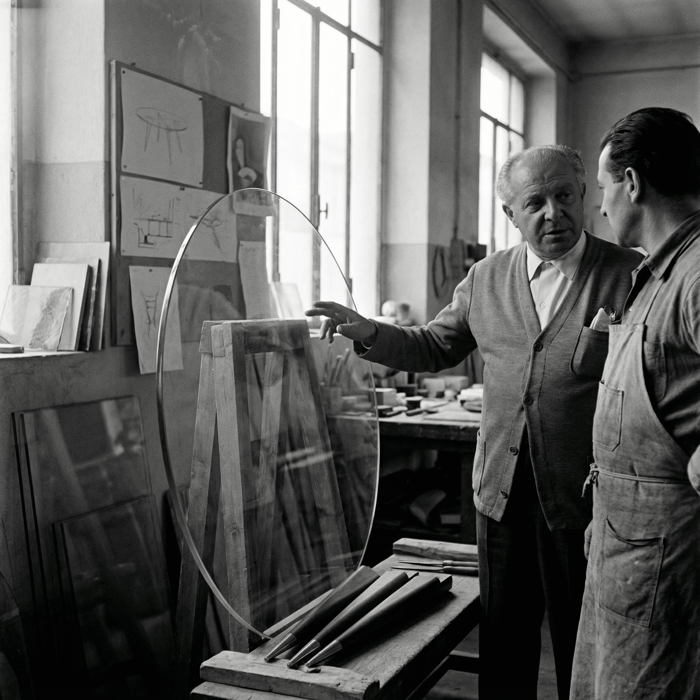
If Italian design has a personality—sunlit, elegant, inventive, and just a little theatrical—Gio Ponti helped give it that voice. Born in Milan in 1891, Ponti wasn’t “just” an architect or “just” a furniture designer. He moved fluidly across disciplines: buildings, interiors, furniture, lighting, glass, ceramics, publishing, teaching. He treated design as one continuous conversation about how people live—what they touch, what they see, how a room makes them feel, and how beauty can belong to everyday life.
That multidisciplinary mindset is exactly why Ponti remains such a towering figure in Italian design history. He didn’t merely produce icons; he helped build the culture that allowed Italian modernism to thrive—through his objects, his buildings, and his role as a tastemaker and amplifier of others’ work.
A designer of “total environments”
Long before “lifestyle” became a marketing term, Ponti was thinking in complete environments. He believed architecture wasn’t finished when the structure was complete—it only became whole when the interior, furnishings, materials, and objects formed a coherent, uplifting world. That concept—today we’d call it holistic design—ran through everything he did, from private residences to hotels to industrial design.
This is one of Ponti’s great gifts to Italian design history: he showed that modernism didn’t have to be cold or rigid. It could be playful, lyrical, tactile, and deeply personal. In his hands, modern design became something you could live with—and love.
From porcelain to publishing: launching a modern Italian design language
Ponti’s early career offers a clue to how he thought. In the 1920s, he became artistic director at the storied Italian porcelain manufacturer Richard-Ginori and helped modernize its output while still drawing from classical heritage. Instead of treating tradition as something to escape, he treated it as raw material to reinterpret—reviving motifs, simplifying forms, and making craftsmanship feel current. That balance of reverence and reinvention would become a Ponti signature.
Then, in 1928, Ponti founded Domus, a magazine that became one of the most influential design and architecture publications in the world. This wasn’t a side project—it was a major part of his impact. Through Domus, Ponti advocated for a distinctly Italian “art of living,” championed new work, and helped position Italian design as a cultural force, not just an industry.
In other words: Ponti didn’t just design objects. He helped design the ecosystem around design.
What made Ponti uniquely “Ponti”
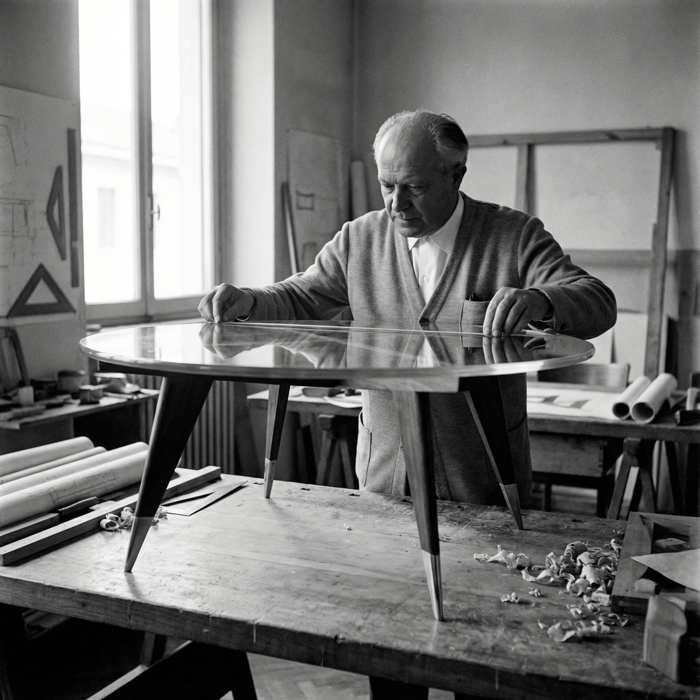 Plenty of designers are prolific. Fewer are prolific and consistently poetic. Ponti’s work is often described as light, bright, elegant—sometimes witty. He loved surfaces, pattern, color, and a sense of buoyancy. Even when he pursued minimal forms, he wasn’t chasing severity. He was chasing what he called an essential purity—an “essentiality” that kept beauty intact.
There’s also a consistent optimism in his work. Ponti designed for the future, but he never lost sight of pleasure. His modernism wasn’t an austere doctrine—it was an invitation.
Furniture: the genius of lightness
For many collectors, Ponti’s name instantly calls up one chair: the Superleggera.
Designed in 1957 and produced by Cassina, the 699 Superleggera is often treated like a magic trick: a classic Italian chair form refined until it becomes astonishingly light and precise. Cassina still describes it as a “modern icon,” and it remains in production decades later—proof that Ponti’s search for elegance wasn’t a trend, but a permanent standard.
What makes the Superleggera so important isn’t only its silhouette. It’s the idea inside it: Ponti pushed craftsmanship to the edge of what’s structurally possible, pairing tradition (a familiar chair archetype) with innovation (extreme slenderness, refined geometry, industrial reproducibility). It’s modern design as engineering discipline—and as poetry.
And the Superleggera isn’t an isolated moment. Ponti designed a wide range of furniture: chairs, tables, storage, and experimental pieces that often feel architectural—slender legs, airy frames, graphic lines, and proportions that make rooms feel more open. Even when the pieces are visually quiet, they have a distinct “Italian intelligence”: practical, but never plain.
Glass and light: Ponti’s brilliance in transparency
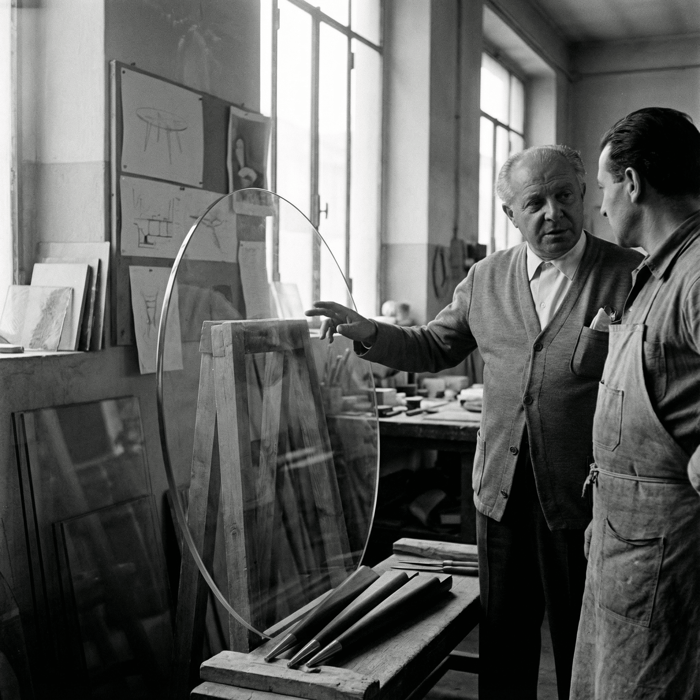
Ponti’s design mind was perfectly suited to glass—material that is both object and atmosphere. In the 1920s and 1930s he collaborated with leading Italian glassmakers, including Venini, and he later worked with Fontana Arte, a Milan-based company closely tied to Italian innovation in glass and lighting.
Why does this matter? Because Ponti’s glass work wasn’t just decorative—it was conceptual. He understood that glass changes a room without “adding weight.” It’s modernism’s ideal material: luminous, clean, and capable of transforming space through reflection and refraction.
In Ponti’s hands, lighting and glass objects often behave like architecture in miniature: they frame, they glow, they articulate. He treated lamps, mirrors, and glass furnishings as spatial tools—ways to choreograph how a room feels at different hours, how it holds shadow, how it catches the eye.
That sensitivity to light is one reason his interiors still photograph like a dream: bright but not sterile, refined but not distant.
Architecture: the Pirelli Tower and the postwar confidence of Italy
Ponti’s architectural legacy is vast—more than a hundred buildings over his career—but a few projects crystallize his role in shaping modern Italy. Among the most celebrated is Milan’s Pirelli Tower (Grattacielo Pirelli), commissioned in 1950 and built in the 1950s, a symbol of Italy’s postwar ambition and design excellence. Ponti worked in collaboration with engineer Pier Luigi Nervi and others on the project.
The Pirelli Tower matters not only as a skyscraper, but as a statement: Italy could be technologically modern and aesthetically sophisticated at the same time. It’s sleek, confident, and elegant—traits that would become hallmarks of Italian design on the global stage.
Ponti also produced influential residential and cultural projects, including internationally recognized works like Villa Planchart in Caracas, and later commissions such as the Denver Art Museum expansion (with local collaborators).
The power of Domus: Ponti as Italy’s design storyteller
It’s hard to overstate how unusual it is for a single figure to shape both the making of design and the conversation about design. Ponti did that through Domus.
As founder and long-time director, he used the magazine as a platform to celebrate modern life—architecture, interiors, graphics, products—creating visibility and momentum for Italian designers and makers. Domus helped define what modern Italian taste looked like, and it helped export that taste globally.
This is one of Ponti’s most important contributions to Italian design history: he made design feel culturally central. Not a luxury niche. Not a technical afterthought. A way a society expresses values—craft, innovation, beauty, livability.
Why Ponti still matters
So why does Gio Ponti continue to loom so large—especially today, when design is saturated with images and “icons”?
Because Ponti offers a model of design as a joyful, integrated practice. His work says:
You can respect heritage without copying it.
You can embrace industry without losing craft.
You can pursue modernism without sacrificing warmth.
You can design lightly—visually, structurally, emotionally—and still make something lasting.
Ponti also reminds us that Italian design’s superpower is not just style. It’s synthesis: the ability to fuse art and engineering, tradition and progress, domestic intimacy and public ambition. He embodied that synthesis across every medium he touched.
A Ponti mindset for collectors and modern interiors
For collectors, Ponti pieces hit a rare sweet spot: they’re historically significant, visually timeless, and genuinely livable. A Superleggera doesn’t just sit in a room like a sculpture—it works. Ponti’s lighting doesn’t only decorate—it changes the mood. His mirrors don’t merely reflect—they animate.
And for anyone who loves Italian design, Ponti is a kind of origin story. He helped transform Italy into a postwar design leader, not by narrowing his focus, but by expanding it—showing that everything around us is designed, and that everything deserves intelligence and grace.
Gio Ponti’s enduring lesson is simple, and radical: beauty is not extra. It’s essential.