Table of Contents
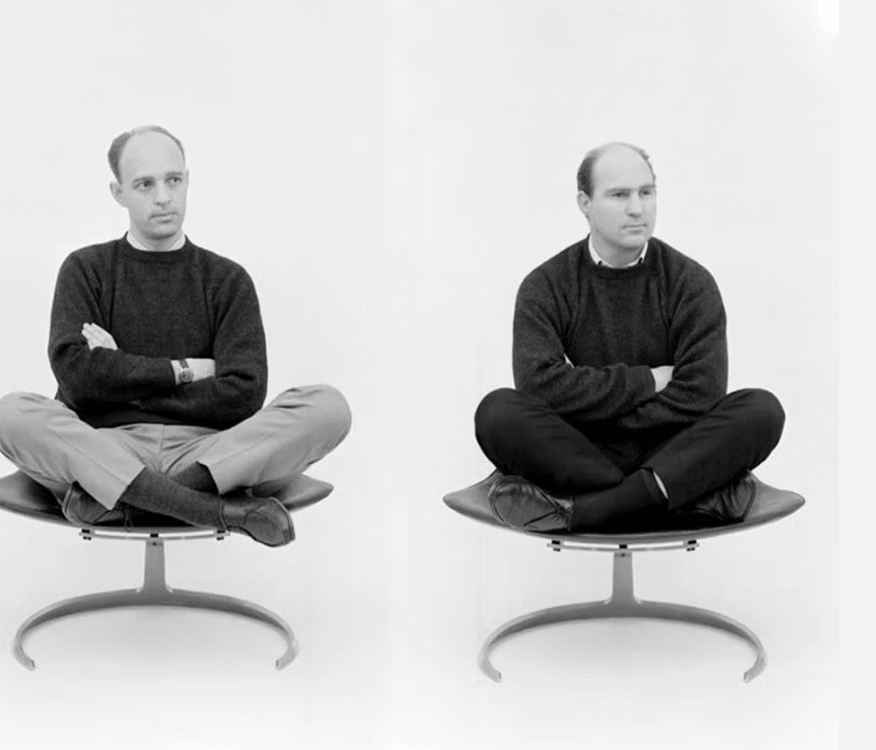
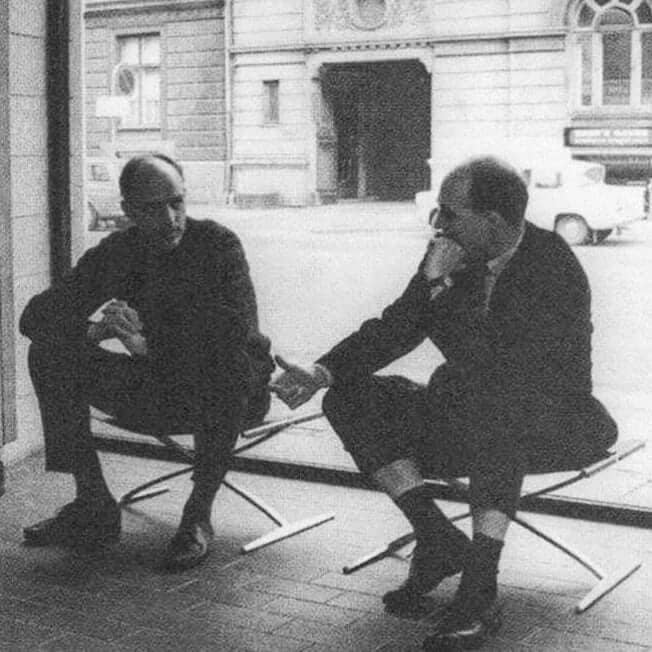
Yet, standing slightly apart from this lineage—more architectural, more industrial, and arguably more forward-looking—are Preben Fabricius (1931–1984) and Jørgen Kastholm (1931–2007).
Together, they redefined what Danish modern could be. Their work introduced a disciplined, almost architectural rigor into furniture design—where steel met leather, geometry met comfort, and minimalism was elevated to something quietly monumental.
Pair of "Scimitar" Lounge Chairs by Preben Fabricius and Jørgen Kastholm

$19,995.00
A Rare and beautiful pair of exceptionally well-made Scimitar lounge chairs designed by Preben Fabricius and Jørgen Kastholm. These striking chairs are a masterclass in late-modern Scandinavian design—where sculptural form, technical precision, and comfort meet in perfect balance. The design is… read more
Both Fabricius and Kastholm emerged from Denmark’s deeply rooted tradition of craft—but with different material sensibilities that would later define their partnership.
- Preben Fabricius trained as a cabinetmaker under Niels Vodder, one of the most respected craftsmen in Denmark and the primary executor of Finn Juhl’s most important works. Through Vodder, Fabricius absorbed a near-obsessive attention to detail—joinery, proportion, and finish at the highest level.
- Jørgen Kastholm, by contrast, began as a blacksmith, giving him an innate understanding of metal—its strength, its limitations, and its expressive potential.
Both later studied under Finn Juhl, whose philosophy—that furniture should be sculptural yet human—left a lasting imprint. But where Juhl embraced organic softness, Fabricius and Kastholm would ultimately pursue something more restrained, more architectural.
This duality—wood and steel, softness and structure—became the foundation of their collaboration.
When Fabricius and Kastholm established their studio in the late 1950s, Danish modern was already internationally celebrated. But it was also, in many ways, becoming predictable—dominated by teak, oak, and organic forms.
Their work disrupted that trajectory.
Instead of relying on wood as the primary structural element, they turned to:
- Stainless steel
- Chrome-plated frames
- Taut leather upholstery
This wasn’t just a stylistic shift—it was philosophical. Steel allowed for precision. It enabled thin profiles, crisp lines, and structural clarity that wood could not achieve in the same way.
Their furniture often feels less “crafted” in the traditional sense and more engineered—closer to architecture than cabinetry.
This is where their importance to Danish design becomes clear:
They expanded the material language of Danish modern and anticipated the international modernism that would dominate the 1970s and beyond.
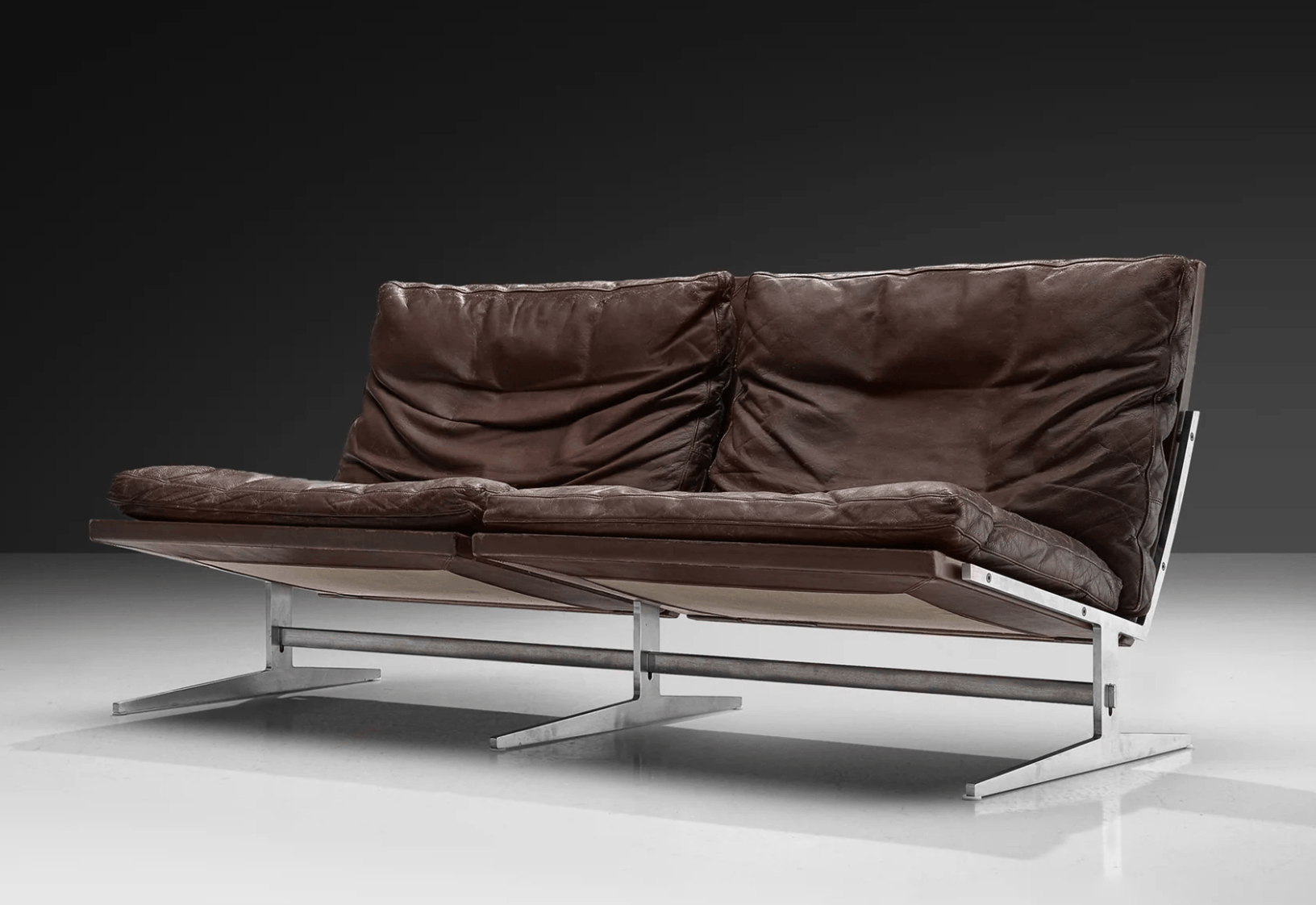
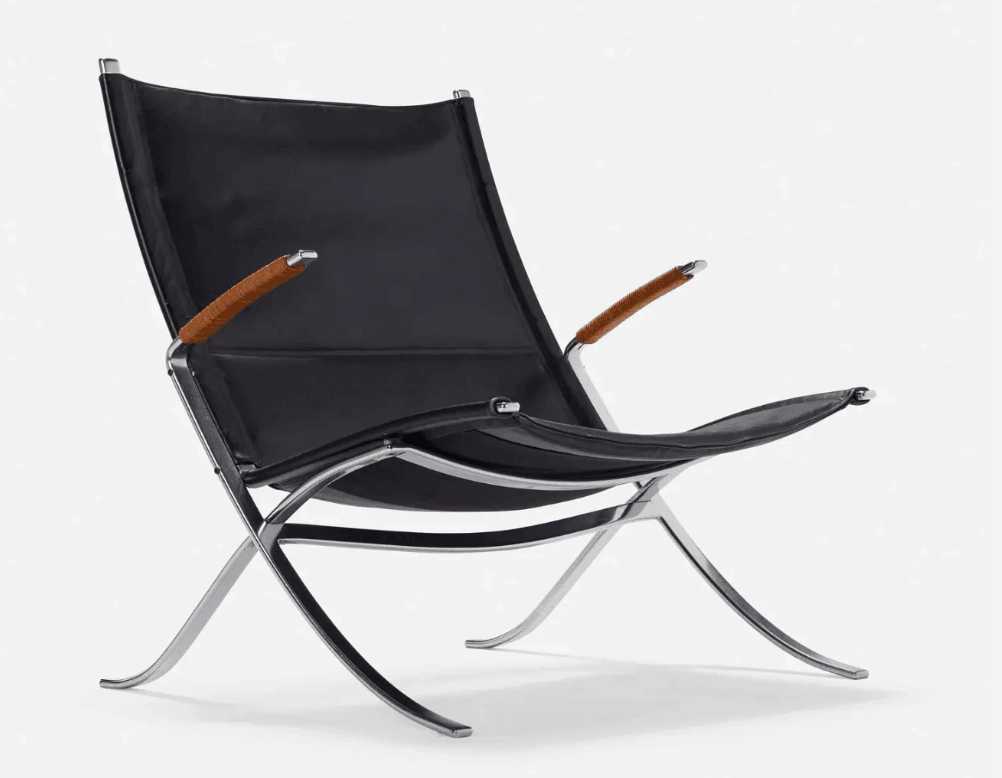
Among their most iconic works is the FK 6725 “X-Chair”, produced by Kill International.
At first glance, the chair appears almost severe:
- A sharply defined X-shaped steel frame
- Minimal upholstery
- A restrained, geometric silhouette
But sit in it, and the design reveals its brilliance.
The leather sling adapts to the body, softening the rigid geometry. The structure provides stability, while the material offers comfort. It is a perfect example of their philosophy: comfort through structure, not excess.
What many don’t realize:
The X-chair is not just a lounge chair—it is a structural experiment. The crossing steel elements distribute weight in a way that minimizes material while maximizing strength. It’s closer to bridge engineering than traditional furniture design.
A significant, and often underappreciated, aspect of their success was their collaboration with Kill International (founded by Alfred Kill).
Unlike many Danish manufacturers, Kill International was:
- Industrially ambitious
- Internationally focused
- Open to experimental materials
This partnership allowed Fabricius and Kastholm to fully realize their vision at scale. Their designs were not confined to artisanal production—they were engineered for modern living environments, including:
- Corporate interiors
- Architectural spaces
- Public institutions
Lesser-known insight:
Kill International positioned their furniture not just as home furnishings, but as part of a total modern environment—aligning Fabricius and Kastholm more closely with architects than traditional furniture makers.
While their seating designs are the most celebrated, Fabricius and Kastholm also developed:
- Modular office systems
- Conference tables
- Architectural furniture programs
These works reveal another dimension of their thinking: systems design.
Rather than designing isolated objects, they envisioned furniture as part of a broader spatial language—aligned with modern architecture. Their pieces often feature:
- Repetition of geometric forms
- Modular adaptability
- Material consistency (steel + leather + glass)
This approach places them in dialogue with international modernists like Mies van der Rohe, whose influence can be felt in their disciplined use of structure and proportion.
Pair of "Scimitar" Lounge Chairs by Preben Fabricius and Jørgen Kastholm
$19,995.00
A Rare and beautiful pair of exceptionally well-made Scimitar lounge chairs designed by Preben Fabricius and Jørgen Kastholm. These striking chairs are a masterclass in late-modern Scandinavian design—where sculptural form, technical precision, and comfort meet in perfect balance. The design is… read more
The Subtle Luxury of Restraint
One of the most compelling aspects of Fabricius and Kastholm’s work is its quiet luxury.
Unlike more expressive designers, they avoided:
- Ornamentation
- Excessive curves
- Decorative gestures
Instead, their luxury comes from:
- Material honesty (thick saddle leather, polished steel)
- Precision fabrication
- Perfect proportions
Their pieces don’t demand attention—they reward it over time.
This is why their work resonates so strongly today, particularly in interiors that value clarity, calm, and architectural integrity.
Why They Matter in the Canon of Danish Design
Fabricius and Kastholm occupy a unique and essential position in Danish design history.
1. They bridged craft and industry
They respected traditional craftsmanship but embraced industrial production methods—helping Danish design evolve beyond its artisanal roots.
2. They introduced a new material vocabulary
By prioritizing steel and leather, they expanded what Danish modern could look and feel like.
3. They aligned furniture with architecture
Their work feels inseparable from modernist buildings—making them especially relevant in commercial and architectural contexts.
4. They anticipated global minimalism
Decades before minimalism became a dominant aesthetic, they were already practicing it with discipline and clarity.
Legacy and Collectibility
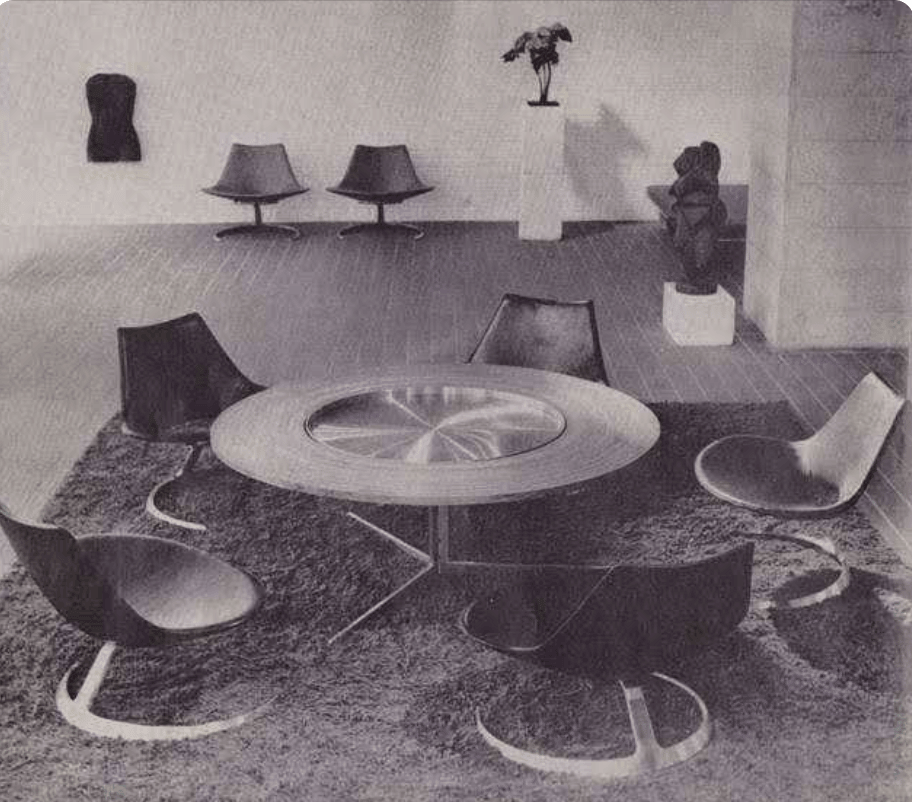
Today, original Fabricius and Kastholm pieces—particularly those produced by Kill International and Bo-Ex—are increasingly sought after by collectors.
Their appeal lies in several factors:
- Rarity: Production numbers were relatively limited
- Material quality: Thick leather and solid steel age beautifully
- Timelessness: Their designs feel as relevant now as they did in the 1960s
For collectors and dealers—their work represents a compelling intersection of:
- Scandinavian heritage
- Architectural modernism
- Investment-grade design
A Partnership Cut Short—but Enduring
The collaboration between Fabricius and Kastholm was relatively brief. After the mid-1960s, they pursued separate paths, though Kastholm continued to develop and refine their shared design language.
Preben Fabricius’s early death in 1984 curtailed what might have been an even more expansive body of work. Yet, the designs they created together remain remarkably cohesive—almost as if they were produced by a single, unified vision.