Table of Contents
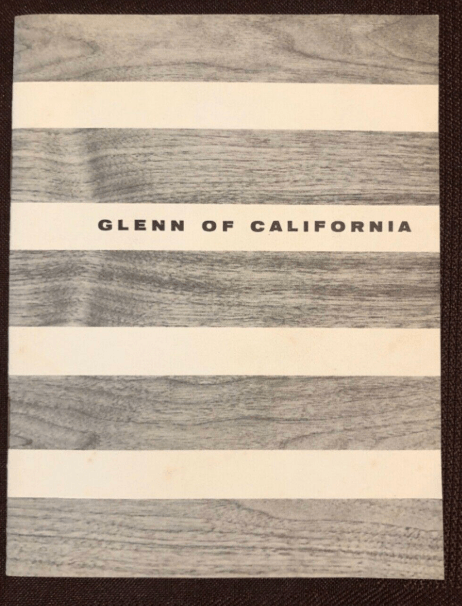
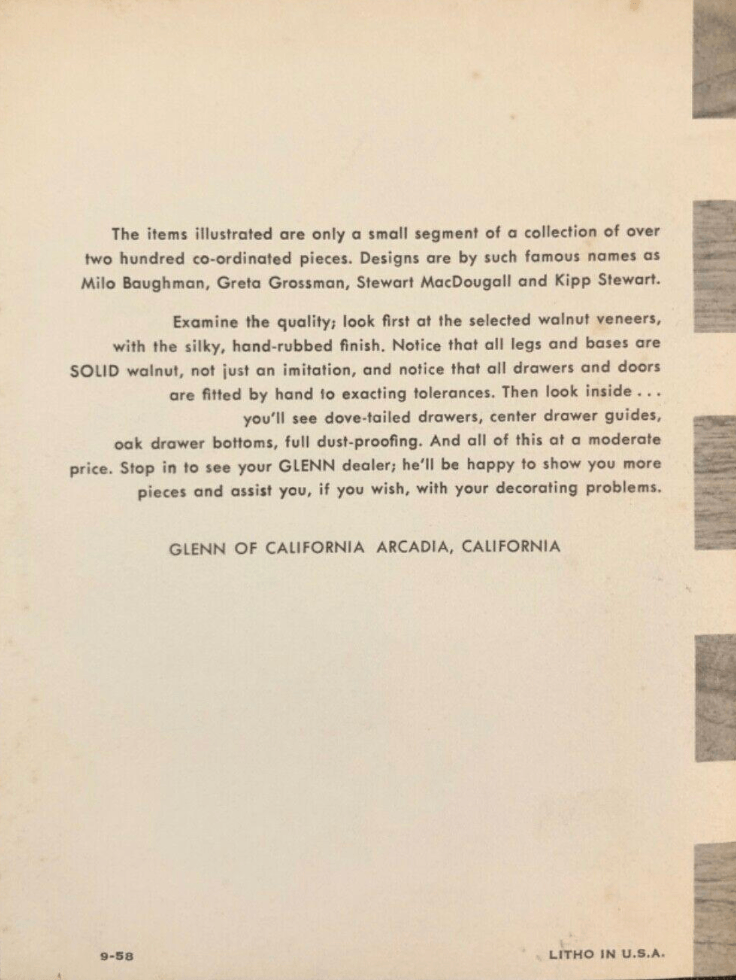
At Hobbs Modern, a few names make us stop whatever we're doing and look twice. Glenn of California is one of them. The pieces are unmistakable once you know them — walnut with a warm glow, legs that taper to almost nothing, storage cases that seem to float above the floor. And yet the company that made them remains one of the more thinly documented stories in American mid-century design. That contradiction — enormous influence, modest paper trail — is a large part of what makes Glenn so rewarding to collect.
Here's what we know, why it matters, and what to look for.
 A California answer to a national appetite
The years after the Second World War remade the American home. Returning servicemen, cheap mortgages, and a building boom created millions of new households, and those households wanted something different from the dark, heavy, formal furniture their parents had owned. They wanted light. They wanted open plans, indoor-outdoor living, and pieces that looked as fresh as the ranch houses going up around them.
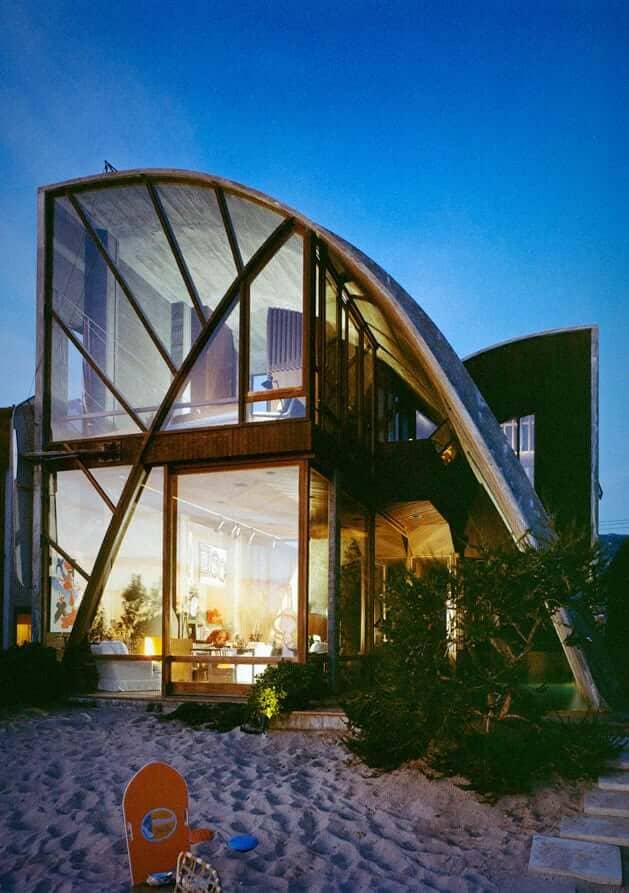
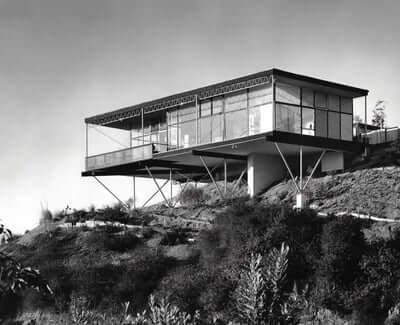 Grossman Residence #2. Photo by John Hartley
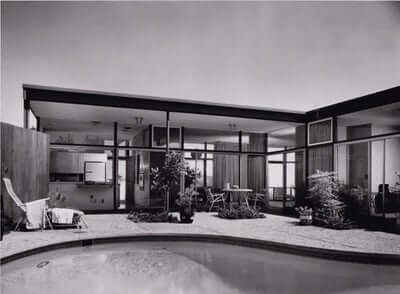 Greta Grossoman Desgined House, Hurley Residence.
 Photo by John Hartley
The East Coast and the Midwest had their answers — Herman Miller and Knoll chief among them. But a distinctly West Coast idiom was taking shape too, one shaped by the California climate, by Scandinavian and Japanese influences filtering through the Pacific, and by a looser, sunnier idea of how a home should feel. Glenn of California, based in Arcadia just northeast of Los Angeles, sat right at the front of that movement.
Founded by designer Stanley Young, Glenn built its reputation on furniture that was modern without being cold: clean-lined and rigorously simple, but crafted from natural materials and warm to the eye. Walnut, iron, and Formica became the company's signature palette — a combination that produced what collectors now recognize instantly as a Los Angeles look.
The Baughman inflection point
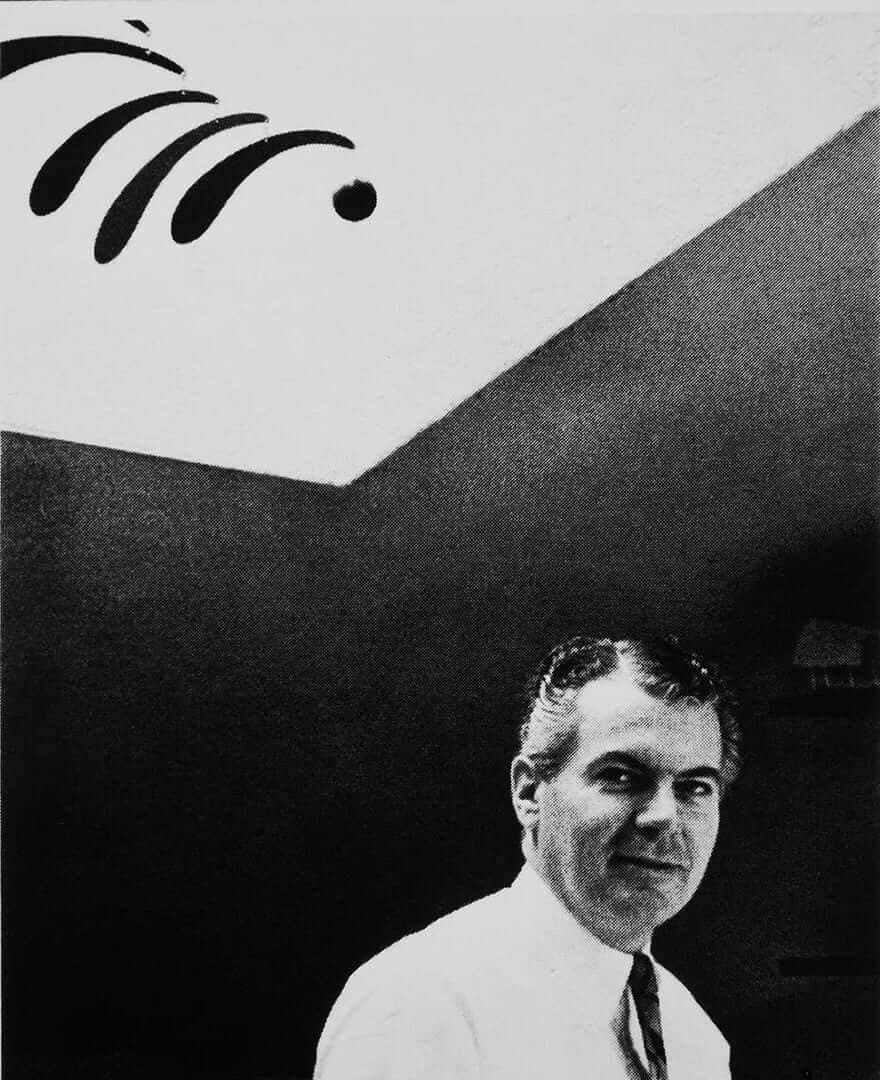
If one decision cemented Glenn's place in design history, it was hiring Milo Baughman in 1948.
Baughman would go on to become one of the most important American furniture designers of the twentieth century — his later work for Thayer Coggin is a canon unto itself — but Glenn is where much of his early language was worked out. His designs for the company favored simple forms and honest materials, predominantly walnut, and prized function as highly as beauty. These pieces anchored the California Modern collection that Glenn launched in 1948, and they set the standard the rest of the line would be measured against.
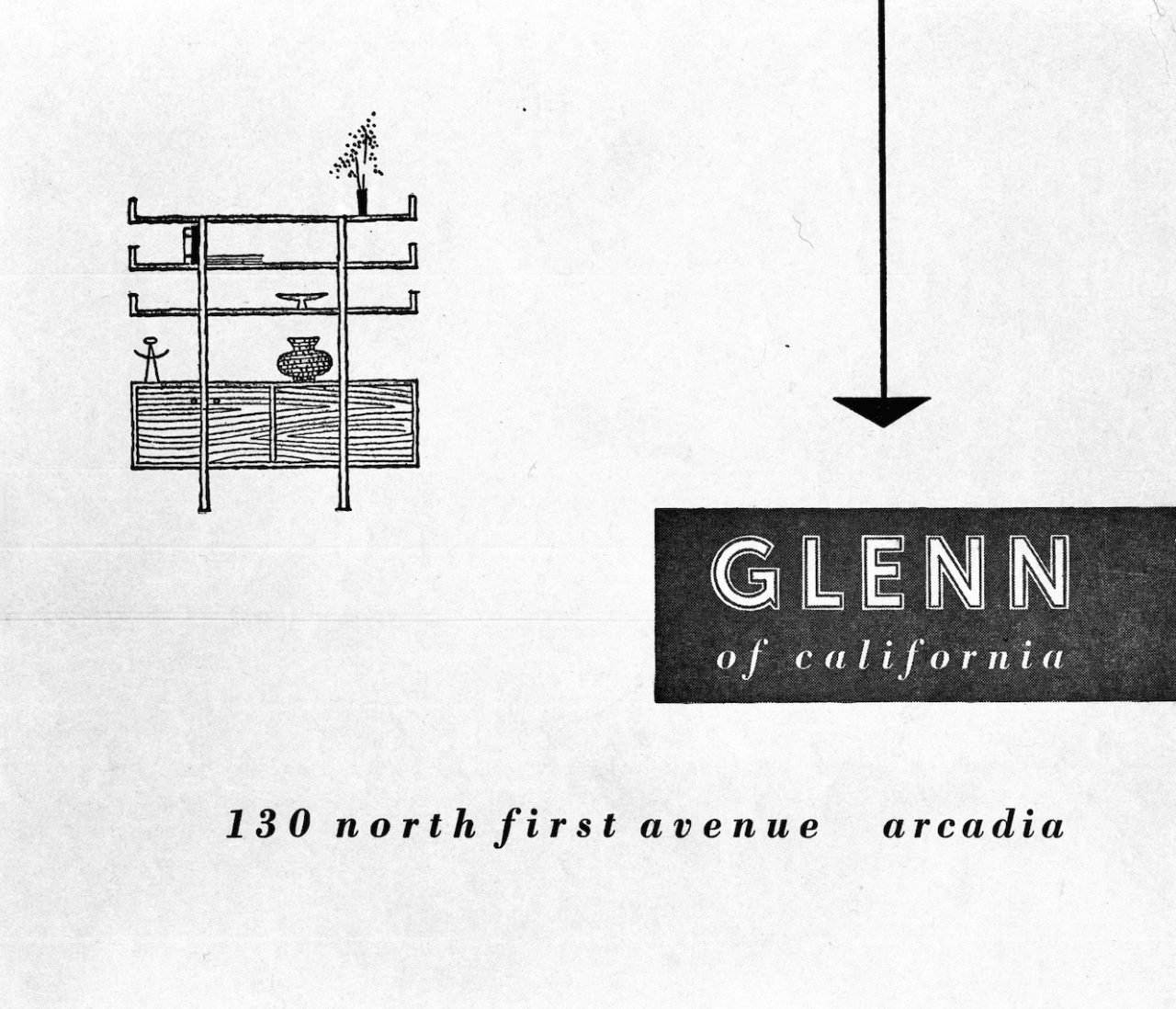
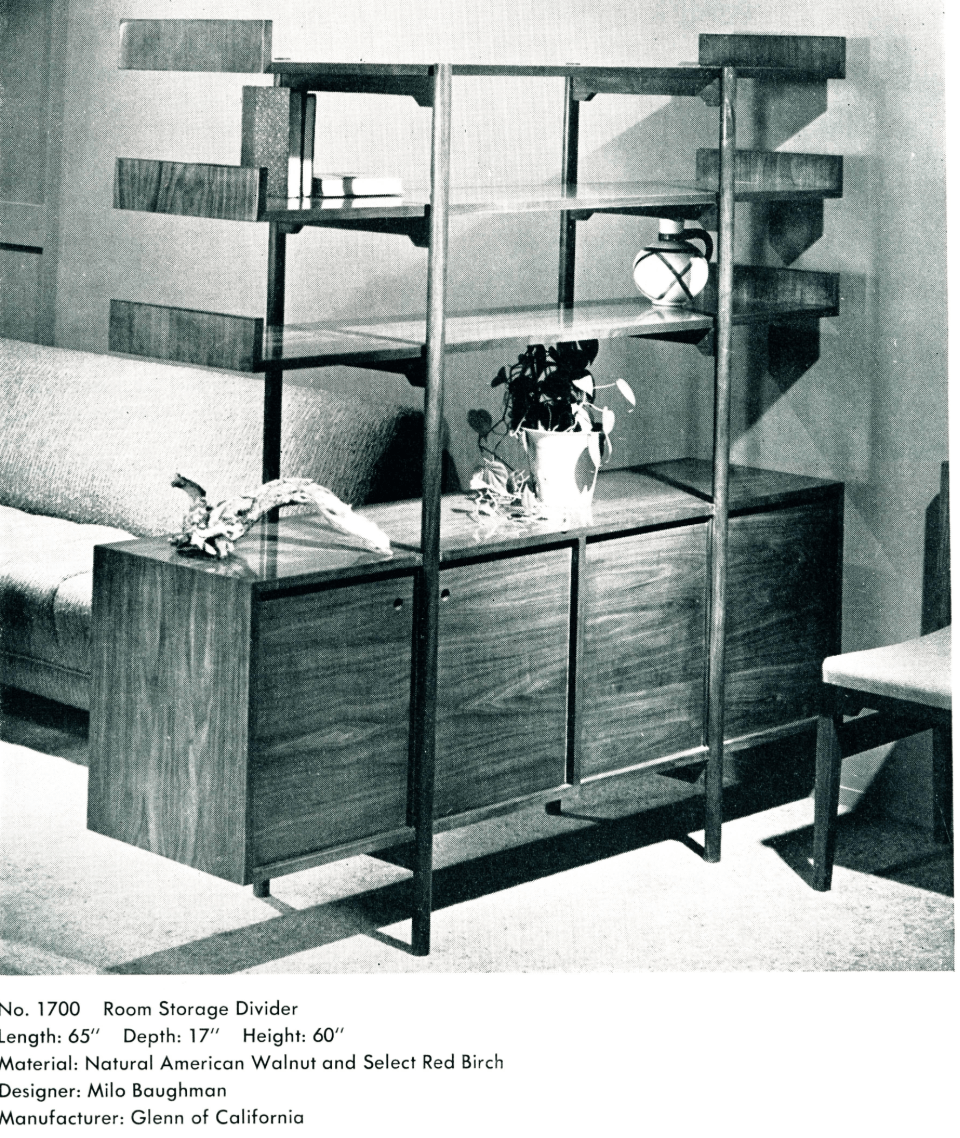
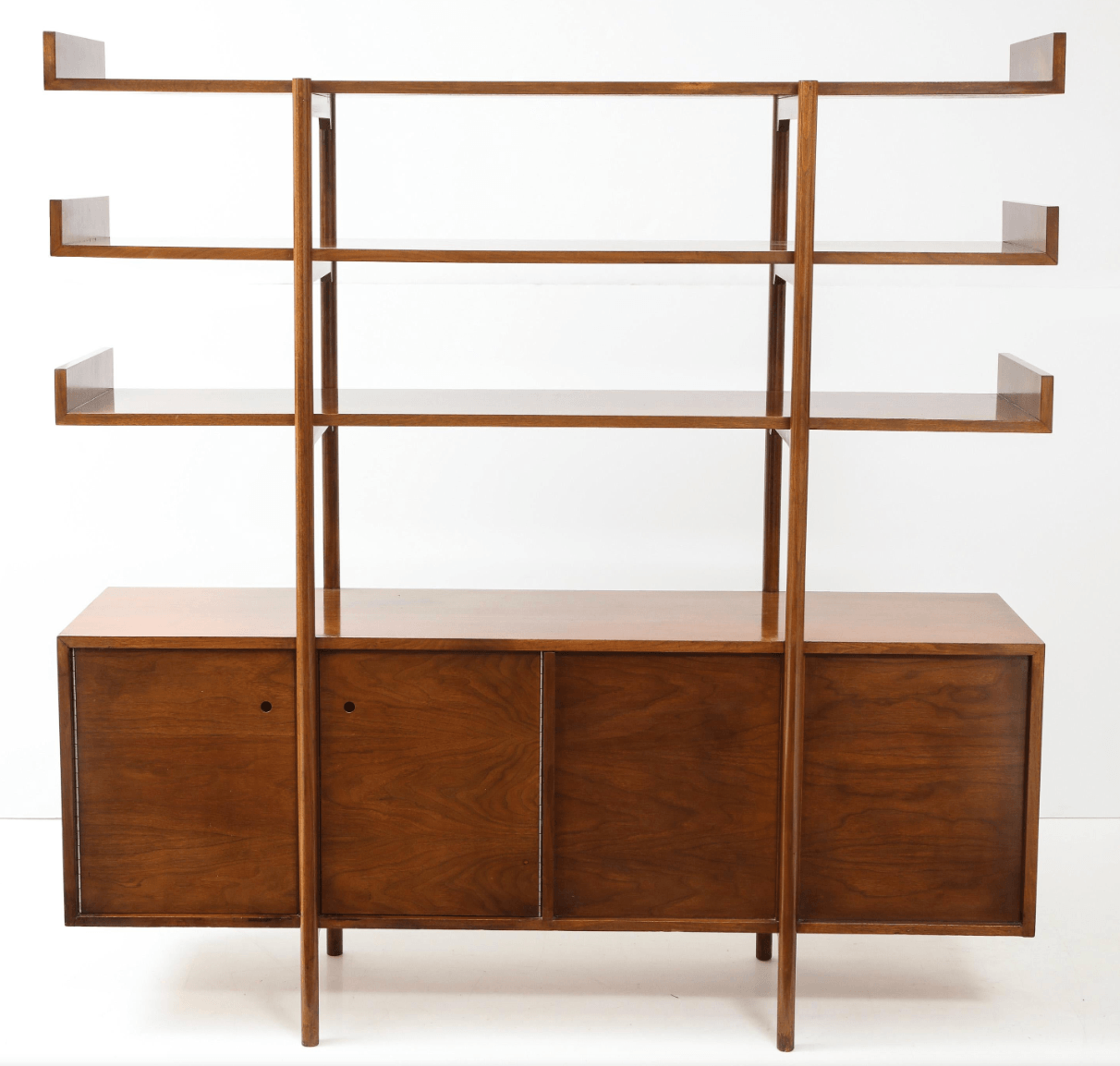
Look at Baughman's No. 1700 Room Storage Divider — walnut and select red birch, a low sliding-door case topped by an open, cantilevered shelving frame — and you can see the whole philosophy in a single object. It divides a room without walling it off. It stores without bulk. It's architectural, but it invites you to rearrange it. Baughman's furniture for Glenn consistently did that: it gave you structure and freedom in the same breath.
That idea reached its logical conclusion in Glenn's modular systems, marketed with the wonderfully democratic pitch: be your own designer. Six components could be combined a dozen ways — a low base for seating or to support cabinets, a high base for a console or sofa table, cabinets with lazy-susan interiors that doubled as bars. Buyers could change their configuration later simply by buying extra parts. In an era of small, evolving postwar homes, that flexibility wasn't a gimmick; it was the point.
A roster most companies would envy
Baughman was the cornerstone, but Glenn's talent bench ran remarkably deep for a company of its size. Alongside him, the label produced work by:
- Greta Magnusson Grossman — the Swedish-born, Los Angeles-based designer and architect whose lighting and furniture are now among the most sought-after of the era. Her contribution helped define Glenn's early California Modern identity.
- Paul László — the Hungarian émigré known for luxurious, sophisticated interiors for Hollywood's elite.
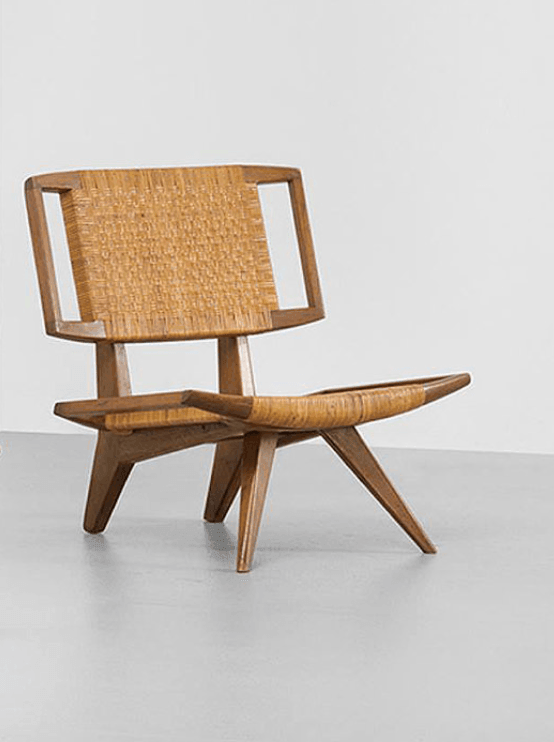
- John Kapel — a designer and woodworker whose credenzas, armoires, and caned chairs for Glenn are prized for their craftsmanship.
- Kipp Stewart — later celebrated for his work with Drexel and for a refined, understated modernism.
- Robert Baron and founder Stanley Young himself, who continued to design for the label he built.
That's an extraordinary concentration of ability. It's also why Glenn pieces can vary so much in feel from one to the next — a Kapel cabinet and a Baughman divider share a sensibility but not a signature. Part of the fun of collecting Glenn is learning to read those hands.
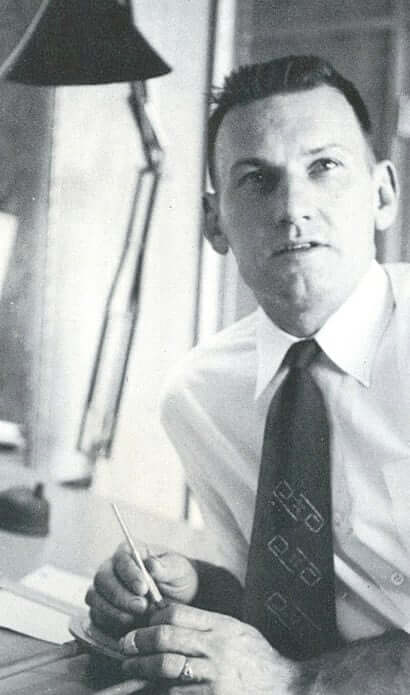 John Kapel
John Kapel 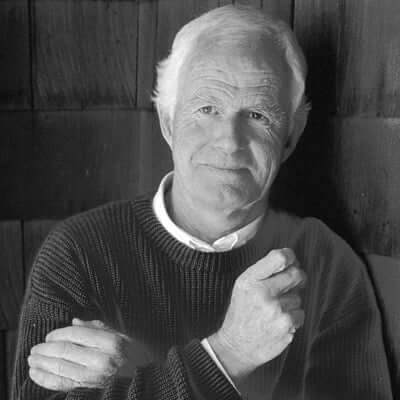 Kipp Stewart
Kipp Stewart Reading a Glenn Piece
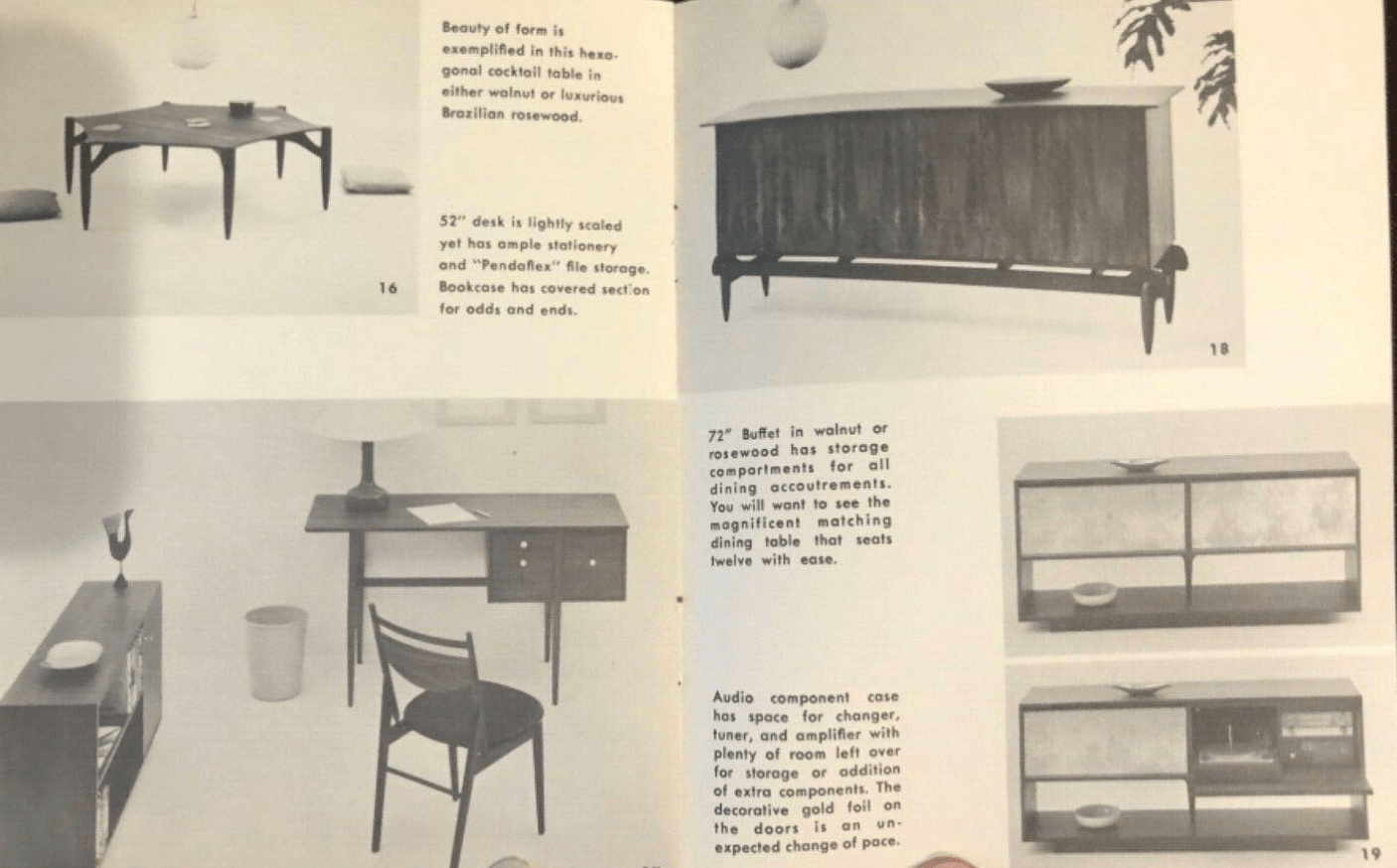
Because so little marketing material survives, much of what we know about the range comes from the company's own catalogs — and they're a delight. The copy is pure period optimism, and the specifications tell you exactly what mattered to a 1950s buyer.
A hexagonal cocktail table offered in walnut or "luxurious Brazilian rosewood." A 52-inch desk, lightly scaled but with genuine Pendaflex file storage built in — modern furniture that actually worked for the way people lived. A 72-inch buffet in walnut or rosewood with compartments "for all dining accoutrements," paired with a table that seated twelve. An audio component case sized for a changer, tuner, and amplifier, with decorative gold-foil doors thrown in as "an unexpected change of pace." Bedroom cases in Roman travertine or inlaid walnut tops; tambour-front storage; platform benches that supported cushions or cabinets interchangeably.
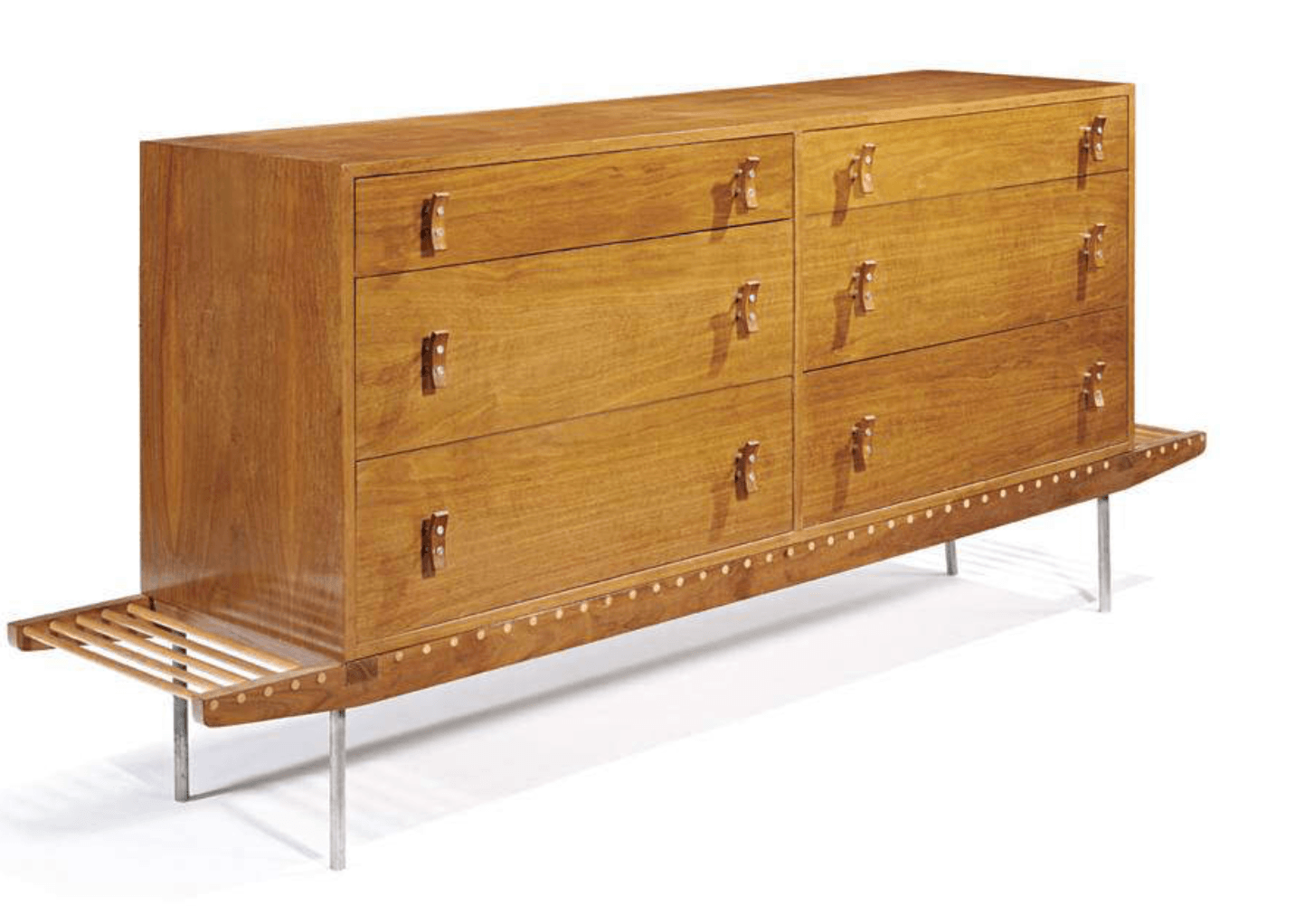
The through-line is restraint married to usefulness. Glenn rarely shouted. The drama, when it came, was in a material — the cathedral walnut grain, a Tambour door, a bench base of chromed steel legs supporting a leather-pulled walnut dresser — never in unnecessary ornament.
For collectors today, a few things are worth knowing:
- The wood does all the talking. Expertly chosen walnut veneer and book-matched grain mean that these pieces can be restored and look beautiful again.
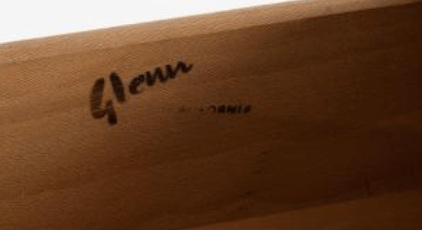
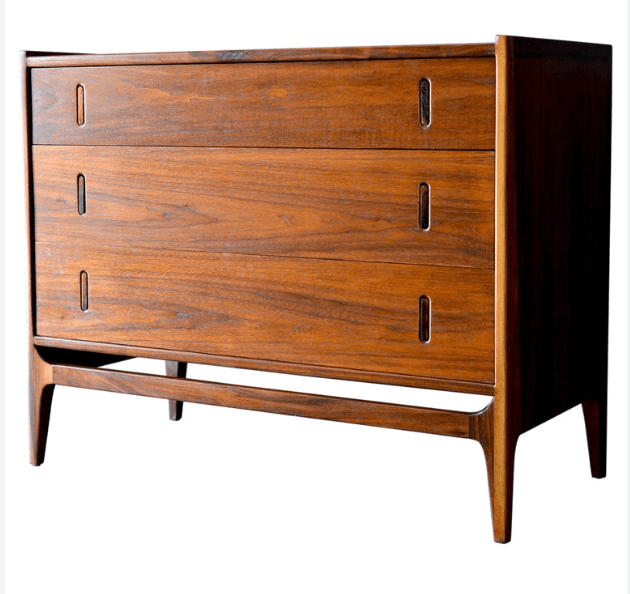
- Details signal the designer. Curved wood and aluminum drawer pulls, the style of tambour doors, and the overhang of the drawers at the bottom are all clues to authorship even when a piece is unlabeled — Over time, many stickers would have fallen off from age.
- At times, modularity is a feature, not damage. If a case looks like it was meant to sit on a separate base, it probably was. Glenn's systems were designed to come apart and recombine.
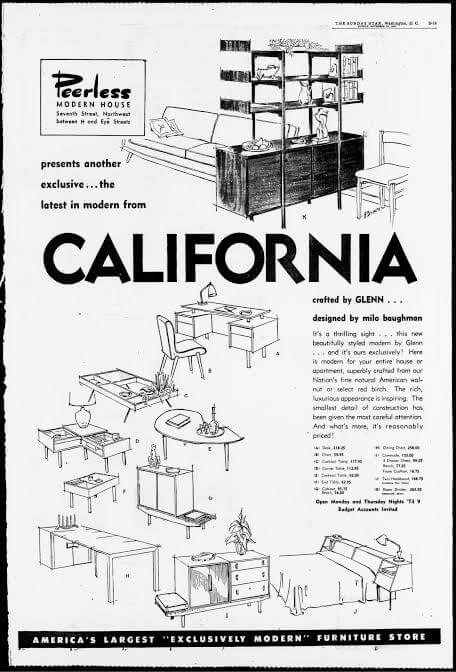
- Documentation is thin, so provenance helps. Period advertisements — like the Peerless Modern House campaigns that promoted "the latest in modern from California, crafted by Glenn, designed by Milo Baughman" — are part of how these pieces get authenticated and dated.
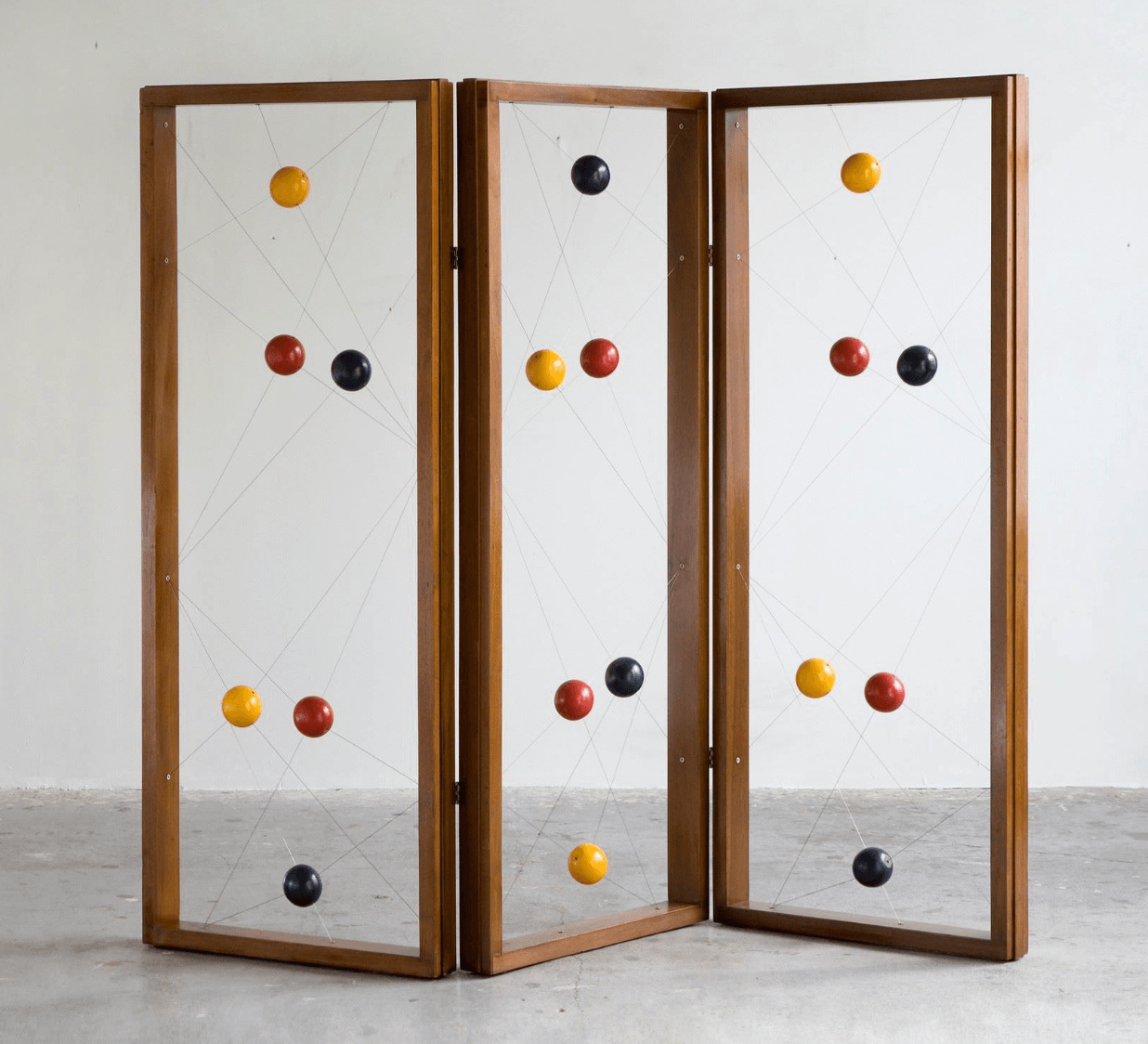
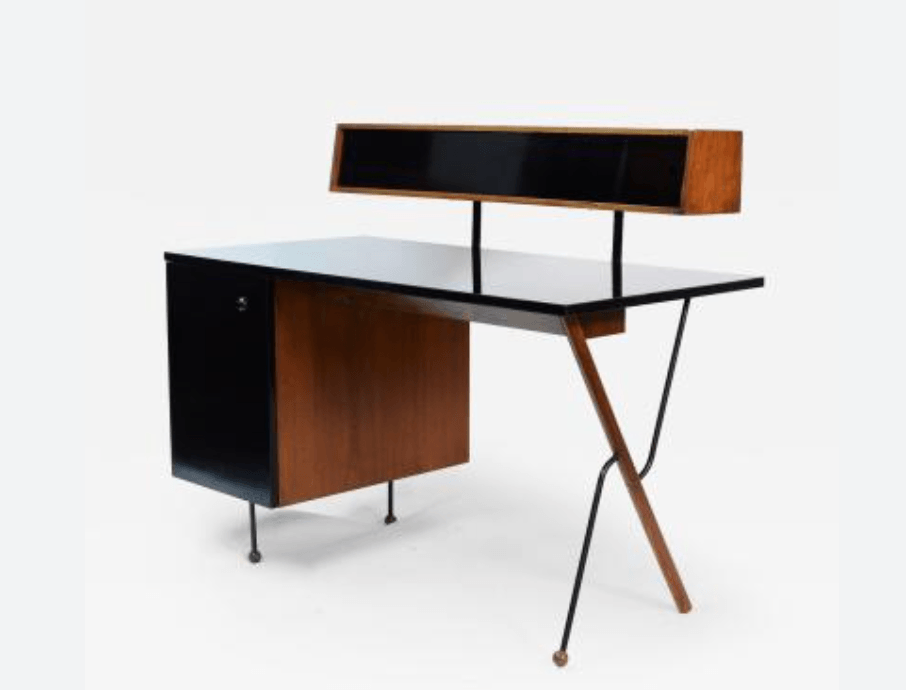 Greta Grossman Desk Manufactured by Glen of California
Greta Grossman Desk Manufactured by Glen of California 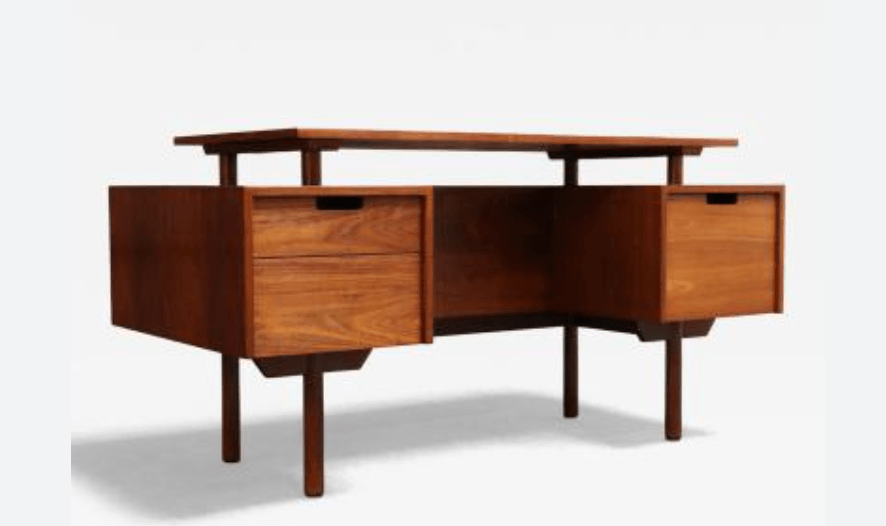
Why Glenn endures
It would be easy for a company this lightly documented to slip out of the story altogether. Glenn hasn't, and the reason is simple: the furniture is genuinely good. It was well made, it was reasonably priced for its quality, and it captured a specific moment — the instant when American design decided that modern could also mean warm, livable, and adaptable to real life.
That's the same reason Glenn of California remains a favorite of ours at Hobbs Modern. These aren't museum objects to be admired from a rope line. They were built to be used, rearranged, and lived with, and six or seven decades on they still do exactly that. A Baughman divider still organizes a room beautifully. A Glenn desk still holds your files. The optimism that produced them turns out to have been well founded.
If you come across a piece with that unmistakable walnut glow and those impossibly clean lines, look closely. It may well be a quiet masterpiece from Arcadia — and one of the best arguments ever made for California Modern.
Stanley Young for Glenn of California Walnut Tall Dresser
$3,795.00
Designed by Stanley Young for Glenn of California, this exceptional four-drawer tall dresser embodies the effortless sophistication that made California Modern design one of the defining aesthetics of the mid-century era. With its clean architectural form, beautifully balanced proportions, and… read more

Sources consulted: Incollect artist profile for Glenn of California; DC Hillier's MCM Daily; period Glenn of California catalogs and Peerless Modern House advertising; 1stDibs designer listings.