Table of Contents
- What Does "Iconic" Really Mean in Design?
- The 5 Qualities That Separate Iconic Designs from Passing Trends
- Famous Furniture Designers Who Created Iconic Works
- Famous Furniture Designers Who Created Iconic Works
- Iconic Design Examples: Furniture That Defined the 20th Century
- Enduring Relevance: Still Desired Decades Later
- Why Iconic Furniture Holds — and Grows — in Value
- How to Identify and Acquire a Genuinely Iconic Piece
- FAQs
By Ryan & Nicole Hobbs | Hobbs Modern — Authenticated Vintage Mid-Century Modern, San Diego
How is it that an object as ordinary as a chair can capture the public's imagination across generations? Why do some chairs become icons — reproduced, obsessed over, displayed in museums, and still desired seventy years after they were made — while others fall quietly into obscurity?
It's a question Nicole and I have thought about constantly over the years of running Hobbs Modern. We've handled thousands of pieces. We've seen furniture that looked the part but wasn't. Pieces we think look so cool...but dont resonate. And we've learned, slowly, that iconicity is not an accident. It has a logic. It has a structure. Once you understand it, you see it — or its absence — immediately.
This is what we know.
What Does "Iconic" Really Mean in Design?
The word "iconic" gets overused. A colorway gets called iconic. A brand collaboration gets called iconic. A limited-edition drop gets called iconic before the week is out.
That's not what we mean.
In design, iconic has a specific weight. It means a piece that has outlasted its moment, crossed cultural contexts, and become a reference point — something other designers respond to, collectors seek out, and non-collectors recognize without knowing why. It means a chair that is still in production seventy years later because discontinuing it would feel like an act of cultural vandalism. It means a sofa that interior designers in 2025 specify the same way designers did in 1955, because nothing has come along that does what it does quite as well.
The question "what makes a chair iconic?" is a serious one. And it deserves a serious answer.
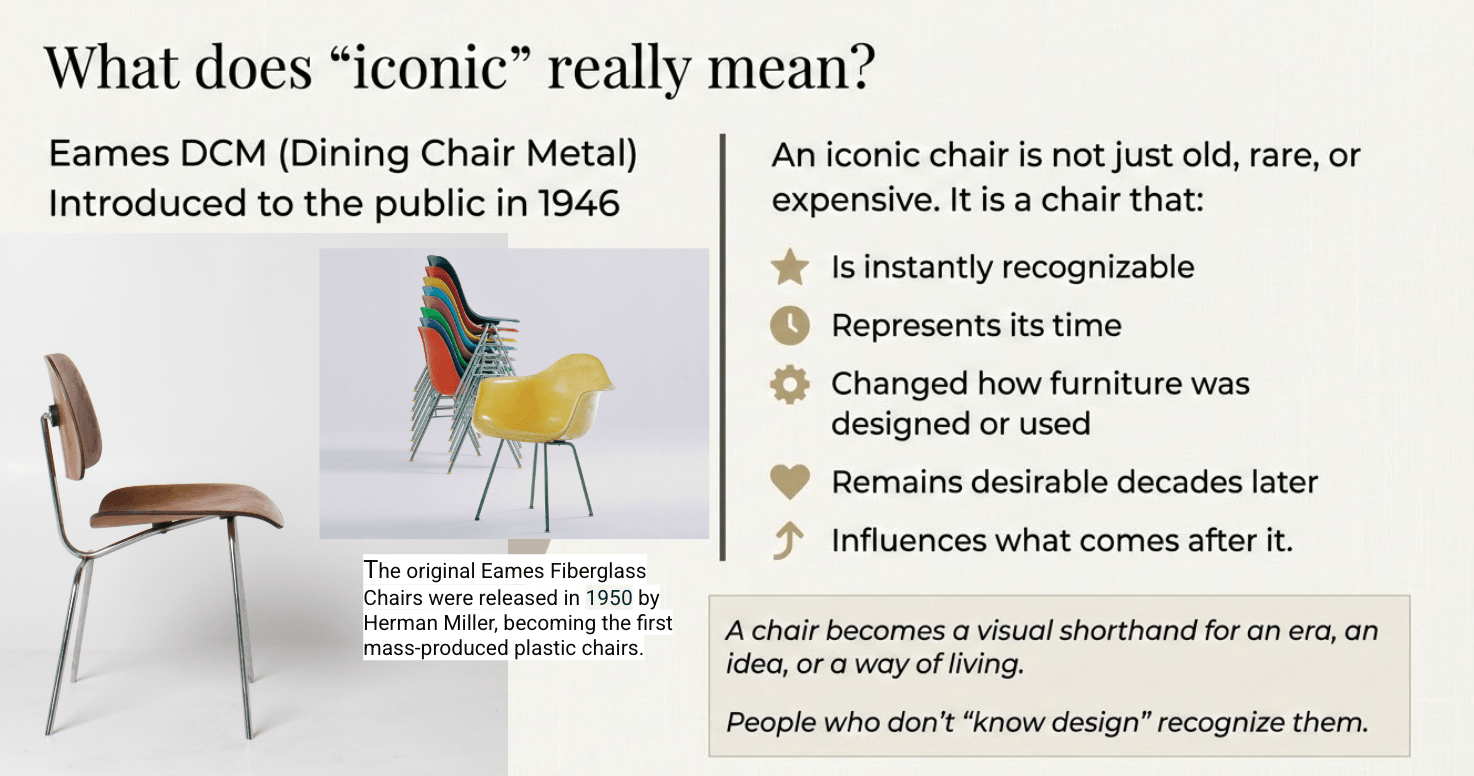
Defining Iconic Beyond Popularity
Popularity is not iconicity. Some of the best-selling furniture in history is forgettable. Some of the most iconic pieces were financial failures at launch.
The Eames Lounge Chair (670) was expensive when it debuted in 1956 — a luxury piece in an era when Charles and Ray Eames had built their reputation on affordable, democratically designed furniture. It was not their bestseller. It became their most recognized piece because its design integrity was absolute.
Iconicity is about cultural impact, not commercial success. About longevity across generations, not popularity in a single decade. About recognition across contexts — the piece that looks right in a lawyer's office, a loft apartment, a museum lobby, and a beach house, all without compromising itself.
The pieces that earn this status share five qualities. Not every icon has all five equally. But every icon has all five.
The 5 Qualities That Separate Iconic Designs from Passing Trends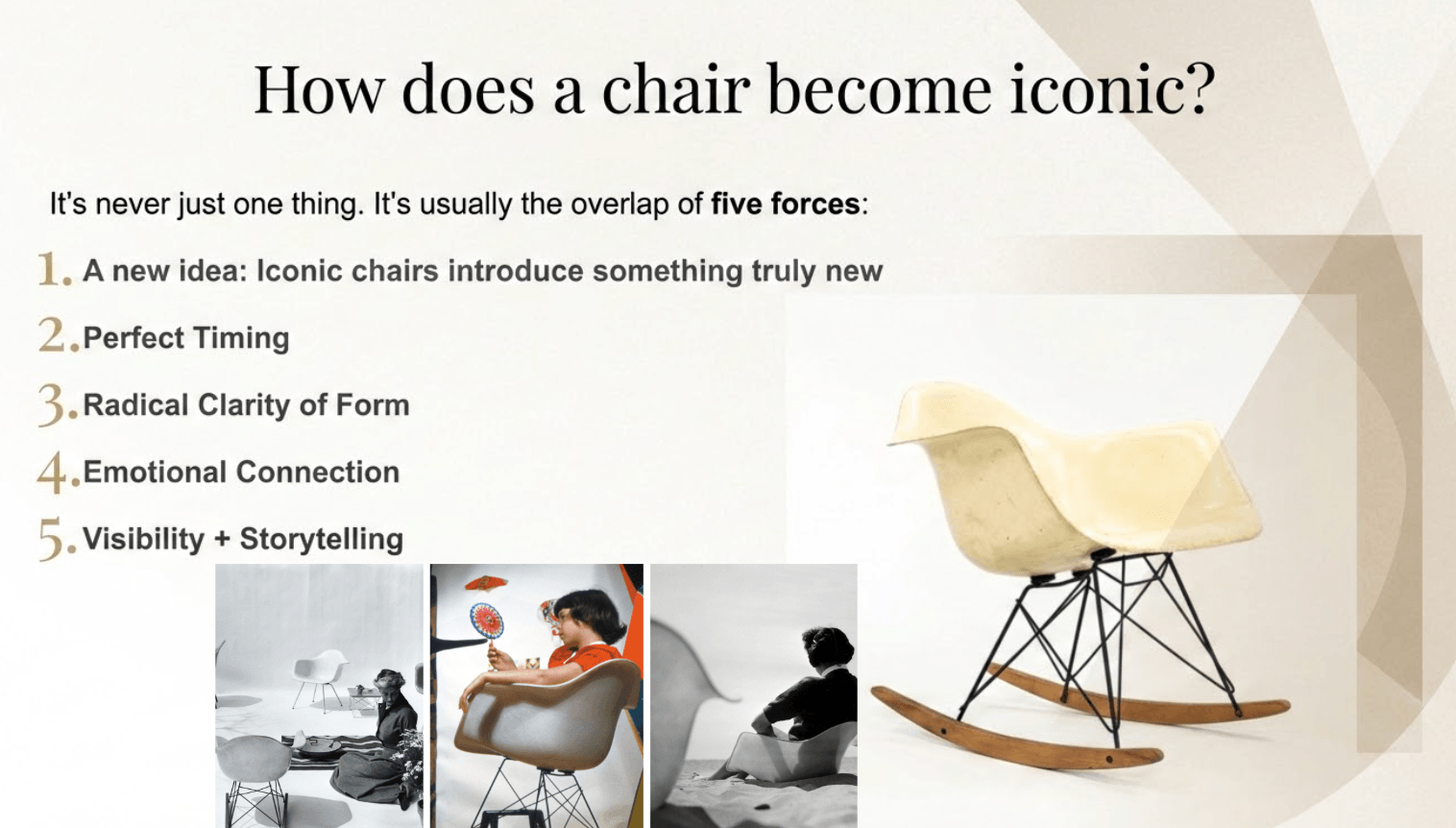
1. A New Idea: Iconic Chairs introduce something truly new.
The first quality of an iconic piece is that it solves a real problem — not adequately, but beautifully and completely, in a way that makes every previous solution look like a draft.
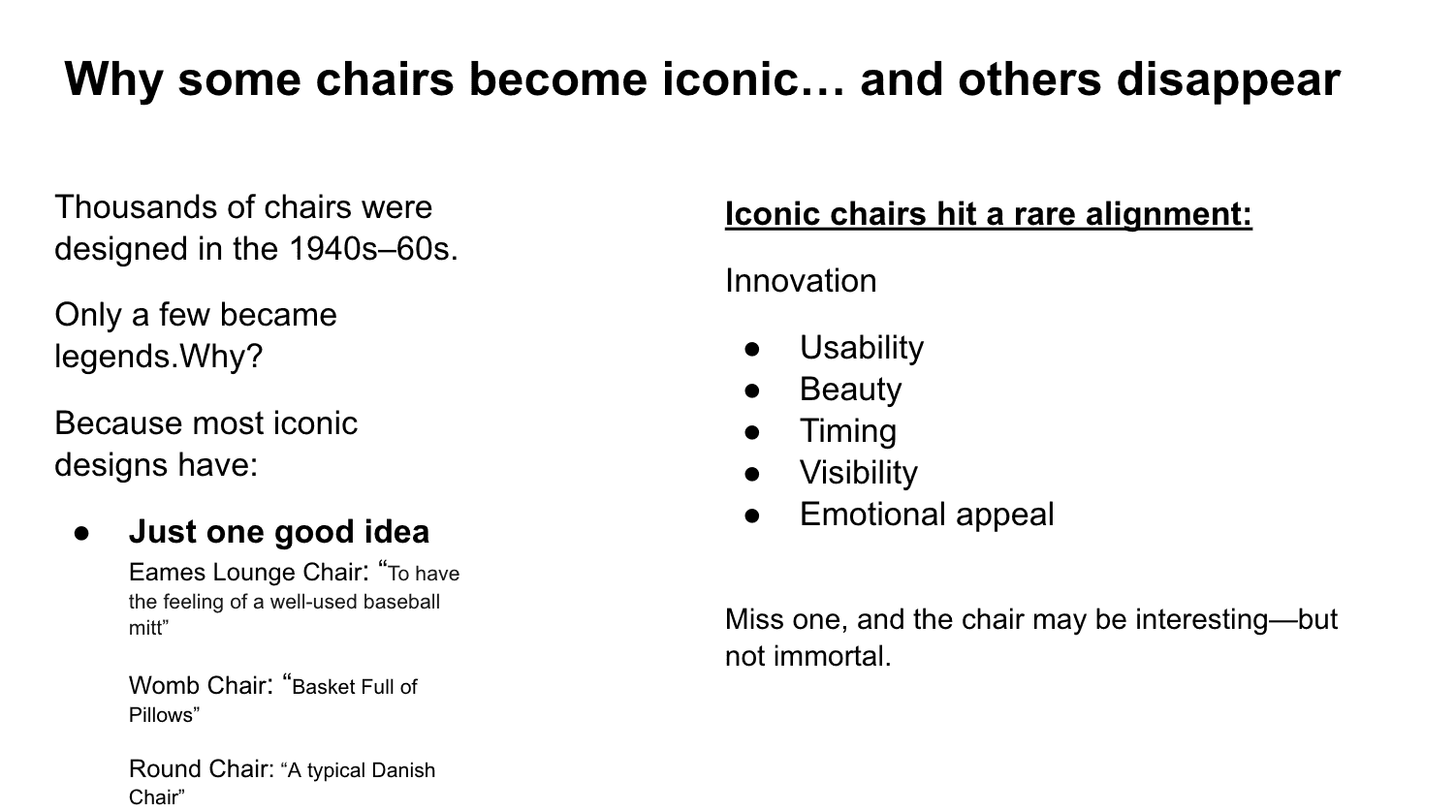
The Eames Fiberglass Shell Chair, released in 1950 by Herman Miller, was the first mass-produced plastic chair. That's a fact people mention but don't always sit with. Mass-produced plastic in 1950 was not a prestige material — it was a gamble. Charles and Ray Eames used it because fiberglass could be molded into a continuous compound curve that no traditional material could hold. The result was a single shell that cradled the entire back and seat of the body in one flowing form. It was function that happened to look like sculpture. It also have the added benefit that the base could be changed and it could be at home in the laundromat, college, or as a dining room chair.
The rule: form follows function so faithfully that the two become indistinguishable. If you have to choose between how a piece looks and how it works, it isn't iconic.
2. Perfect timing
Iconic pieces don't just introduce something new — they do it at exactly the right time. When the world is ready. When the culture has created the conditions for a new idea to land.
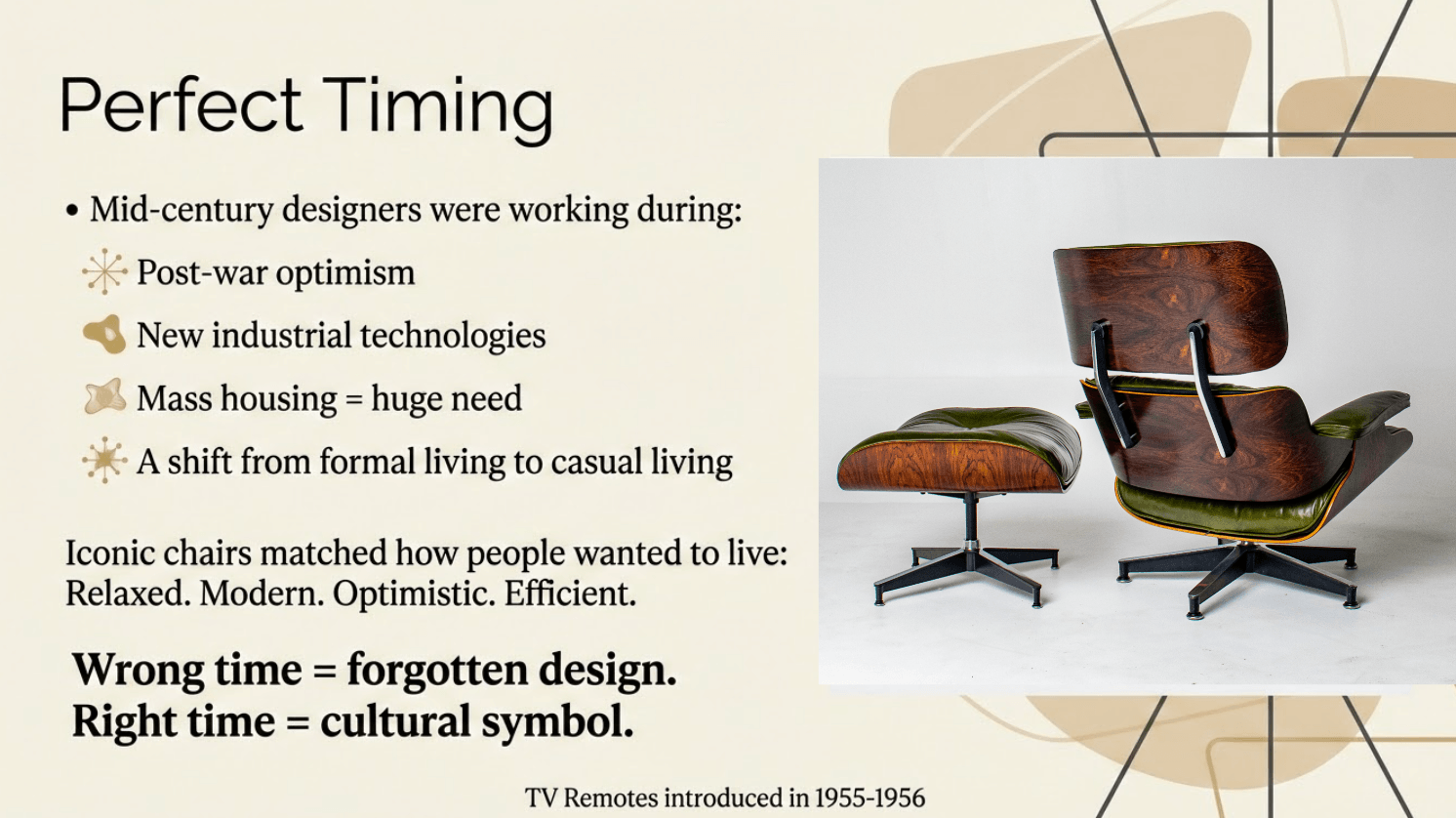
The mid-century modern period produced an extraordinary volume of great furniture for a specific reason: the cultural conditions demanded it. Post-war optimism was real. New industrial technologies — bent plywood, molded fiberglass, aluminum— were suddenly available to furniture makers. Mass housing created a massive need for well-designed, appropriately scaled furniture. And a fundamental shift was happening in how people wanted to live: away from formal, compartmentalized rooms and toward casual, open living.
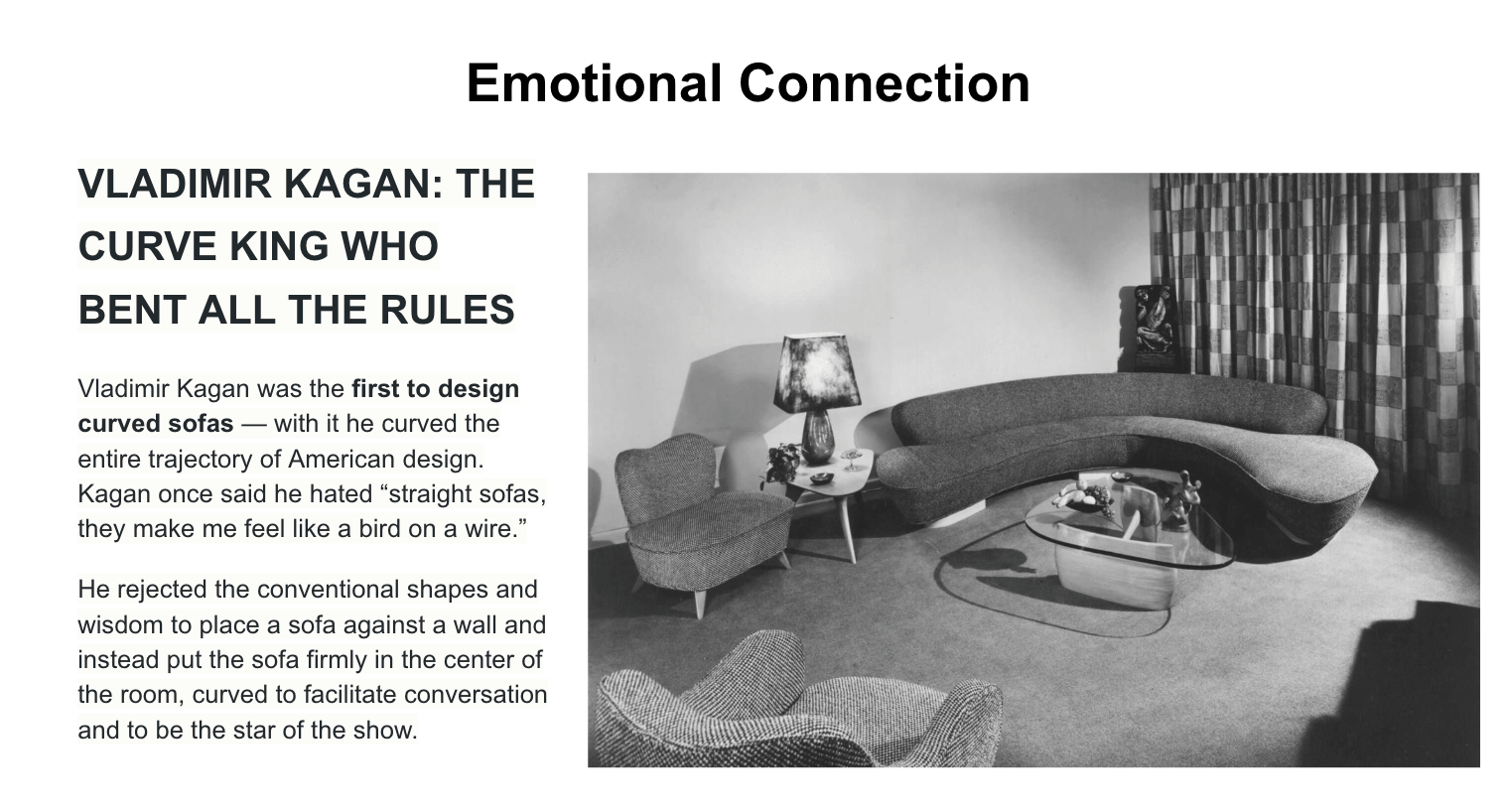
Vladimir Kagan understood this perfectly. He was the first designer to introduce curved sofas into American living rooms at scale. He once said he hated "straight sofas — they make me feel like a bird on a wire." He rejected the conventional wisdom that a sofa belonged against a wall, and instead placed it in the center of the room, curved to face inward, designed to facilitate conversation and command the space. That wasn't a preference. It was a proposition: the living room is for gathering, not for perimeter seating. Kagan curved the sofa and, with it, bent the entire trajectory of American interior design.
Wrong time = forgotten design. Right time = cultural symbol.
The rule: an iconic piece introduces something genuinely new and meets a world that was quietly waiting for it. If you can trace a straight line from what already existed to what the piece is, it's an evolution. If you can't, it might be an icon.
The Eames Lounge Chair (670/671) arrived in 1956 — the same year Zenith's Space Commander made the TV remote control affordable enough for American living rooms. The timing was not just coincidental; it was cultural. Suddenly, people wanted to lean back. Not fully reclined, not upright at attention — something in between. Casual but present. Relaxed but still in the room. The Eames Lounge Chair met that exact posture, held it perfectly, and made it feel like luxury.
3. Radical Clarity of Form
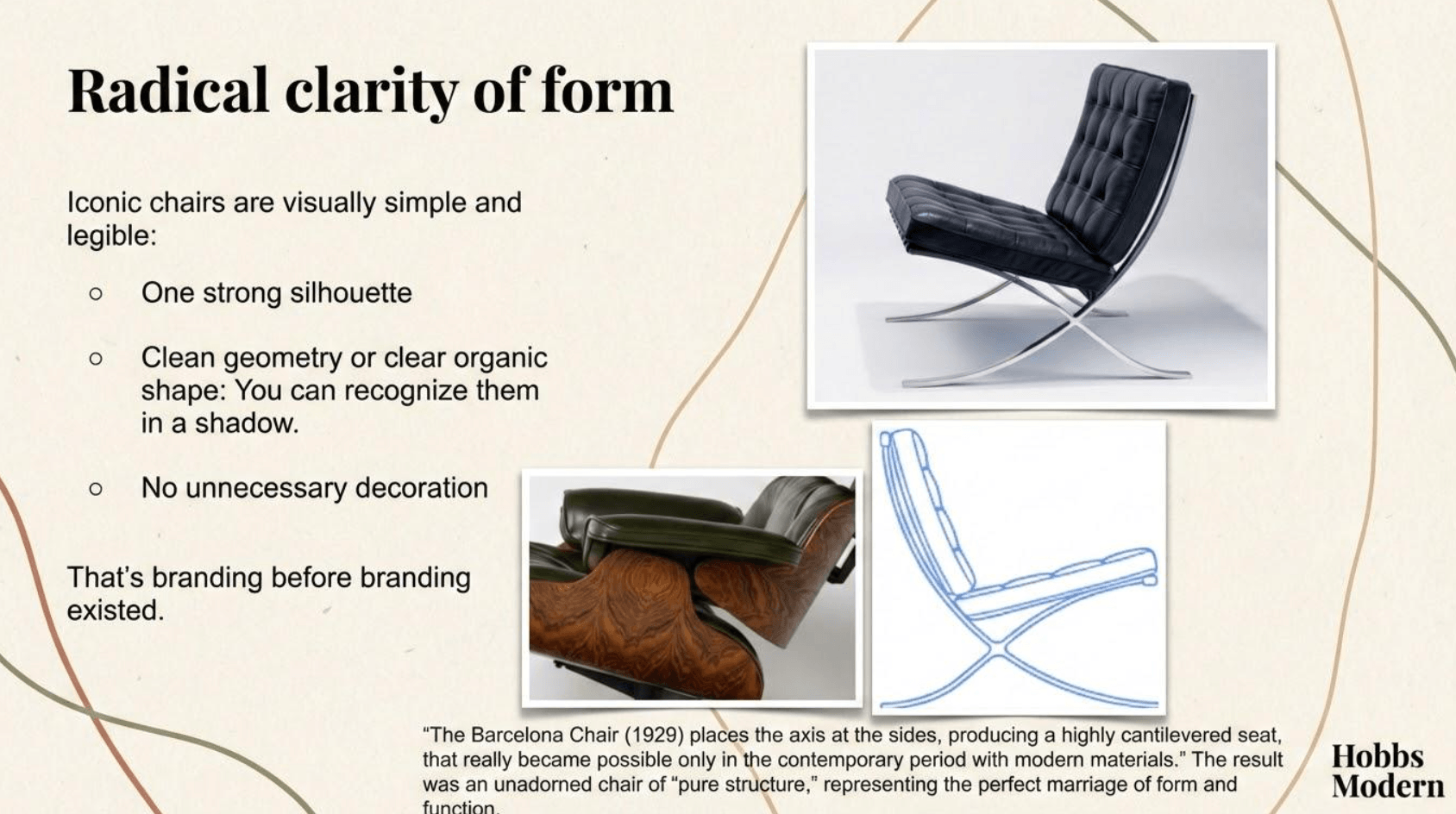
Some chairs are iconic because they introduced something new. Others because they stripped away everything that wasn't essential — until what remained was so pure, so exactly right, that it couldn't be improved. That is radical clarity of form, and it is among the rarest achievements in design.
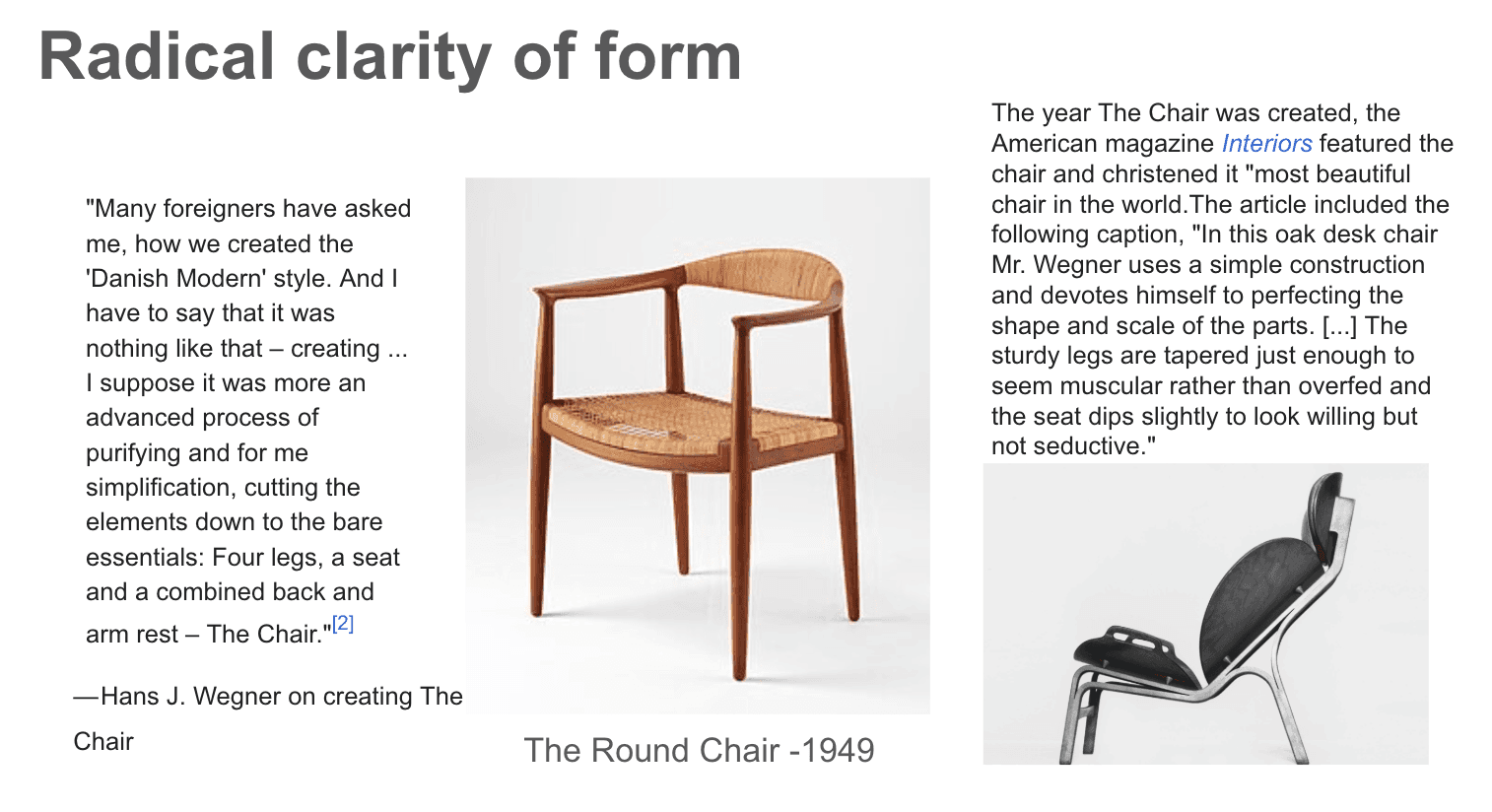
No one embodied it more completely than Hans Wegner. He made over 500 chair designs in his lifetime and described his process not as inventing but as purifying. He spent years studying Chinese Ming dynasty chairs, Japanese joinery, Shaker furniture — anything that revealed what a chair could be when reduced to its essential elements. The result, in his own words about The Round Chair (1949): "I suppose it was more an advanced process of purifying and for me simplification, cutting the elements down to the bare essentials: four legs, a seat and a combined back and arm rest — The Chair."
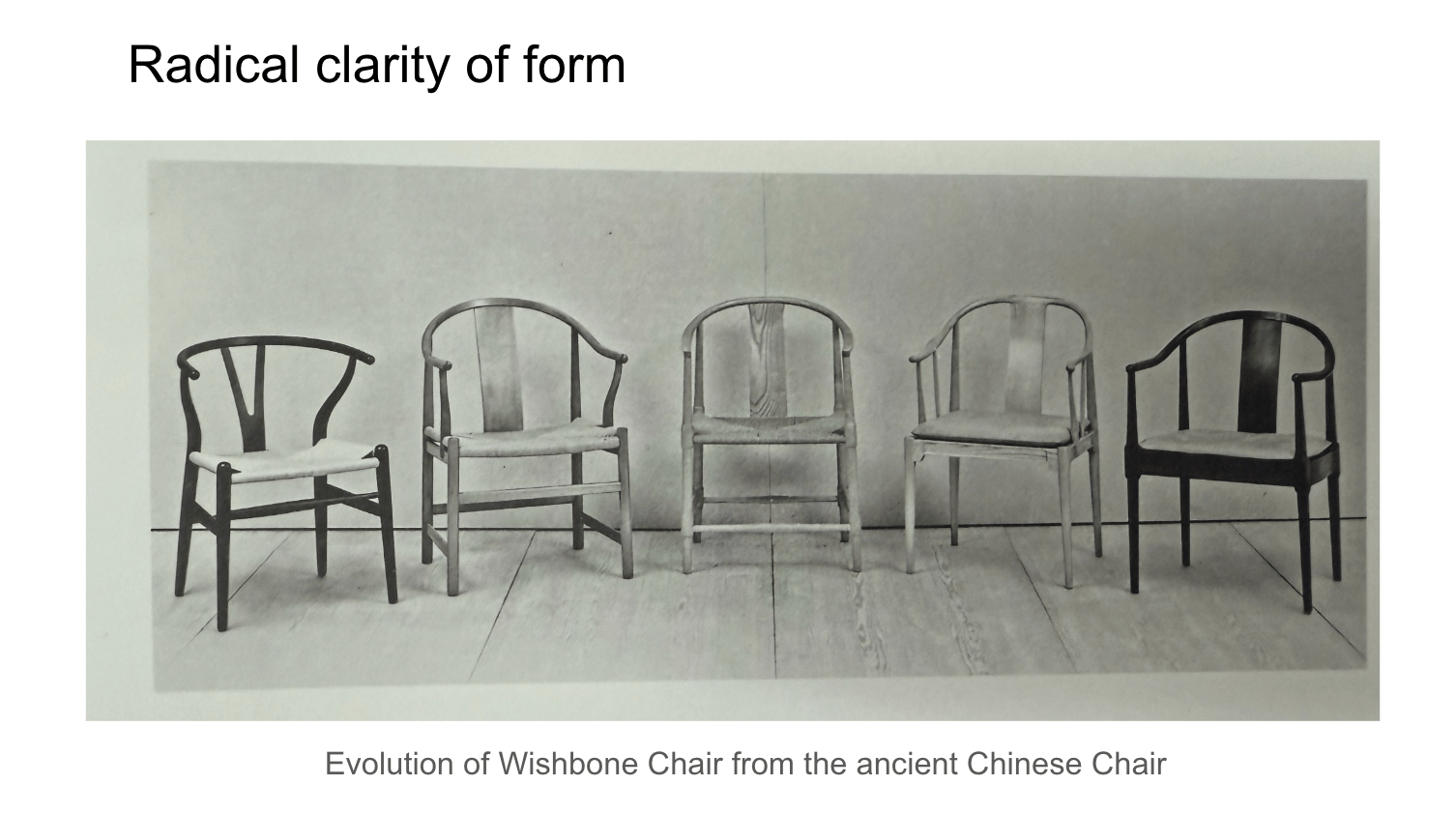
Interiors magazine called it "the most beautiful chair in the world." Their description still holds: the legs are "tapered just enough to seem muscular rather than overfed" and the seat "dips slightly to look willing but not seductive." The Wishbone Chair (CH24), which followed a year later, carried the same philosophy — evolved from the same study of the ancient Chinese chair, distilled into a bent steam-beech frame and hand-woven paper cord seat.
Danish Modern is not a style. It is a methodology: radical clarity, letting the wood be wood, trusting that doing less, more precisely, is always more.
The rule: iconic pieces have nothing extra and nothing missing. Every element earns its place. Remove anything and the piece would be wrong.
 4. Emotional Connection
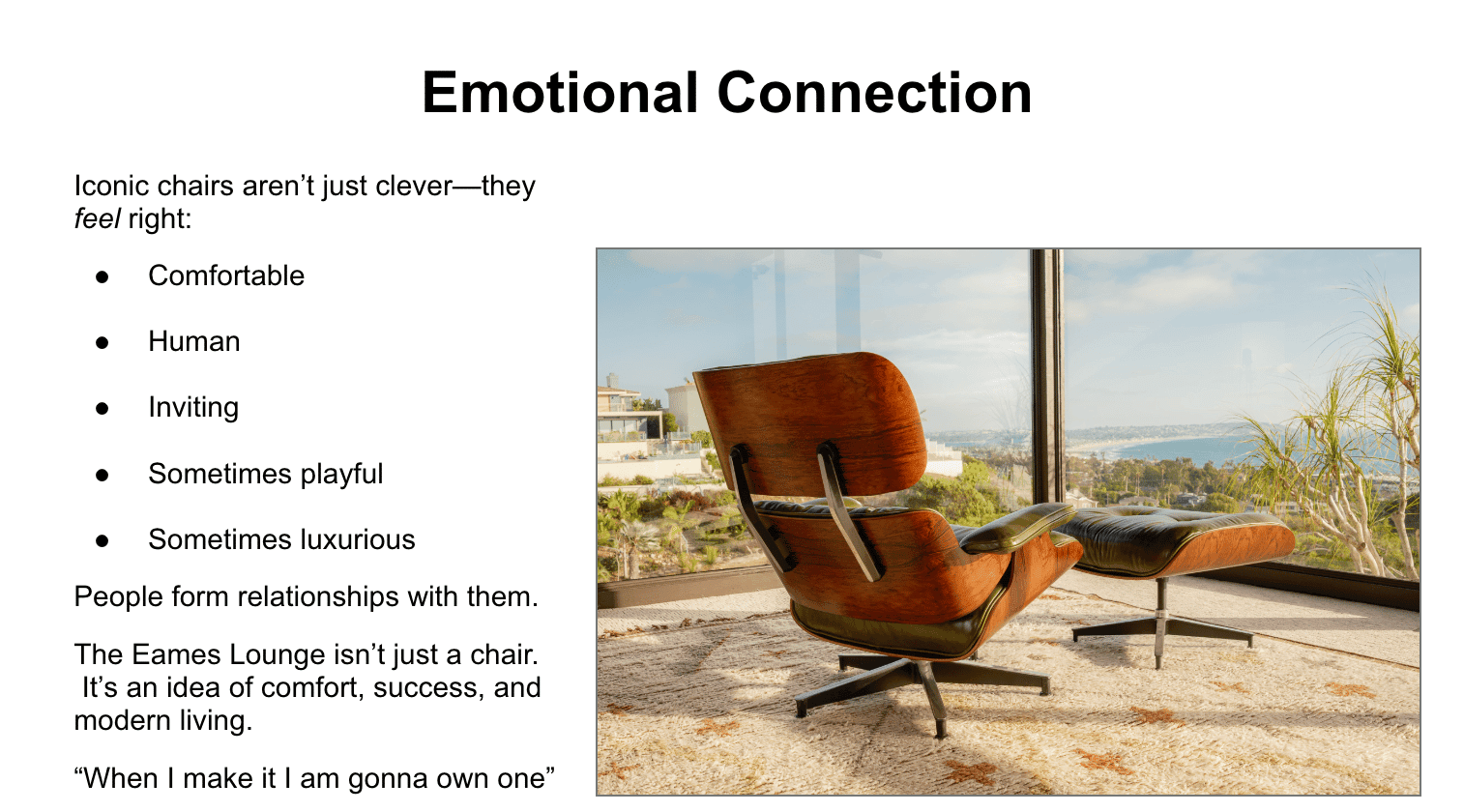
Iconic chairs aren't just clever. They feel right. Comfortable. Human. Inviting. Sometimes playful, sometimes luxurious — but always felt, not just seen.
The Eames Lounge Chair is the clearest example of this quality. It isn't just a chair. It's an idea of comfort, success, and modern living — the kind of piece someone aspires to long before they can afford it. "When I make it," the thinking goes, "I'm going to own one." That's not a marketing outcome. That's a design outcome. The chair conceived its own mythology by being exactly what it promised to be.
People form relationships with iconic chairs in a way they don't with furniture that merely functions. They name them. They write about them. They feel differently in them than in anything else they own. This is not incidental — it is a design achievement as deliberate and difficult as any structural innovation.
The rule: if a piece doesn't make you feel something, it isn't iconic. Function gets you in the door. Emotional resonance is what keeps you there.
5. Visability and Story telling
The fifth quality is perhaps the most underappreciated: iconic pieces have a story, and that story travels.
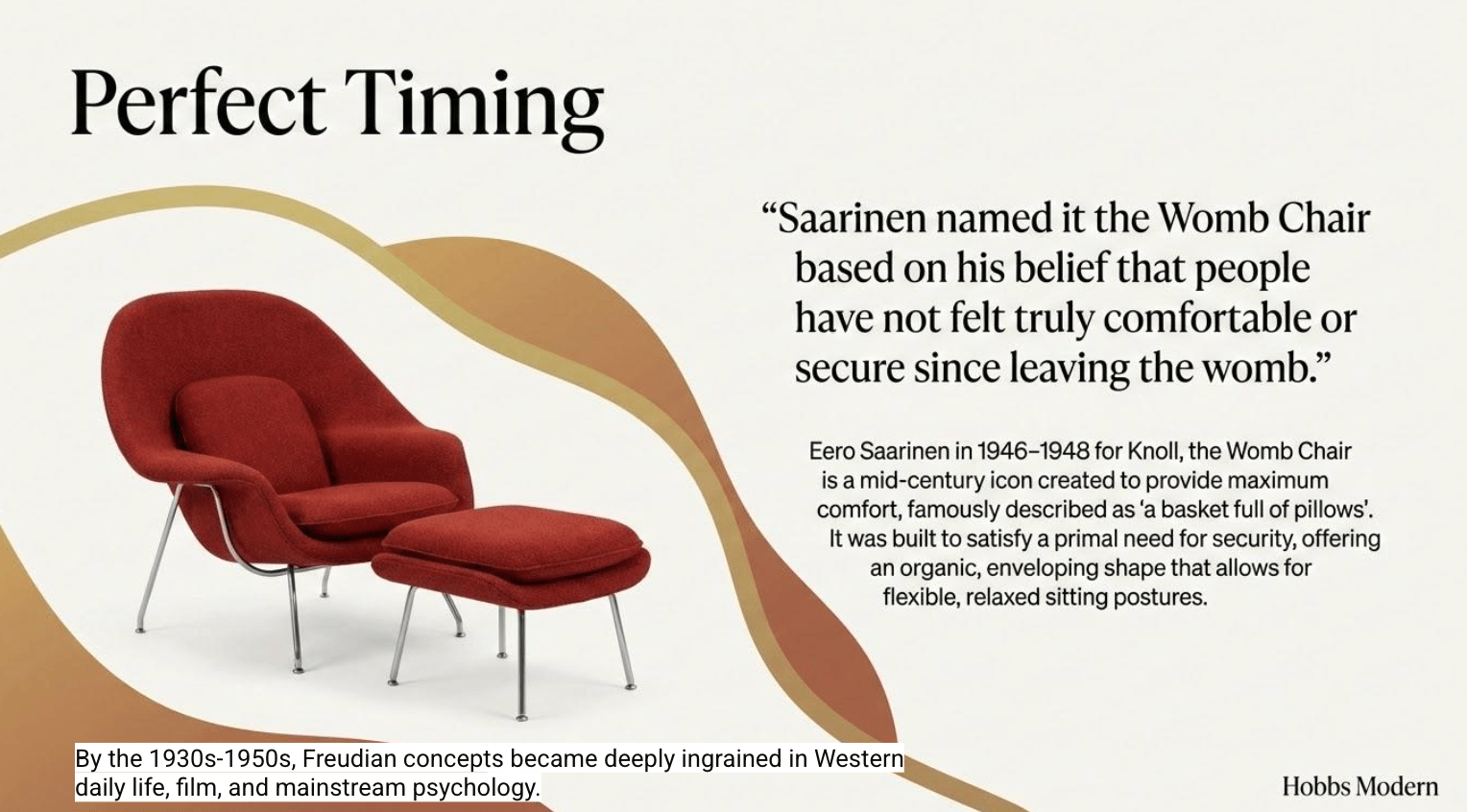
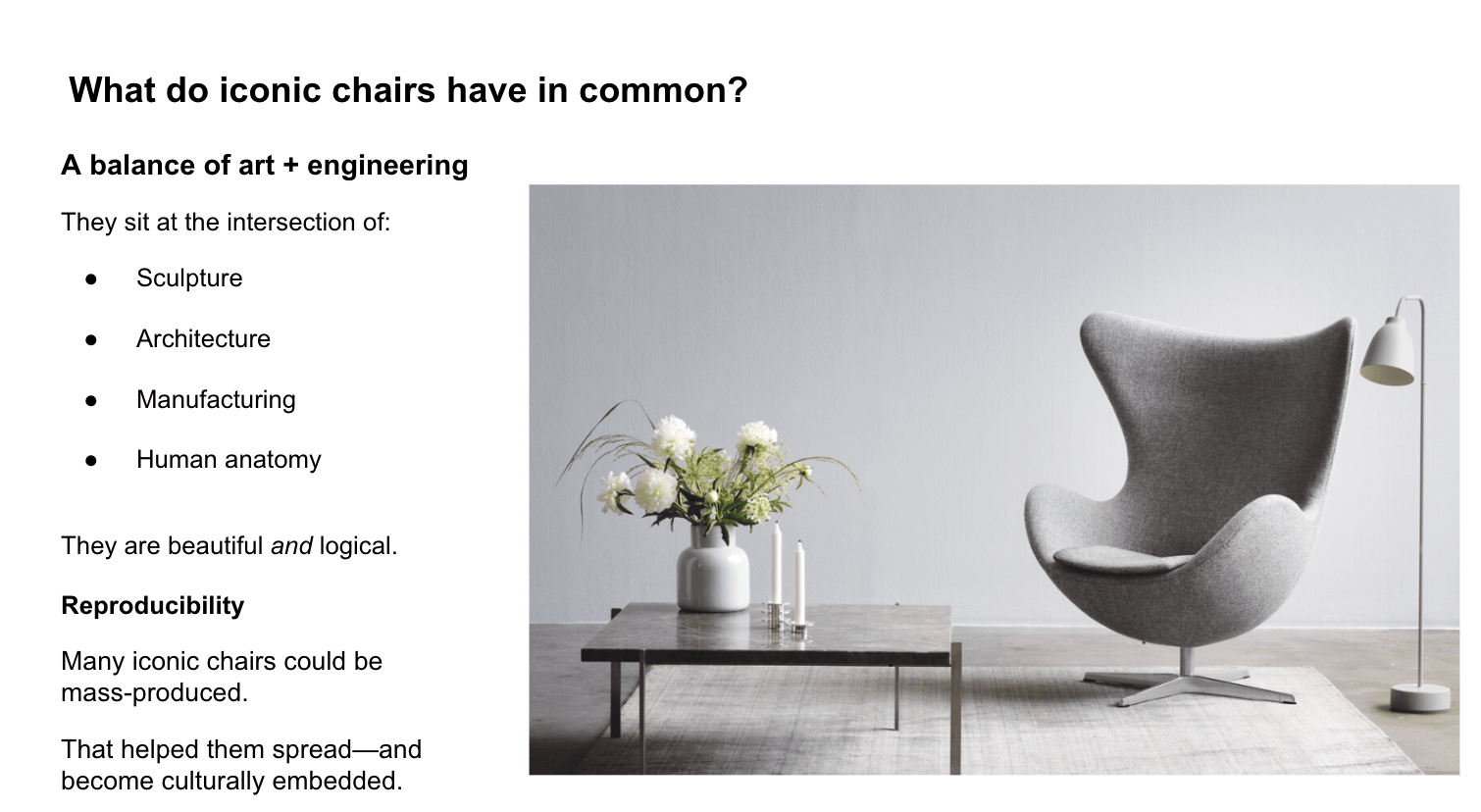
Eero Saarinen understood this more viscerally than almost anyone. The Womb Chair, designed for Knoll in 1946–1948, wasn't just ergonomically conceived. Saarinen named it the Womb Chair because he believed that "people have not felt truly comfortable or secure since leaving the womb." He designed it to satisfy something primal — an enveloping, organic shape that offered security, not just support. He called it "a basket full of pillows." This was Freudian psychology made manifest in upholstery, arriving at exactly the moment when Freudian concepts had become thoroughly embedded in Western cultural life.
The story of why the chair exists — the psychological insight behind its form — gave people a way to talk about it. To understand it. To want it. The visibility of the design idea made the object itself memorable in a way that purely visual appeal cannot achieve alone.
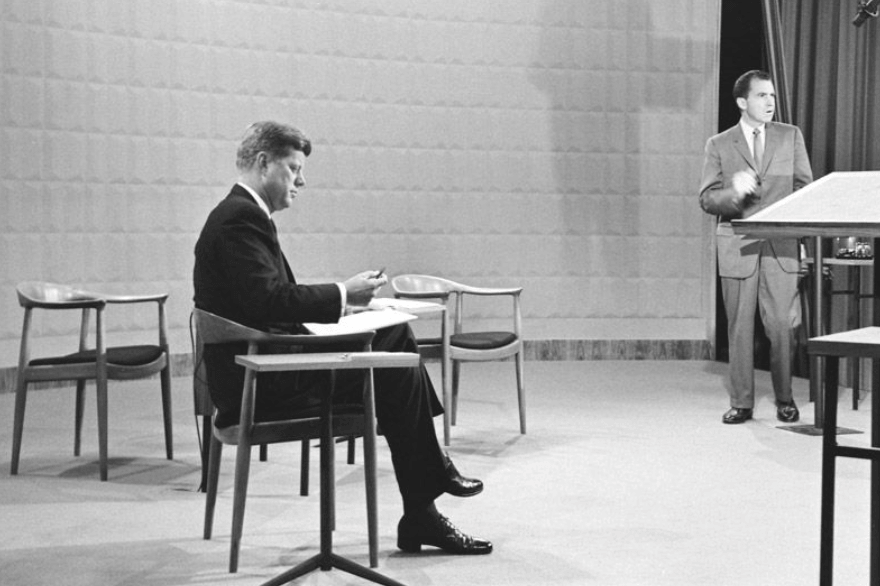
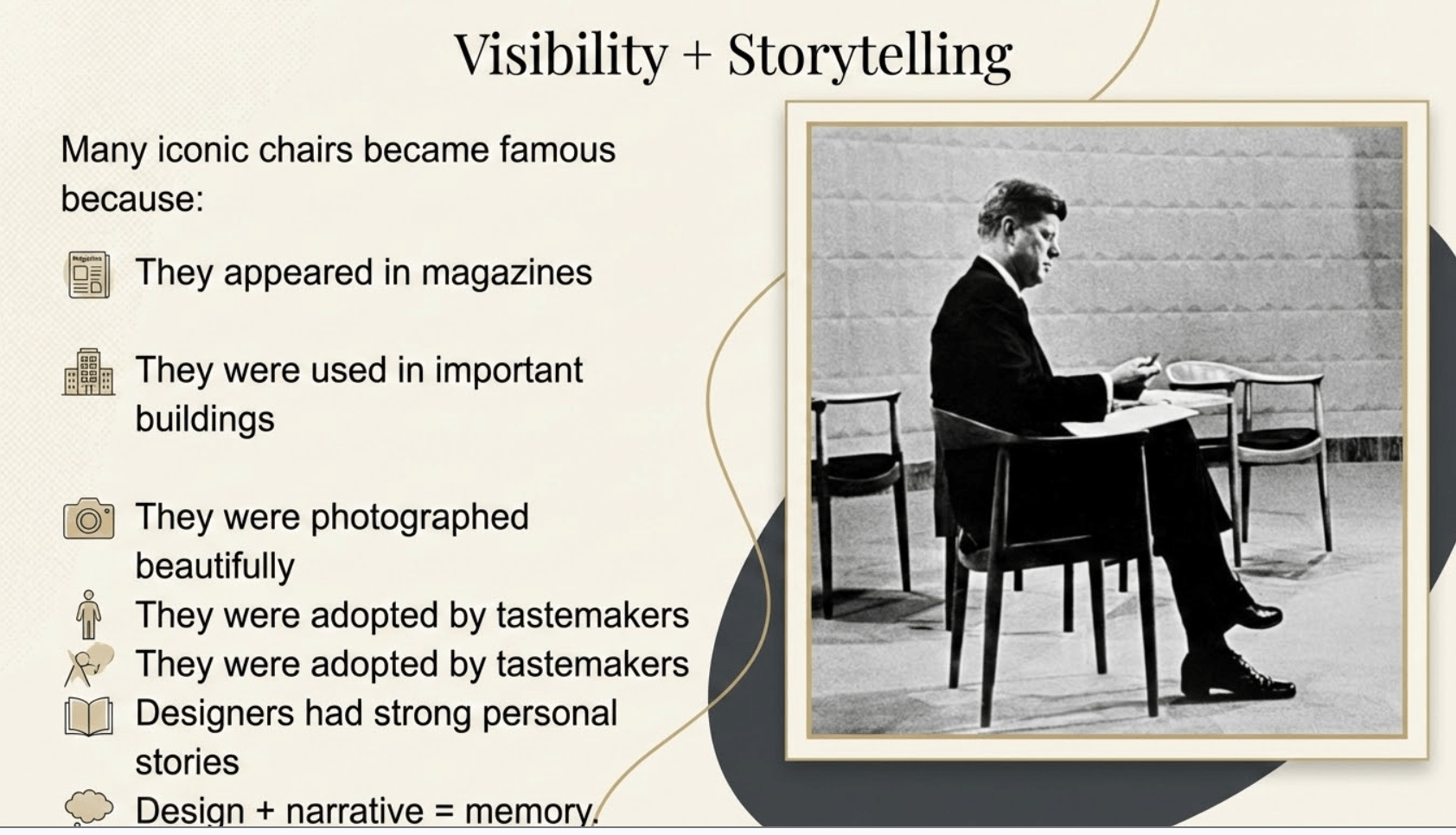
Wegner's Round Chair appeared in the 1960 Kennedy-Nixon presidential debate — not by accident, but because someone understood that the chair projected exactly the right image of modern, serious, democratic authority. That moment lodged the chair permanently in the cultural record. The piece had the story; the story found its moment. Legend has it that Kennedy personally chose the Wegner Round Chair for the 1960 debate not for its aesthetics, but for its ergonomics — it was the only chair that didn't aggravate his chronic back pain. Design history, meet political history, meet instant television fame. By the end of the debate, the world had a new question: what is that chair?
The rule: iconic pieces give people something to say. The narrative — the why behind the form — is what carries a design across generations and contexts, long after the original cultural moment has passed.
Famous Furniture Designers Who Created Iconic Works
There is a generosity in iconic furniture that lesser pieces lack: they give you everything they have. The walnut is exposed, not veneered over particleboard. The joints are designed to be seen, not concealed. The upholstery is chosen for how it ages, not how it photographs on day one. This commitment to material honesty is what connects the greatest mid-century designers — and it's why, when we restore a piece at Hobbs Modern, we're working with material that was built to survive exactly this kind of care. These pieces were made with the assumption that someone, sixty years later, would still want to own them.
The designers below didn't just produce iconic work. They produced it consistently, because they had a philosophy that demanded it.
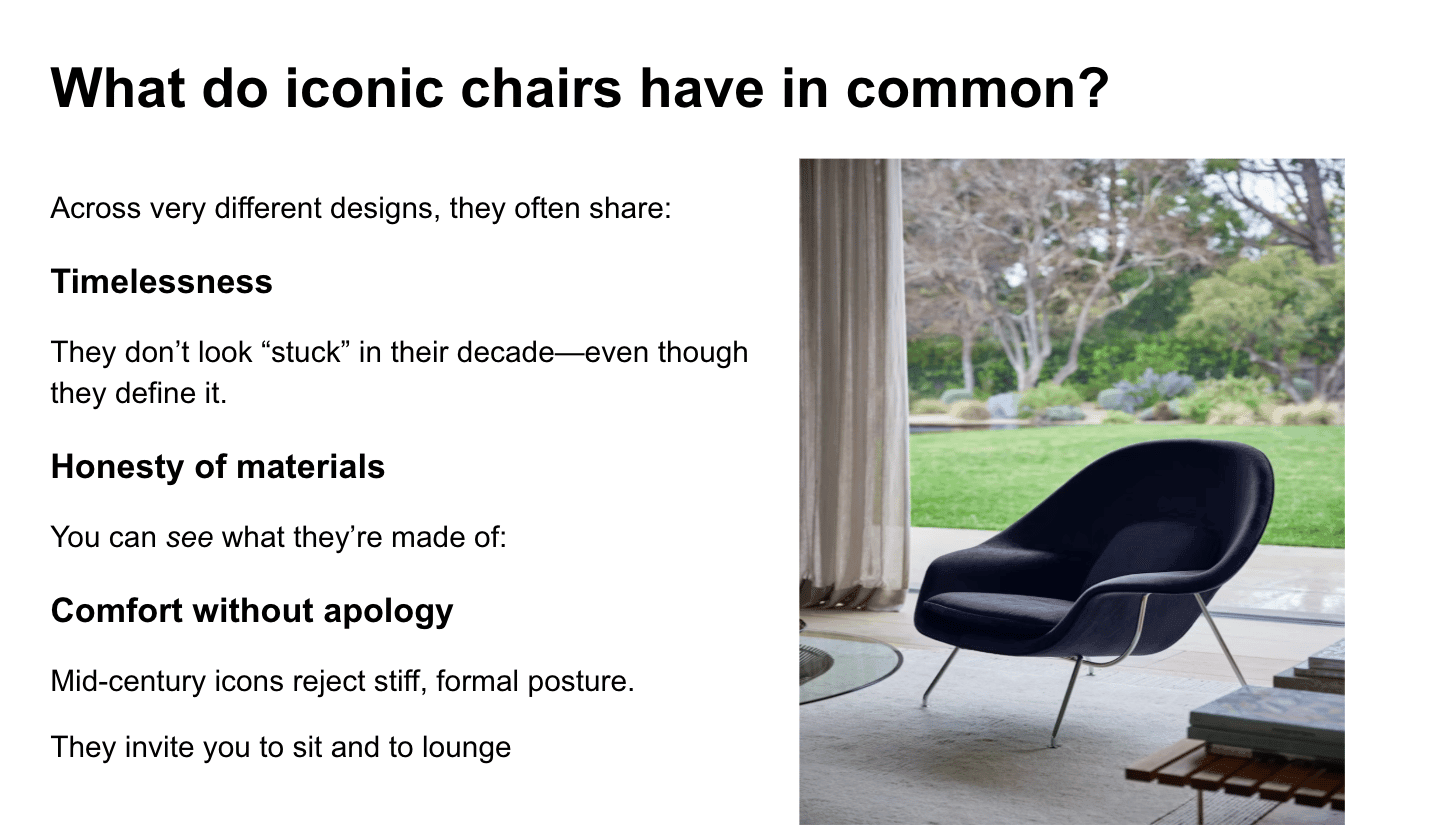
There is a generosity in iconic furniture that lesser pieces lack: they give you everything they have.
Great mid-century pieces don't hide their materials or apologize for their construction. The walnut is exposed, not veneered over particleboard. The joints are designed to be seen, not concealed. The upholstery is chosen for how it ages, not how it photographs on day one.
This is part of why authentic vintage pieces hold value, and why this quality connects directly to what we do at Hobbs Modern. When we restore a piece — whether a William Hinn dresser or an early Wegner chair — we're working with material that was built to survive exactly this kind of care. These pieces were made with the assumption that someone, sixty years later, would still want to own them.
Charles & Ray Eames: Engineering Comfort Into Art
Charles and Ray Eames operated from a single conviction: good design should be available to everyone. This sounds simple. Its implications were radical.
It meant they had to find new materials — bent plywood, fiberglass, wire mesh — that could be manufactured at scale without sacrificing form. It meant they had to work with industrial processes that most designers avoided, because they believed the factory floor was as valid a design studio as the drafting table. And it meant that their most democratic pieces — the fiberglass shell chairs, the molded plywood chairs — became their most reproduced, because the solution was so good that everyone tried to copy it.
The Eames Fiberglass Chair (1950) is the distillation of this philosophy. It was the first mass-produced plastic chair, and the form it achieved — a continuous compound curve cradle — has never been improved upon. Herman Miller still produces a version of it today.
The Eames Lounge Chair (1956) represents their other register: the luxury piece, uncompromising in its craft. Seven layers of molded rosewood plywood. Hand-sewn leather cushions. A design conceived as a reinterpretation of the worn, welcoming English club chair — something that looked like it had been loved for years on the day it arrived. It is not a democratic piece. But it is a perfect one.
Hans Wegner & the Danish Modern Legacy
Hans Wegner made over 500 chair designs in his lifetime. Most were excellent. Perhaps a dozen were transformative. The Wishbone Chair was transformative.
To understand why, you have to understand what Wegner was doing. He was not designing chairs. He was studying the form of the chair — going back to Chinese Ming dynasty chairs, Japanese construction techniques, Shaker furniture, anything that showed him what a chair could be when stripped to its essential elements. The Wishbone Chair (CH24, 1949) emerged from years of that study: a single bent steam-beech frame, hand-woven paper cord seat, the back and armrests fused into one continuous element.
In Wegner's own words about his Round Chair (also 1949): "I suppose it was more an advanced process of purifying and for me simplification, cutting the elements down to the bare essentials: four legs, a seat and a combined back and arm rest — The Chair."
Interiors magazine, upon seeing it, called it "the most beautiful chair in the world." The description they published still holds: the legs are "tapered just enough to seem muscular rather than overfed" and the seat "dips slightly to look willing but not seductive."
Danish Modern is not a style. It is a methodology — one of radical clarity, of letting the wood be wood, of trusting that doing less, more precisely, is always more.
George Nakashima: Where Nature Meets Craft
George Nakashima believed that every piece of wood contains a table, a chair, a bench — a form already present in the grain and the void and the knot. His job was to find it.
This is not a decorative philosophy. It is a fundamentally different argument about what furniture is. Where most designers work against the material — imposing a form, hiding imperfections, standardizing variation — Nakashima worked with it. His live-edge slab tables preserve the natural contour of the tree. His butterfly joints don't just hold cracks together; they display them. The flaw becomes the feature.
He worked in New Hope, Pennsylvania for over fifty years, selecting every piece of wood personally. He turned down commissions that didn't align with his vision. The result is a body of work that is literally unrepeatable — each piece is, in a technical sense, unique — which gives his furniture a different kind of iconic status. It's not the reproducibility of the Eames fiberglass chair. It's the unreproducibility of a specific tree, found, understood, and honored.
Iconic Design Examples: Furniture That Defined the 20th Century
These are the pieces the design world returns to. Not trend-dependent, not context-bound — simply right, in every decade they've occupied.
Eames Lounge Chair & Ottoman (1956) — Herman Miller. The definitive luxury mid-century piece. Seven layers of rosewood plywood, leather cushions, a form conceived as a modern English club chair. Still in production. Still the standard.
Eames Fiberglass Shell Chair (1950) — Herman Miller. The first mass-produced plastic chair. A compound curve that no traditional material could hold. Made design democratic without compromising design.
Wegner Round Chair / "The Chair" (1949) — Carl Hansen & Son. Called "the most beautiful chair in the world" by Interiors magazine in the year it was made. Featured in the 1960 Kennedy-Nixon presidential debate. Proved to the world that Danish Modern was not a style trend but a permanent contribution to the design canon.
Wegner Wishbone Chair / CH24 (1950) — Carl Hansen & Son. Over two million produced. One of the most copied chair designs in history — and one of the least successfully copied. The hand-woven paper cord seat alone is a skill that takes years to master.
Saarinen Womb Chair (1946–1948) — Knoll. Designed to make people feel secure. Organic, enveloping, unmistakable. A piece built on a psychological insight, not a stylistic one.
Vladimir Kagan Curved serpentine Sofa (1950s) — The piece that invented a new spatial logic for the American living room. Still referenced. Still imitated. Still not equaled.
Nakashima Conoid Chair (1960) — A free-form spindle back, a slab seat, a single cantilevered leg structure. Structurally unusual, visually distinctive, and entirely the result of a designer who trusted his own instincts completely.
Enduring Relevance: Still Desired Decades Later
The final test is the simplest. Is anyone still trying to own one?
This quality is not a prediction — it's a retrospective judgment. And the mid-century canon has passed the test conclusively. The Eames Lounge, the Wegner Wishbone, the Saarinen Tulip, the Bertoia Diamond, the Nakashima Conoid — these pieces are not nostalgic objects. They are not antiques in the sense of being period curiosities. They are active design presences, specified by contemporary architects and sought by collectors who have no particular attachment to the 1950s.
Emotional connection is part of it. The Eames Lounge Chair isn't just a chair. It's an idea of comfort, success, and modern living — the kind of piece someone aspires to long before they can afford it. "When I make it," the thinking goes, "I'm going to own one." That's not a marketing outcome. That's a design outcome. The piece created its own mythology.
The rule: iconic pieces are still desired long after the moment that made them possible has passed. Not because they're old, but because they're still right.
Why Iconic Furniture Holds — and Grows — in Value
The investment case for authentic vintage iconic furniture rests on a simple reality: supply is finite and demand is not.
Herman Miller can produce new Eames Lounge Chairs indefinitely. But they cannot produce original 1956 rosewood versions with first-year production markings. Those exist in fixed quantity. Every year, some are damaged, some are lost, some are restored and re-enter the market. The total pool does not grow.
Meanwhile, the number of people who want one grows steadily. International collectors have discovered mid-century American design. Interior designers with global practices specify it. A new generation is entering the collecting market with direct-purchase resources and a genuine design education.
Three factors drive value in iconic vintage pieces:
Provenance. Documented history — original purchase receipts, period photographs, chain of ownership — dramatically increases value. A piece we can account for is worth more than one we can't, regardless of condition.
Authenticity. The difference between an authentic early Eames Shell Chair and a licensed reissue is significant. The difference between an authentic piece and an unlicensed knockoff is categorical. Reproductions, however attractive, are not investments.
Condition and restoration quality. Authentic pieces that have been professionally restored — original materials maintained, structural integrity intact, patina preserved — command premiums over pieces in poor condition and over pieces that have been improperly repaired.
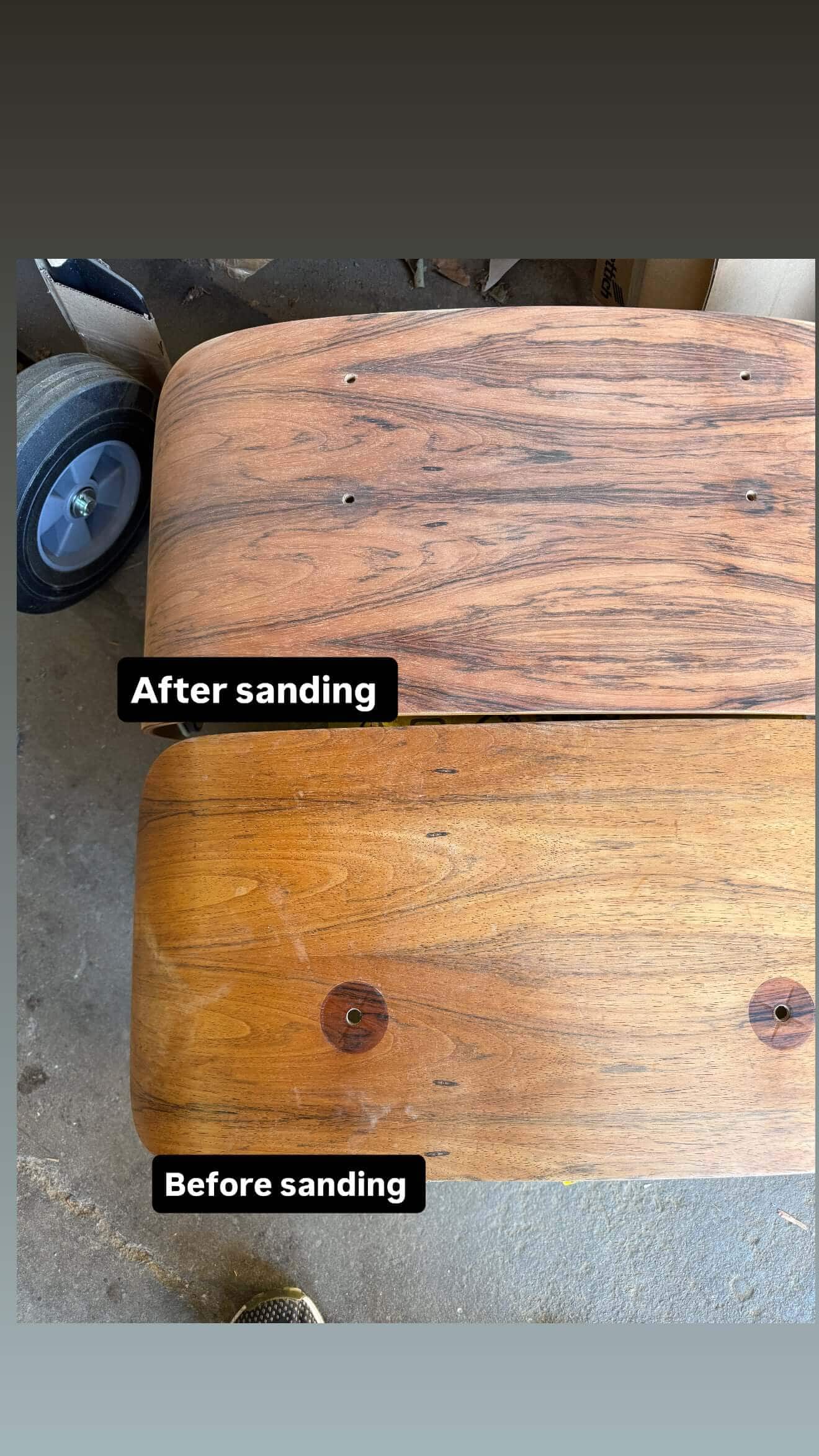
This is precisely why restoration quality matters as much as the piece itself. A William Hinn dresser stripped of its original finish and refinished carelessly is worth a fraction of one where the restoration respects the original material intent.
How to Identify and Acquire a Genuinely Iconic Piece
The market for mid-century modern furniture contains some of the most beautiful objects ever made and some of the most convincing fakes. Knowing the difference requires either expertise or a trusted expert. There is no shortcut.
What to look for:
Maker's marks and labels. Original Herman Miller, Knoll, Carl Hansen, Cassina, and other manufacturer labels are the first line of authentication. Absence isn't disqualifying — labels were often removed — but presence is meaningful.
Construction technique. Authentic vintage pieces were built to specific tolerances and using specific methods. Molded plywood has a particular flex. Joinery from the 1950s has a particular character. If you've handled enough originals, you feel the difference.
Material aging. Real rosewood develops a particular patina over sixty years. Original leather upholstery ages in specific ways. Fiberglass from the 1950s has a different quality than modern reproductions.
Proportions. This is subtle but important. Authorized reissues are often dimensionally faithful. Unlicensed knockoffs frequently aren't — slight changes in scale, in seat depth, in leg angle. If a piece "looks right but feels wrong," trust the feeling.
What to avoid:
Pieces with no provenance and prices that seem too good. Iconic furniture is valuable. Pieces priced as though they aren't, probably aren't what they claim to be.
Sellers who can't tell you where a piece came from. Not in an accusatory sense — many authentic pieces have gaps in their history — but a knowledgeable dealer should be able to tell you what they know and what they don't.
"Vintage style" listings. This phrase, in an online marketplace context, means reproduction.
What we offer at Hobbs Modern:
Every piece we sell has been authenticated, evaluated, and — where appropriate — professionally restored before it reaches you. We document what we know about each piece's history. We don't sell pieces we can't account for. And we're happy to walk you through the authentication of any piece in our collection, because we believe that understanding what you own is part of owning it well.
FAQs
What makes mid-century modern furniture iconic
Iconic mid-century furniture combines a genuinely new idea, perfect cultural timing, radical clarity of form, strong emotional resonance, and a compelling story that carries across generations. Pieces by Eames, Wegner, Saarinen, Nakashima, and Kagan earn iconic status because they solved design problems in ways that have never been surpassed — and gave people a way to talk about why.
How do I know if a piece of vintage furniture is truly iconic or just old?
Ask whether it introduced something genuinely new and whether it still looks right outside its original context. Iconic pieces are still specified by contemporary designers and sought by collectors with no nostalgic attachment to the era. Old furniture that was merely fashionable in its time simply isn't.
Is iconic mid-century furniture a good investment?
Authentic, well-documented vintage furniture by recognized mid-century designers has historically held and appreciated in value, driven by finite supply and growing global demand. The key word is "authentic" — reproductions do not carry investment value.
How does Hobbs Modern authenticate the furniture it sells?
Through maker's marks, material analysis, construction technique, provenance research, and specialist consultation where needed. We document what we know and are transparent about what we don't. We don't sell pieces we can't stand behind.
Why does restoration quality matter?
A poorly restored piece has been damaged twice — once by time and once by the restorer. Professional restoration preserves original materials, respects construction intent, and maintains the patina that makes a vintage piece valuable. It's the difference between a piece that appreciates and one that doesn't.