Table of Contents
When collectors think about Vladimir Kagan, names like Directional, Kagan-Dreyfuss, and Holly Hunt usually come to mind. Yet one of the most important chapters of his career is often overlooked.
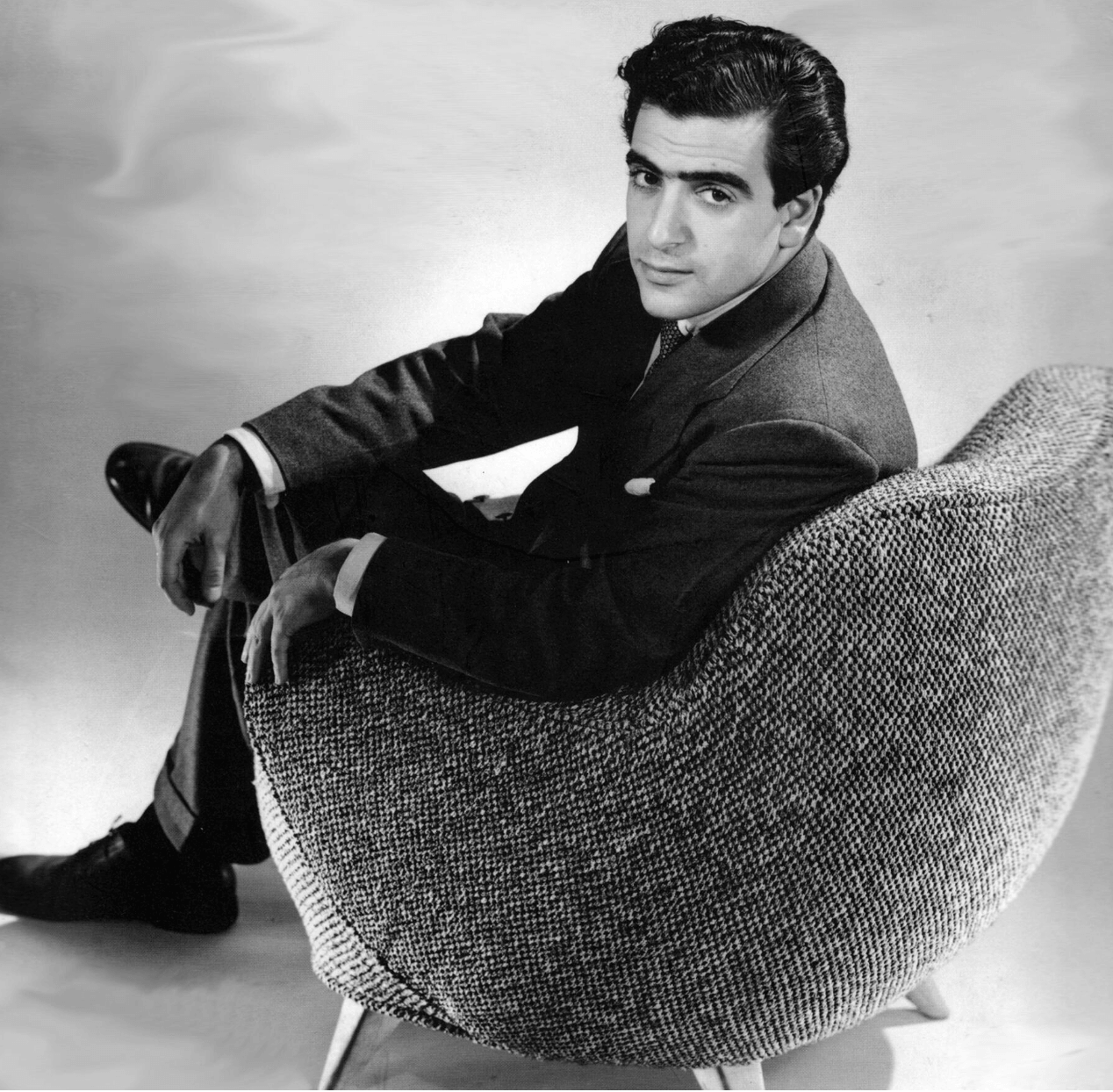
Long before his furniture became synonymous with sculptural modernism, Grosfeld House gave the young designer one of his biggest opportunities—and in doing so helped redefine American luxury furniture during the late 1950s.
For collectors today, understanding Grosfeld House isn’t just an interesting piece of history. It explains why some of the most desirable Vladimir Kagan furniture on the market today bears a different manufacturer’s label.
At Hobbs Modern, we’ve been fortunate to acquire and restore several rare Grosfeld House pieces over the years, including this exceptional Vladimir Kagan dresser:
Rare Vladimir Kagan 6 Drawer Dresser for Grosfeld House, Circa 1955
$29,995.00
A striking expression of American Mid-Century Modern design, this exceptionally rare double dresser by Vladimir Kagan for Grosfeld House is a museum-worthy example of the designer’s groundbreaking approach to sculptural furniture. Designed circa 1955, this impressive case piece showcases the… read more

From Hollywood Glamour to Modern Design
Founded in New York during the early twentieth century, Grosfeld House built its reputation producing exceptionally crafted luxury furniture for affluent American homes.
Early Grosfeld designs leaned toward Hollywood Regency, Art Deco, and refined traditional styling. Their furniture appeared in elegant residences, luxury hotels, and the homes of celebrities and business leaders. Every piece emphasized quality construction, premium materials, and sophisticated craftsmanship.
By the mid-1950s, however, American tastes were changing.
The heavy formal furniture of previous decades was giving way to cleaner lines and more contemporary interiors. Rather than resisting the shift, Grosfeld House embraced it.
Their solution was ambitious.
Instead of asking existing designers to modernize traditional furniture, they partnered with one of America’s most exciting young talents: Vladimir Kagan.
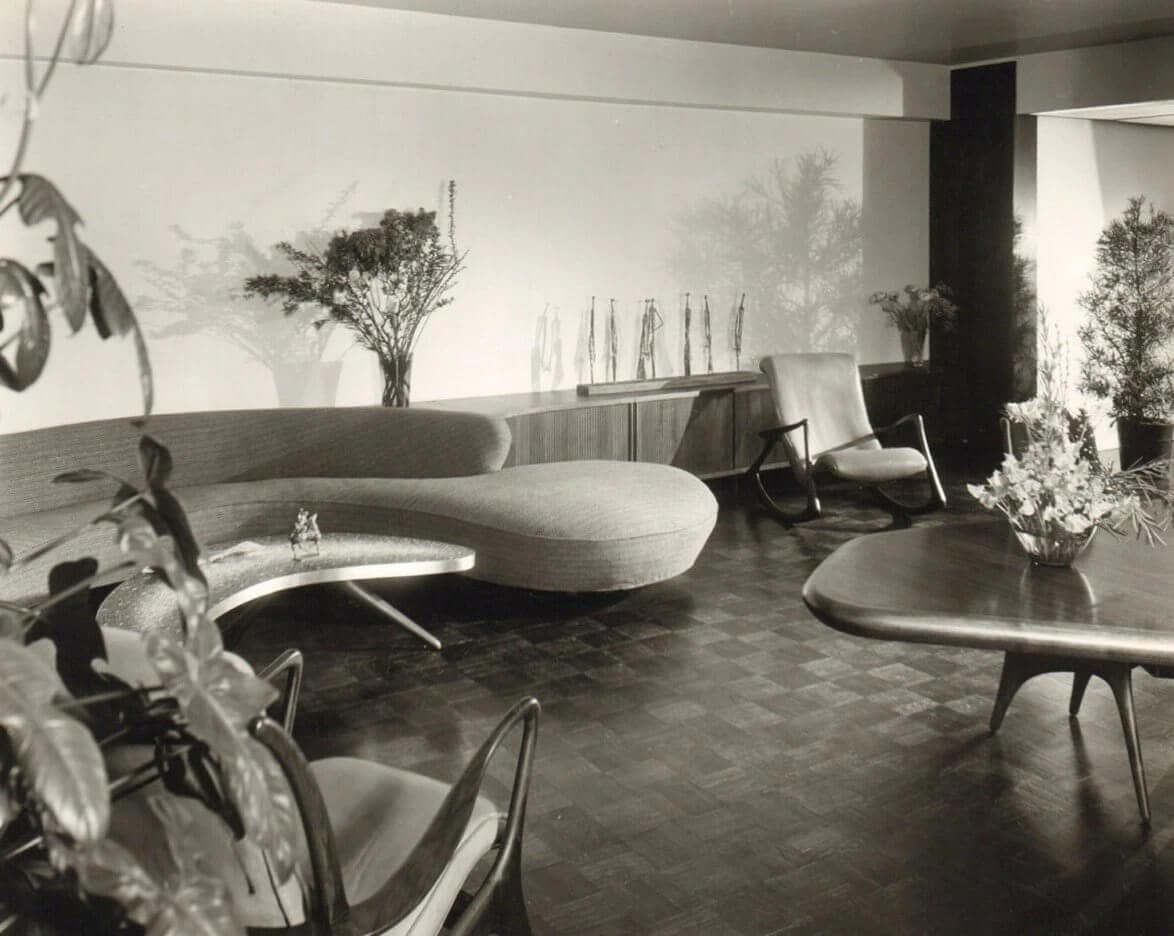 Photo: Vladimir Kagan Design Group
Vladimir Kagan’s Breakthrough
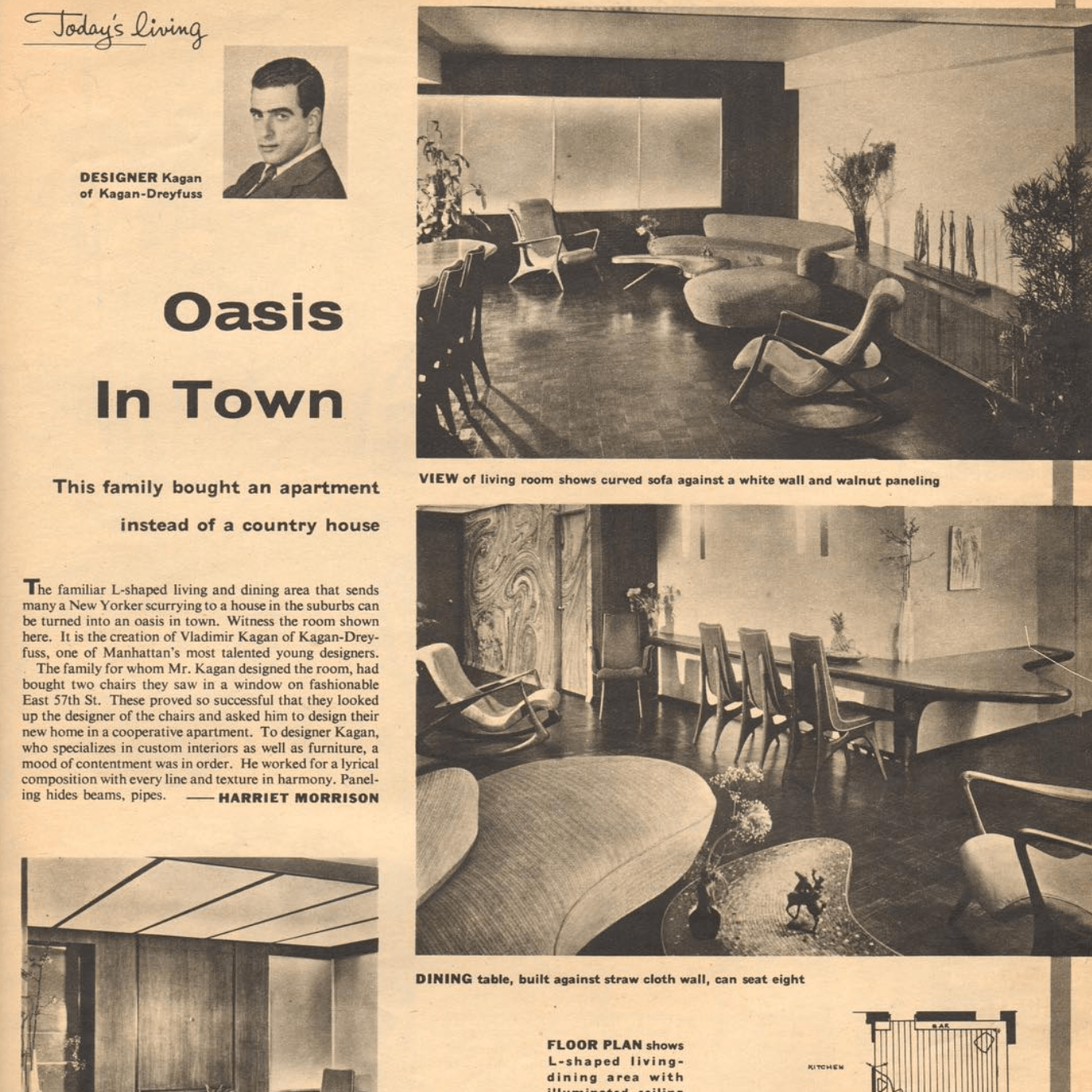
By the time Grosfeld House approached him, Vladimir Kagan was already experimenting with furniture unlike anything being produced in America.
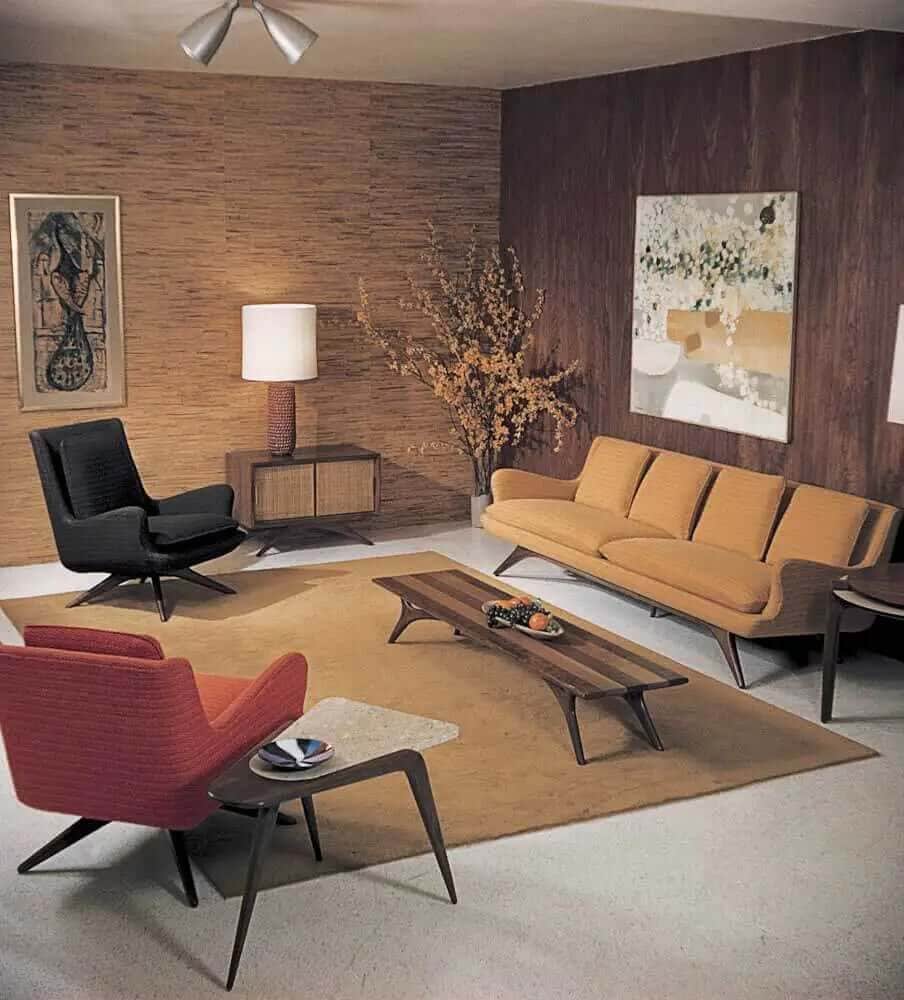
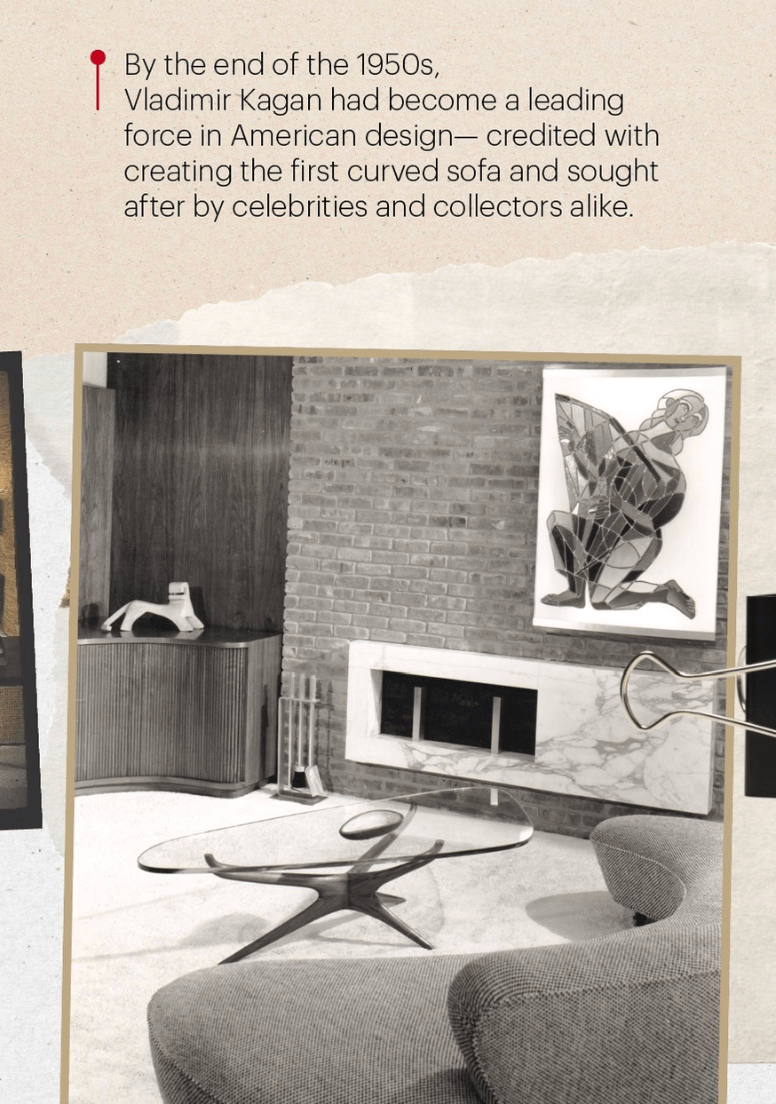
While most manufacturers favored straight lines and rectangular forms, Kagan designed furniture that seemed almost alive. Sofas curved gracefully around a room. Cabinets floated on sculptural legs. Tables abandoned rigid geometry in favor of flowing organic forms.
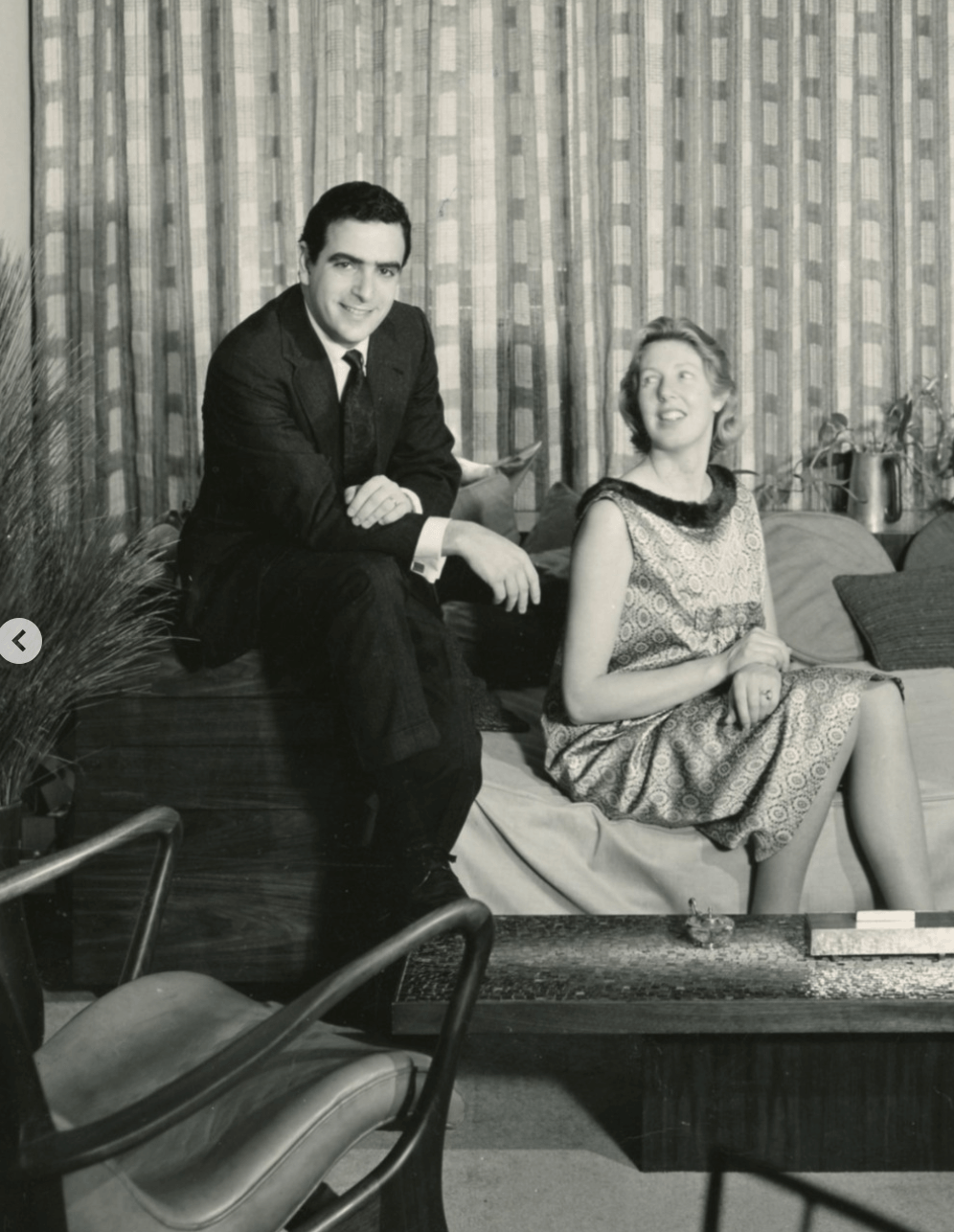 This archival black-and-white photograph captures legendary mid-century modern furniture designer Vladimir Kagan and his wife, the celebrated embroidery and needlepoint artist Erica Wilson.
His philosophy was simple:
Furniture should complement how people naturally move through space rather than forcing people to adapt to furniture.
That idea was revolutionary.
Grosfeld House recognized its potential.
The partnership would become one of the defining collaborations of American Mid-Century Modern furniture.
Rare Pair of Vladimir Kagan Nightstands for Grosfeld House, Circa 1955
$11,995.00
An extraordinary and seldom-seen pair of Vladimir Kagan nightstands for Grosfeld House, these sculptural bedside cabinets represent one of the finest examples of American Mid-Century Modern design from the 1950s. Designed circa 1955, they embody Kagan’s revolutionary approach to furniture—where… read more

Nearly 150 Designs
Depending on the source, Vladimir Kagan designed between approximately 150 pieces for Grosfeld House, making it one of the largest collections he ever created for a single manufacturer.
That volume alone is remarkable.
The collection included:
- Dressers
- Credenzas
- Dining tables
- Chairs
- Lounge seating
- Cabinets
- Bedroom furniture
- Coffee tables
- Occasional tables
Rather than producing isolated statement pieces, Grosfeld House and Kagan created complete environments.
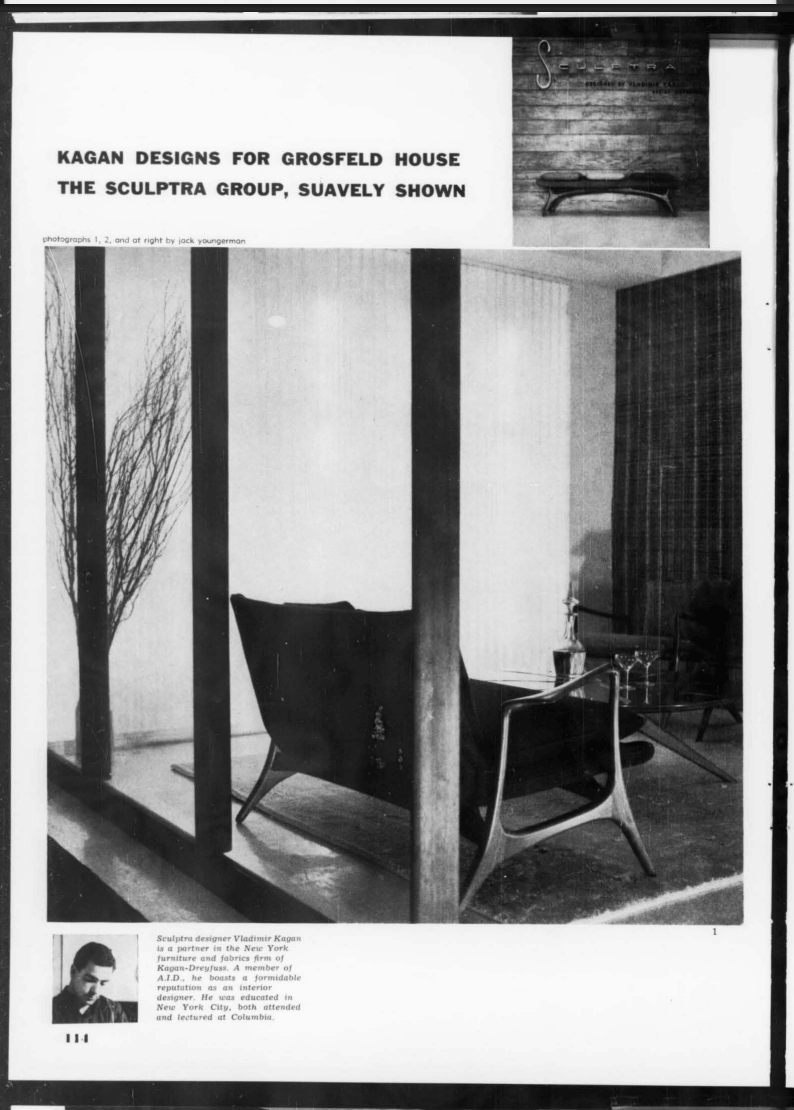
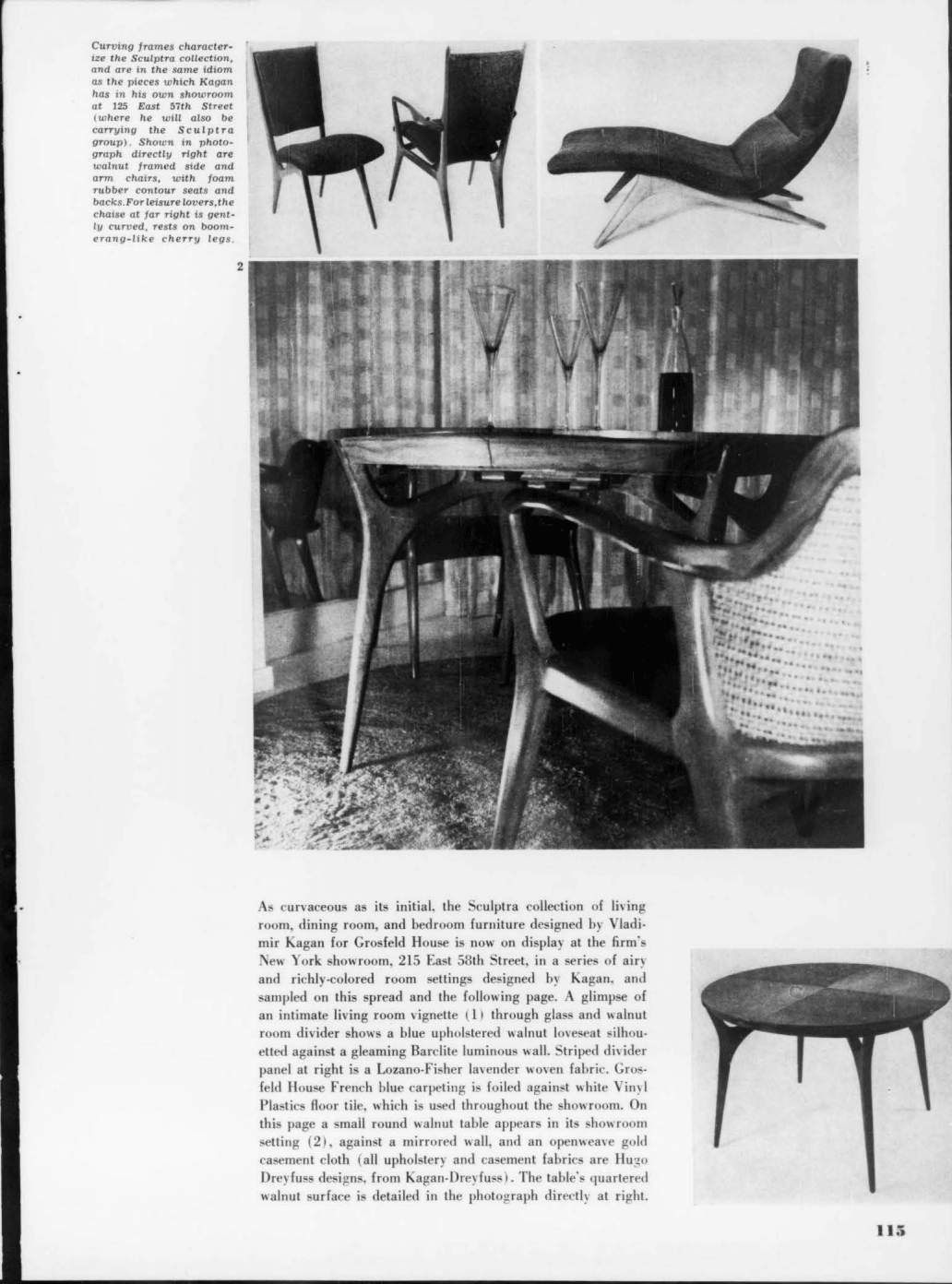
In 1957 and 1958, the company introduced Kagan’s new Sculptra Collection, marketing it as the “new look” of Grosfeld House. Contemporary design magazines showcased entire rooms furnished with his organic walnut furniture, emphasizing flowing forms, curved frames, and modern living.
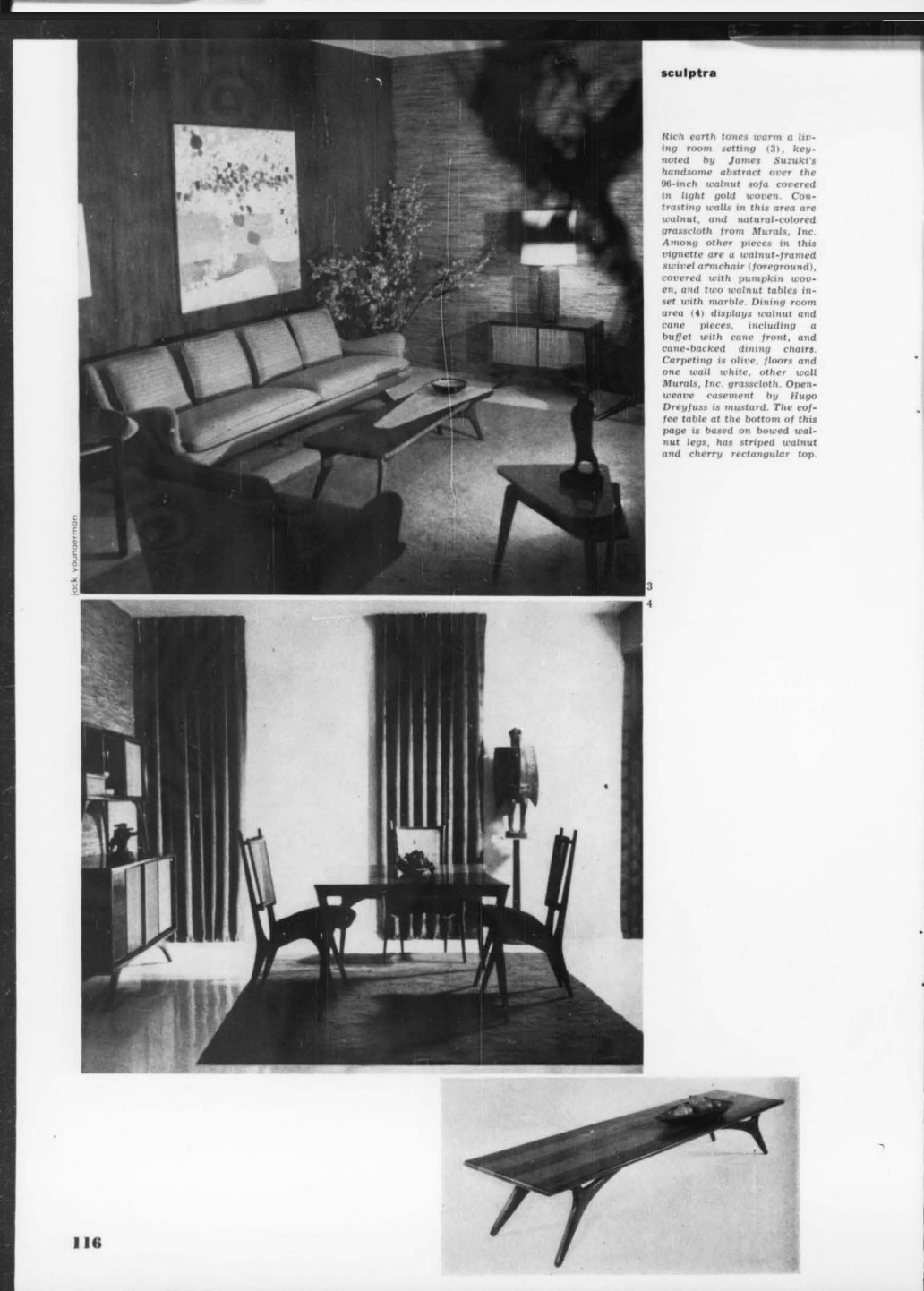
Discover the history of Grosfeld House, the influential American luxury furniture manufacturer that helped launch Vladimir Kagan’s career. Learn why his sculptural Mid-Century Modern designs for Grosfeld House remain among the most collectible pieces today.
For many consumers, this was their first introduction to Vladimir Kagan.
Rare Vladimir Kagan Three-Drawer Dresser for Grosfeld House, circa 1955
$14,995.00
An exceptional and highly sculptural three-drawer dresser designed by Vladimir Kagan for Grosfeld House, circa 1955. The piece beautifully captures Kagan’s early approach to furniture design, combining the functionality of traditional case furniture with the sweeping, organic forms that would become… read more

An Instant Success
The response was immediate.
Interior design publications featured the new collections extensively, while Grosfeld House advertisements highlighted Kagan by name—something manufacturers did only for designers they believed could sell furniture on their own reputation.
The furniture stood apart because it looked unlike anything else available.
Rounded edges replaced hard corners.
Cabinets appeared to float.
Legs curved gracefully beneath cases.
Instead of decorating furniture with ornament, Kagan allowed the shape itself to become the decoration.
That philosophy feels commonplace today.
In 1957, it was groundbreaking.
A Philosophy Unlike Anyone Else
Vladimir Kagan’s distinctive approach wasn’t borrowed from the prevailing trends of the 1950s—it was shaped by his early experiences working in his father’s cabinet shop. There he developed a deep respect for craftsmanship, proportion, and the expressive possibilities of wood, while learning that exceptional furniture begins with understanding both a material’s strengths and its limitations. Although largely self-taught as a designer, Kagan believed that his lack of formal business training forced him to invent his own path, giving him the freedom to challenge convention rather than follow it. He deliberately avoided the growing movement toward industrialized furniture in America, instead admiring the refinement of Danish Modern designers such as Finn Juhl, Arne Vodder, and Hans J. Wegner. Yet Kagan was equally determined not to imitate them. Drawing inspiration from the organic forms found in nature, he developed a design language that was sculptural without becoming decorative. As he later explained, he wanted his furniture to function “like a piece of sculpture,” with every sweeping curve serving a structural purpose rather than existing as ornament. That philosophy would become the defining characteristic of his work for Grosfeld House and, ultimately, his entire career.
Why Grosfeld House Furniture Still Matters
Today, many collectors immediately recognize Vladimir Kagan’s famous Serpentine sofas or Contour lounge chairs.
His Grosfeld House case pieces, however, remain one of the hidden treasures of American Mid-Century Modern furniture.
They combine several qualities collectors actively seek:
Sculptural Design
Few storage pieces possess such dramatic presence while remaining highly functional.
Exceptional Craftsmanship
Grosfeld House built furniture to luxury standards.
Heavy hardwood construction, beautifully veneered surfaces, and meticulous joinery distinguish these pieces from many mass-produced contemporaries.
Relative Rarity
Compared to Herman Miller or Directional production, far fewer Grosfeld House pieces survive today.
Many were purchased by affluent homeowners who viewed them as luxury furniture rather than collectible design, making original examples increasingly difficult to locate.
Historical Importance
These designs represent the moment Vladimir Kagan emerged from promising young designer to nationally recognized modernist.
Without Grosfeld House, it’s difficult to imagine the trajectory of his later career.
Our Vladimir Kagan for Grosfeld House Dresser
One of our favorite examples perfectly illustrates why these pieces remain so desirable.
The dresser’s silhouette is unmistakably Kagan.
Its sculptural base gives the cabinet an almost floating appearance, while the subtle curvature of the frame softens what could otherwise be a simple rectangular form.
Rather than relying on excessive decoration, every detail serves the overall composition.
The proportions feel balanced from every angle.
The walnut grain becomes part of the design itself.
This restraint is exactly what separates great Mid-Century Modern furniture from ordinary furniture of the era.
Rare Vladimir Kagan 6 Drawer Dresser for Grosfeld House, Circa 1955
$29,995.00
A striking expression of American Mid-Century Modern design, this exceptionally rare double dresser by Vladimir Kagan for Grosfeld House is a museum-worthy example of the designer’s groundbreaking approach to sculptural furniture. Designed circa 1955, this impressive case piece showcases the… read more
Collecting Grosfeld House Today
As scholarship surrounding Vladimir Kagan continues to grow, collectors have begun paying closer attention to his early collaborations.
Grosfeld House furniture occupies an especially interesting place in that history.
These pieces capture Kagan before many of his most famous designs became icons, yet they already display nearly every hallmark that would define his career:
- Organic forms
- Sculptural silhouettes
- Floating cabinetry
- Architectural proportions
- Timeless elegance
For serious collectors, they’re among the most compelling opportunities remaining within American Mid-Century Modern furniture.
Why Hobbs Modern Loves Grosfeld House
At Hobbs Modern, we believe the best furniture tells a story.
Grosfeld House represents more than another furniture manufacturer.
It represents a company willing to take a chance on an innovative young designer whose ideas challenged conventional thinking.
That gamble paid off.
The furniture remains remarkably fresh nearly seventy years later, proving that truly great design isn’t about following trends—it’s about creating forms so beautiful they never become dated.
Whether you’re furnishing an entire home or searching for a single museum-quality statement piece, Vladimir Kagan’s work for Grosfeld House remains one of the most sophisticated expressions of American Mid-Century Modern design ever produced.
And in our opinion, collectors are only beginning to appreciate just how important these remarkable pieces really are.
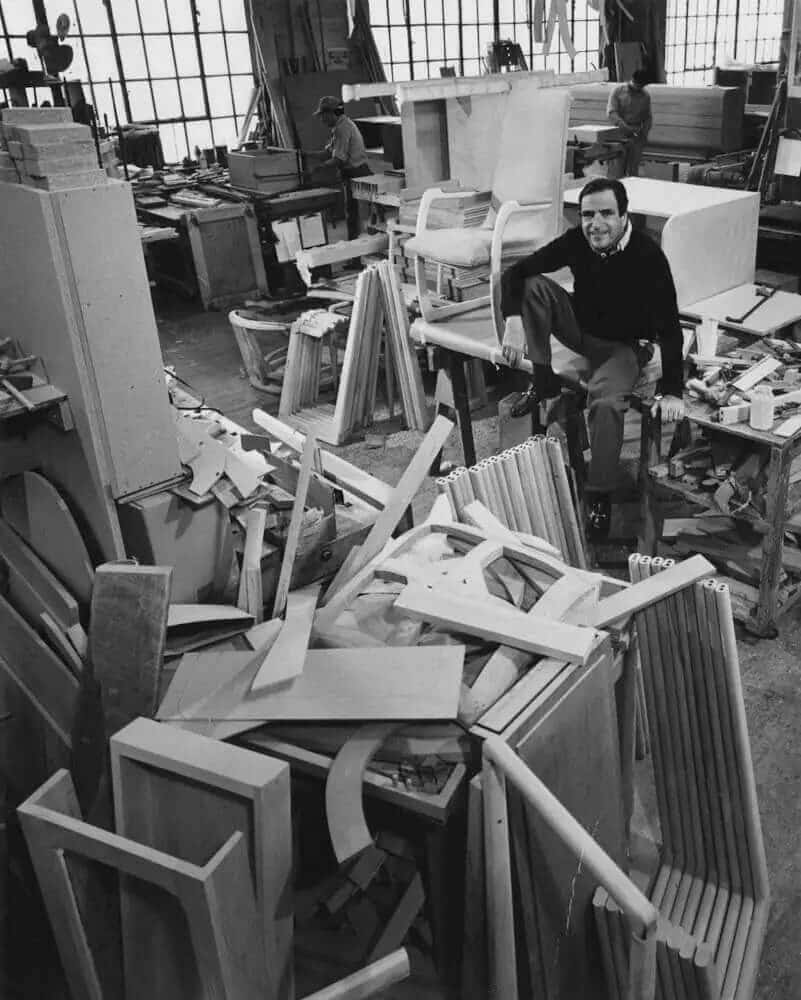 Kagan in his workshop
 FAQs
What was Grosfeld House?
Grosfeld House was a New York luxury furniture manufacturer known for producing high-quality American furniture from the early twentieth century through the mid-century era. While originally associated with Hollywood Regency and Art Deco styles, the company embraced modern design during the 1950s through collaborations with designers like Vladimir Kagan.
Did Vladimir Kagan design furniture for Grosfeld House?
Yes. Vladimir Kagan designed a substantial body of work for Grosfeld House in the late 1950s. Estimates range from roughly 50 pieces to nearly 150 individual designs, including dressers, credenzas, seating, dining furniture, and occasional tables.
What is the Sculptra Collection?
The Sculptra Collection was Vladimir Kagan’s landmark furniture line for Grosfeld House, introduced in 1957. It featured sculptural walnut furniture with flowing organic forms and became one of the defining modern furniture collections of the era.
Why is Vladimir Kagan for Grosfeld House furniture valuable?
Collectors value these pieces for their rarity, exceptional craftsmanship, historical importance, and unmistakable sculptural design. They represent an early and influential period in Vladimir Kagan’s career.
How can I identify authentic Vladimir Kagan furniture made by Grosfeld House?
Original pieces typically retain Grosfeld House labels or construction details consistent with the manufacturer’s production methods. Provenance, documented catalogs, and expert evaluation are often necessary for confirmation, as many designs have been copied over the decades.