Table of Contents
- Intro
- Flat and Low-Pitched Rooflines
- Open Floor Plans and Seamless Indoor-Outdoor Living
- Expansive Glass, Natural Light, and Transparency
- Integration of Organic and Man-Made Materials
- Function-First Design Philosophy
- Farnsworth House — Ludwig Mies van der Rohe
- Fallingwater — Frank Lloyd Wright
- The Glass House — Philip Johnson
- Eames House (Case Study House #8)
- Mid-Century Modern Architecture
- Mid-Century Modern Design
- FAQs
Intro
Few architectural styles have captured the imagination of homeowners, collectors, designers, and architects quite like mid-century modern architecture. More than seventy years after its emergence, the style continues to influence new construction, interior design, furniture, and even the way we think about living in our homes.
At Hobbs Modern, we spend our days restoring authentic mid-century furniture by legendary designers such as Charles and Ray Eames, George Nelson, Hans Wegner, Edward Wormley, Vladimir Kagan, Ib Kofod-Larsen, Finn Juhl, George Nakashima, and Sergio Rodrigues. These iconic furnishings were never meant to exist in isolation—they were created to complement an entirely new vision of architecture.
To truly appreciate mid-century modern furniture and design, it’s important to understand the architectural movement that inspired it.
This guide explores the origins, defining characteristics, famous examples, and enduring appeal of mid-century modern architecture.
What Is Mid-Century Modern Architecture?
Mid-century modern architecture is an architectural movement that flourished roughly between 1945 and 1969, although many of its ideas began forming during the late 1930s.
Rather than focusing on decorative ornamentation, mid-century modern architecture emphasized:
- Simplicity
- Functionality
- Clean geometric forms
- Honest materials
- Natural light
- Integration with nature
- Efficient living
The philosophy was revolutionary for its time.
Instead of grand columns, carved moldings, and formal rooms, architects envisioned homes where families could gather in open spaces surrounded by sunlight and gardens.
The house itself became a machine for comfortable living—beautiful because it functioned beautifully.
Today, many people mistakenly associate “mid-century modern” only with furniture. In reality, the furniture was designed as part of a much larger architectural vision.
A Brief History: Where Did Mid-Century Modern Come From?
The movement emerged during one of the most optimistic periods in American history.
Following World War II, millions of soldiers returned home to unprecedented economic prosperity. New suburbs expanded rapidly, homeownership increased dramatically, and advances in manufacturing made innovative building materials more affordable than ever.
Architects believed the future could be designed.
New homes would be:
- brighter
- healthier
- more affordable
- more connected to nature
- better suited for modern family life
This optimism fueled one of the most influential architectural movements of the twentieth century.
Bauhaus Roots and Post-War Optimism
While mid-century modern architecture feels distinctly American, many of its ideas originated in Europe.
The Bauhaus School, founded in Germany in 1919 by Walter Gropius, rejected unnecessary decoration and promoted the unity of architecture, art, and industrial design.
When political unrest forced many Bauhaus designers to emigrate before World War II, they brought these revolutionary ideas to America.
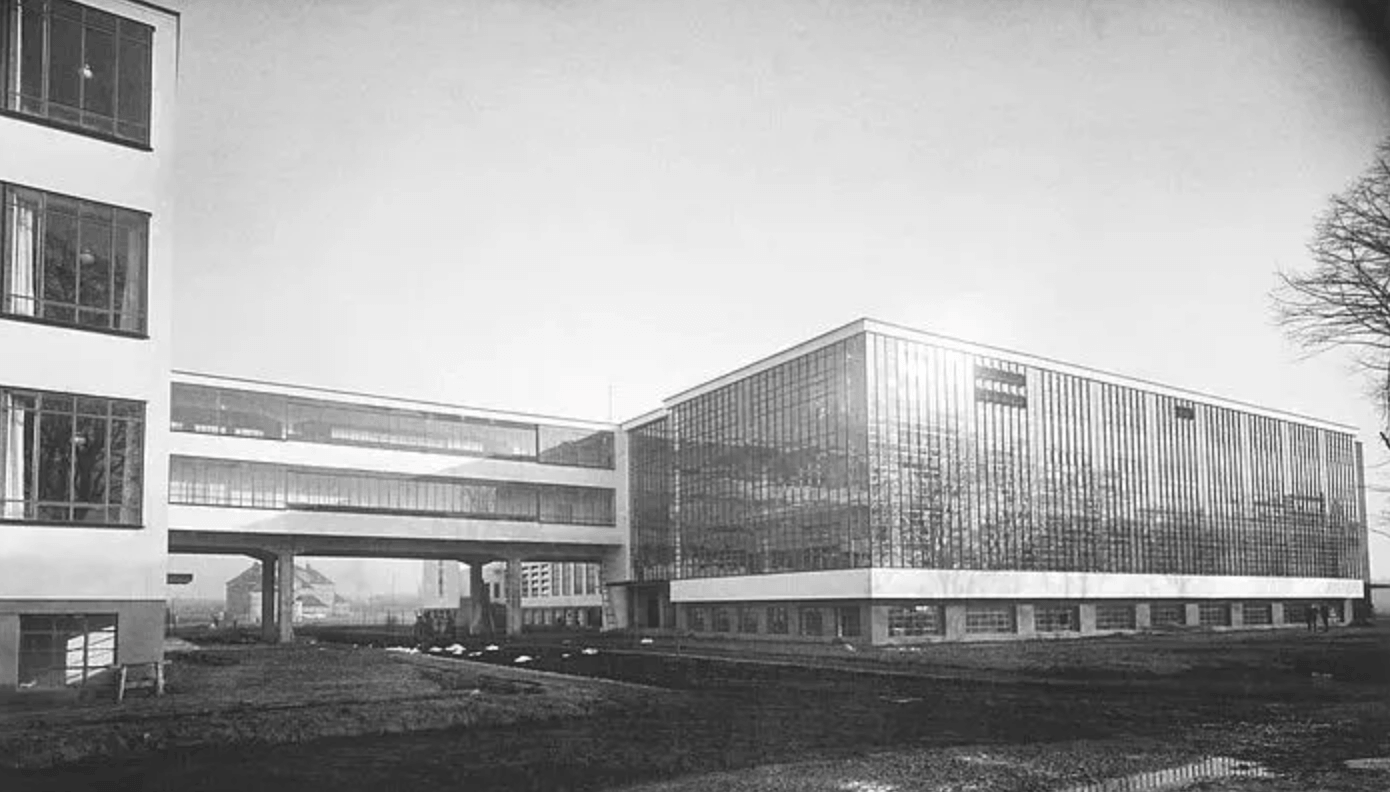 Bauhaus school, founded in 1919
 Architects including:
- Walter Gropius
- Marcel Breuer
- Ludwig Mies van der Rohe
introduced European modernism to American universities and architectural practice.
Their emphasis on simplicity merged with America’s post-war optimism, technological innovation, and abundant natural landscapes to create what we now recognize as mid-century modern architecture.
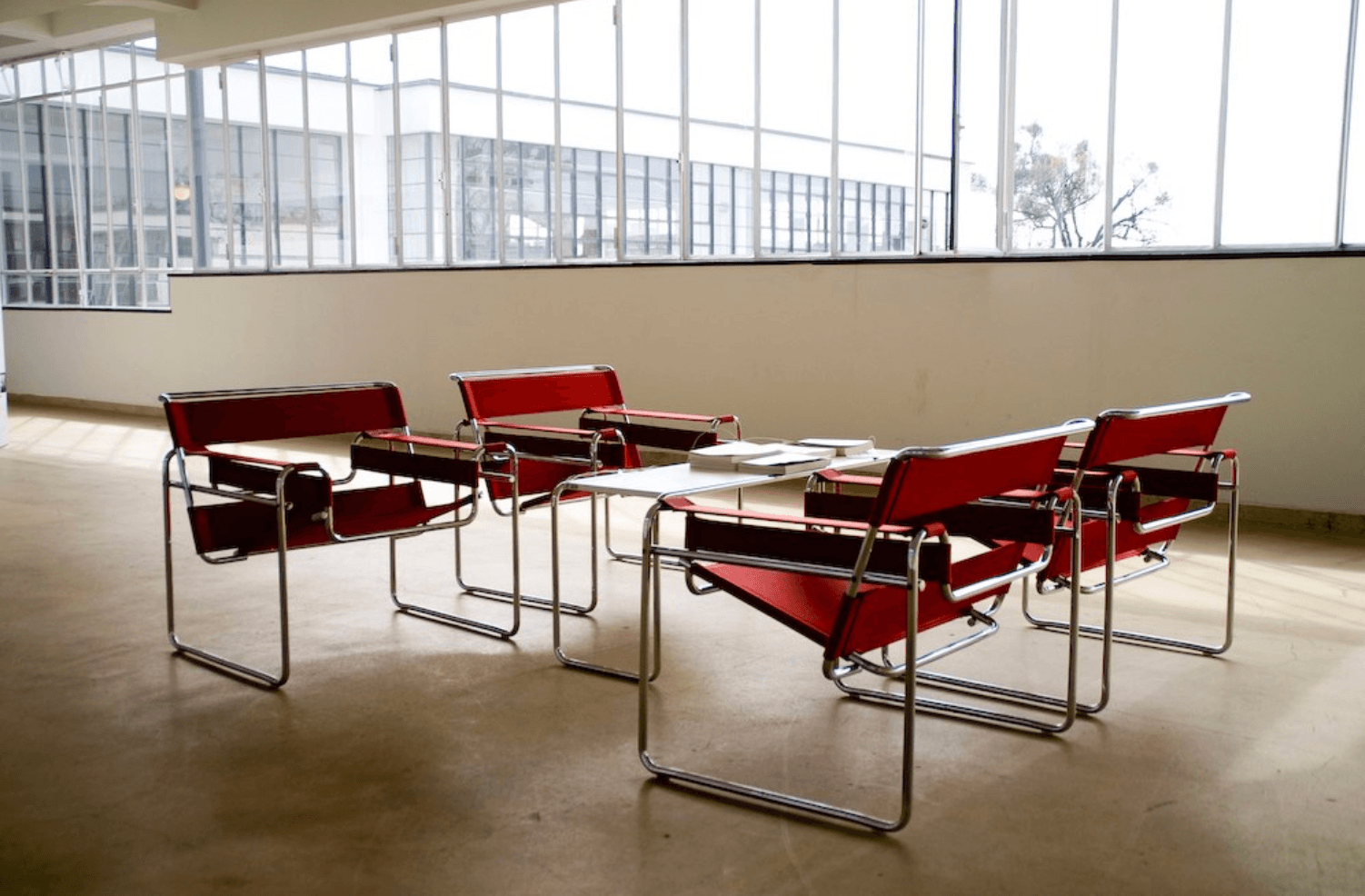 Photograph of Wassily Chairs in the Bauhaus building in Dessau, taken by Kai ‘Oswald’ Seidler in 2008. Beautiful architectural contextualization of the object.
 The California Case Study House Program
No program influenced residential mid-century modern architecture more than the Case Study House Program.
Beginning in 1945, Arts & Architecture Magazine commissioned leading architects to design affordable, efficient homes using modern industrial materials.
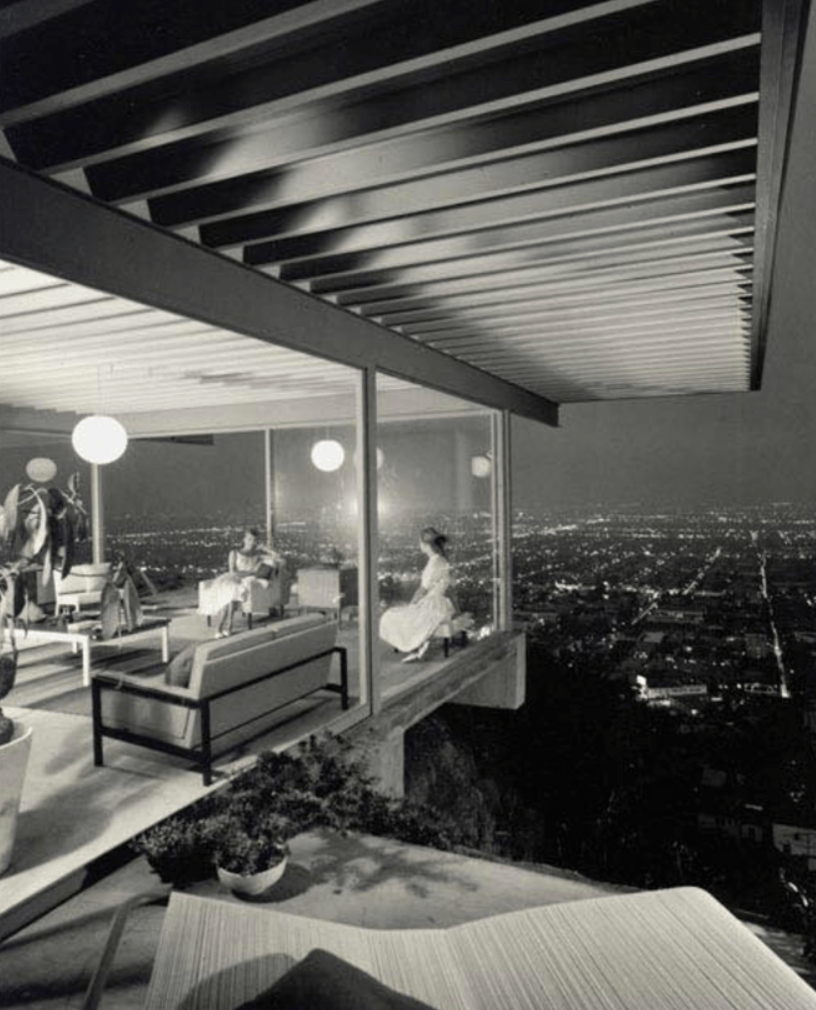
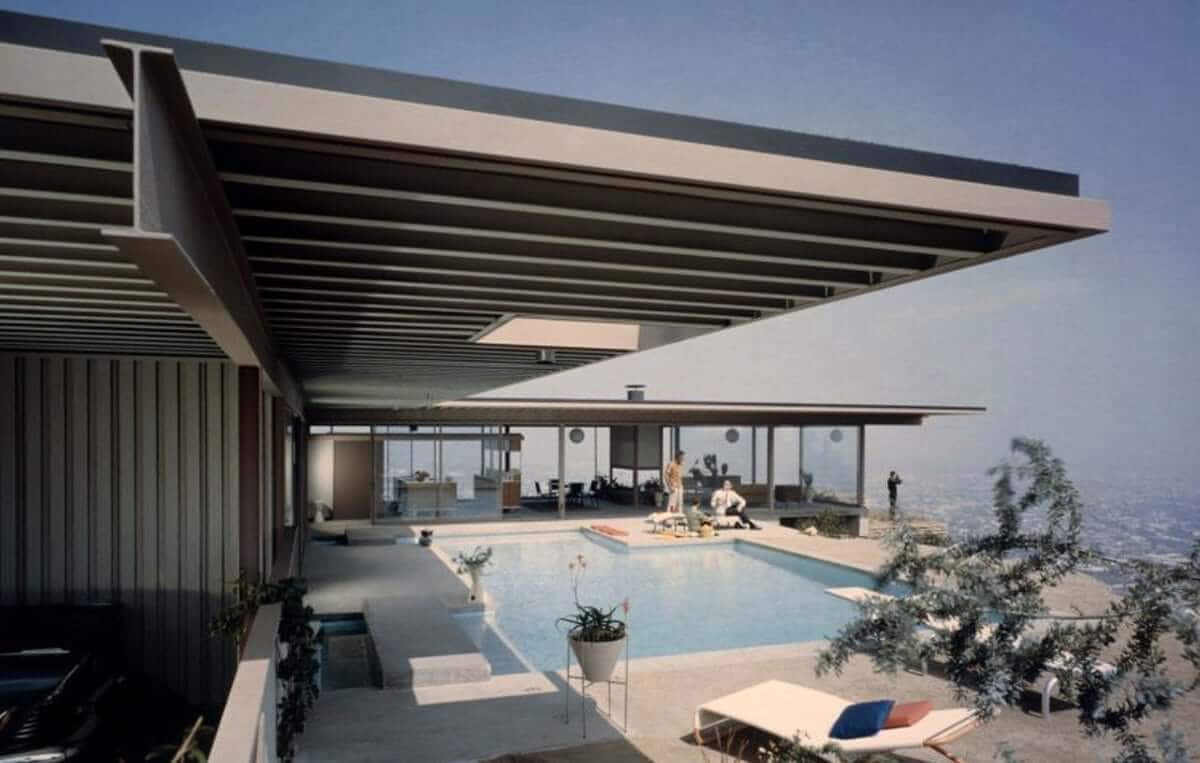 Study House Case Study House #22, by the architect Pierre Koenig, on the West Hollywood hills, 1959-60)
The goals were ambitious:
- Faster construction
- Better use of space
- New building technologies
- Comfortable family living
- Affordable modern homes
Architects including:
- Charles and Ray Eames
- Pierre Koenig
- Craig Ellwood
- Richard Neutra
- Raphael Soriano
created homes that continue to inspire architects today.
Many remain among the most photographed houses in the world.
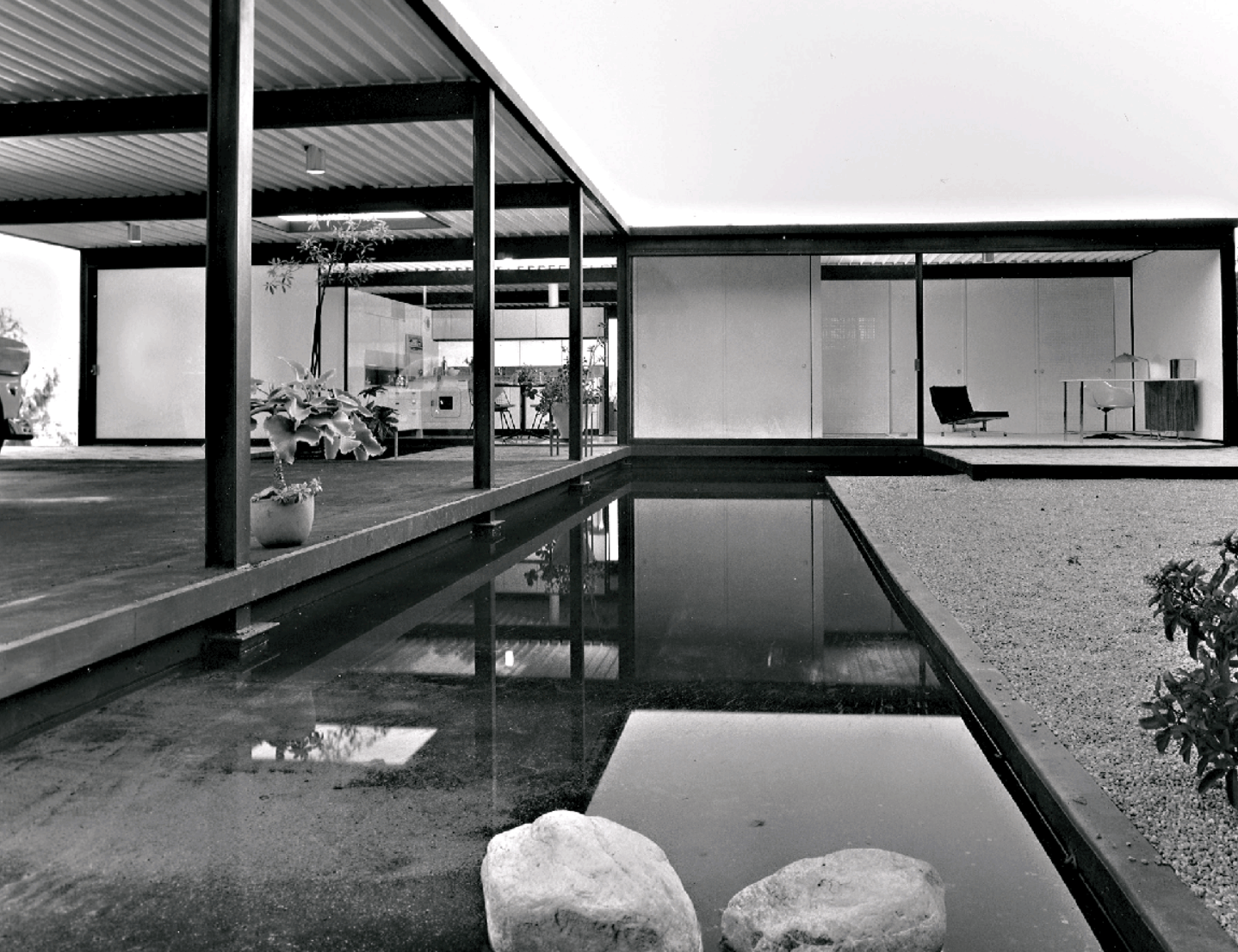 Architect Pierre Koenig, 1958-1960
West Hollywood
Defining Characteristics of Mid-Century Modern Architecture
Although every architect interpreted the movement differently, several design principles appear consistently throughout the finest examples.
 Flat and Low-Pitched Rooflines
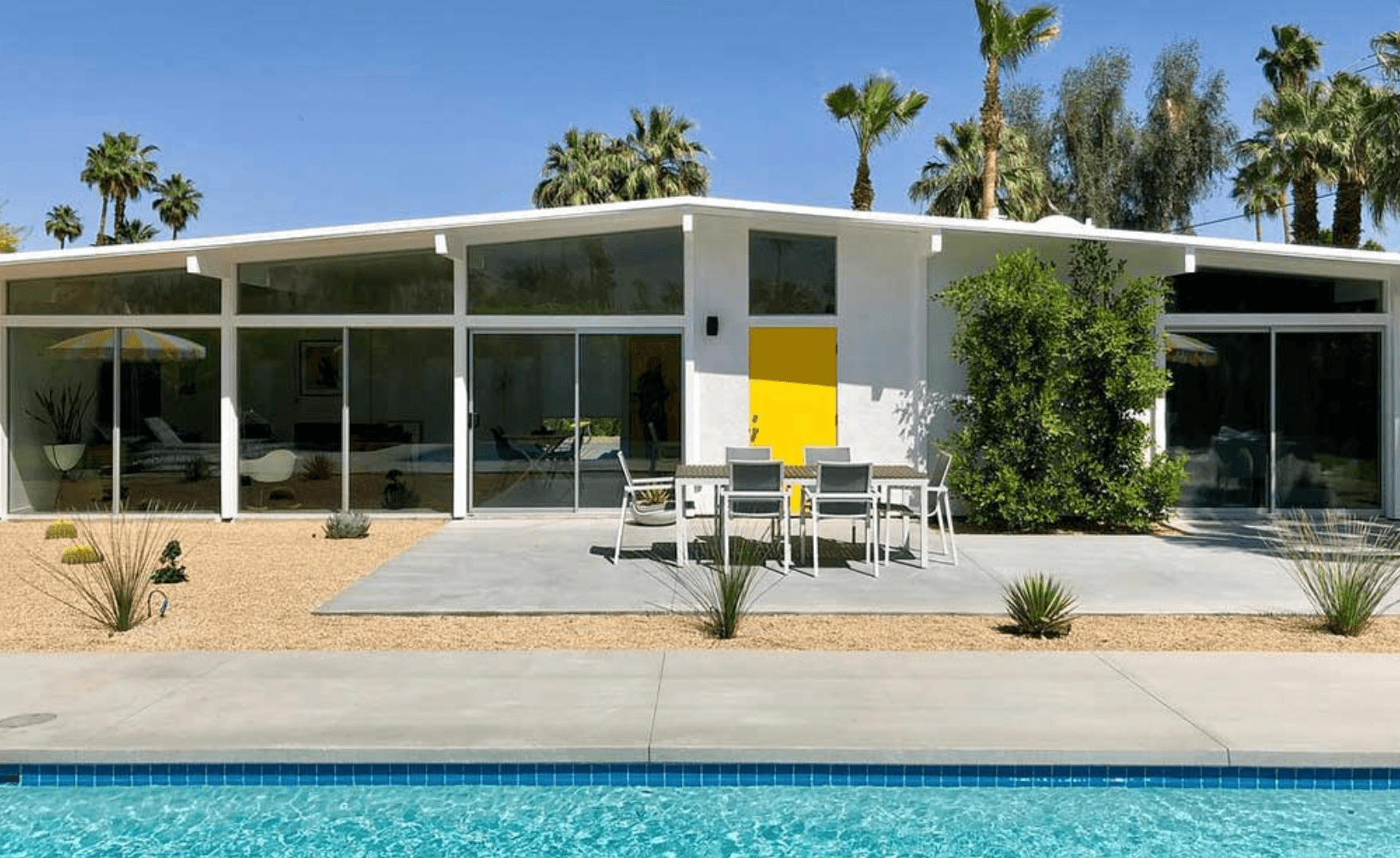
One of the easiest ways to recognize a mid-century modern house is its horizontal profile.
Rather than steep roofs reaching skyward, architects favored:
- flat roofs
- butterfly roofs
- gentle low-pitched rooflines
- dramatic cantilevers
- extended roof overhangs
These long horizontal lines helped buildings appear integrated with the surrounding landscape instead of dominating it.
Open Floor Plans and Seamless Indoor-Outdoor Living
Prior generations divided homes into many small rooms.
Mid-century architects questioned this arrangement.
Instead, kitchens flowed into dining rooms, dining rooms opened into living areas, and entire walls disappeared behind sliding glass doors.
Patios became outdoor living rooms.
Courtyards became extensions of the home.
The boundaries between inside and outside nearly vanished.
This concept remains one of the movement’s most influential contributions to contemporary residential design.
Expansive Glass, Natural Light, and Transparency
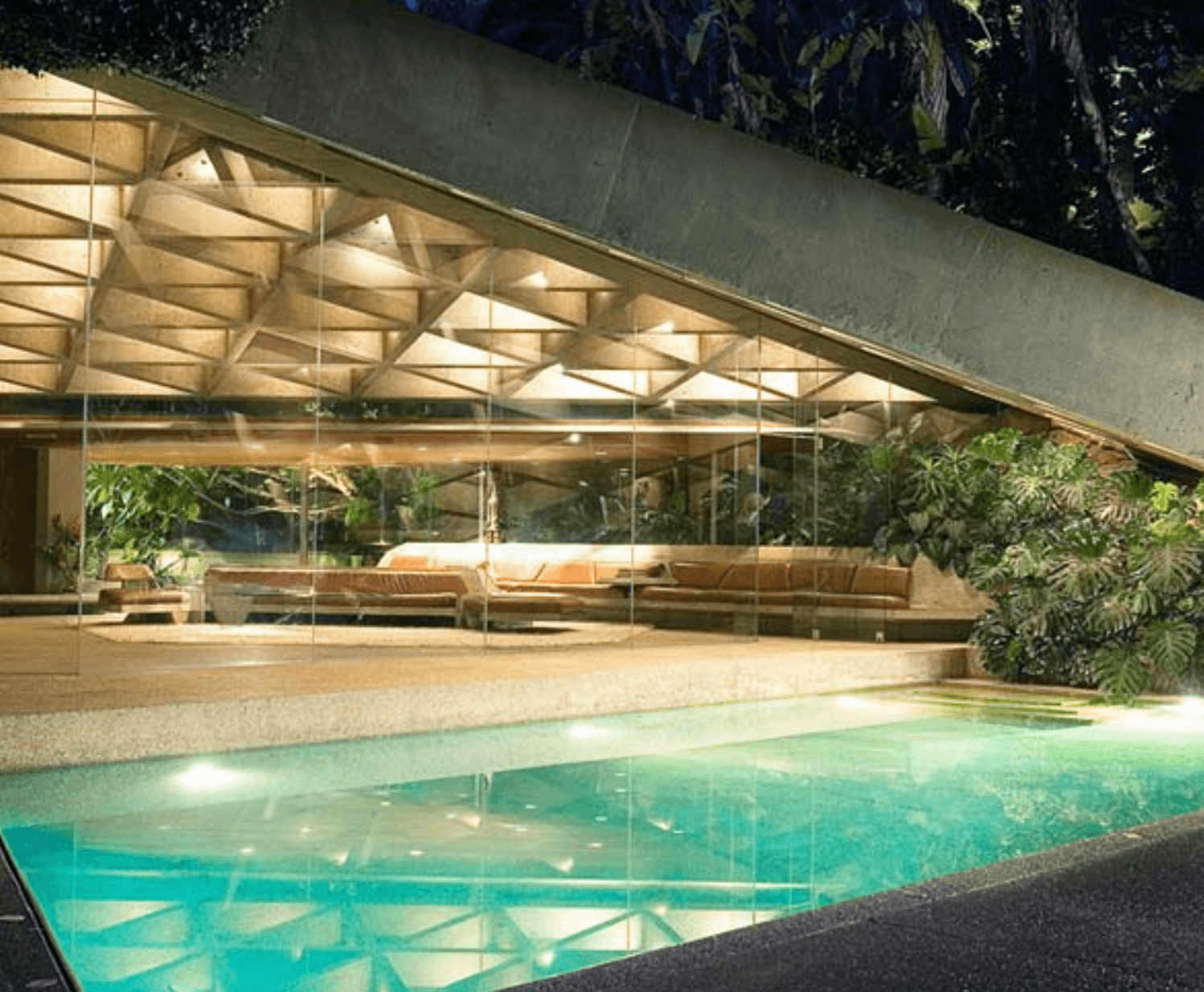
Glass became one of the defining materials of the era.
Large windows accomplished several goals:
- abundant daylight
- panoramic landscape views
- passive solar heating
- visual openness
- stronger connection with nature
Many homes used floor-to-ceiling glass walls that made the landscape feel like another room.
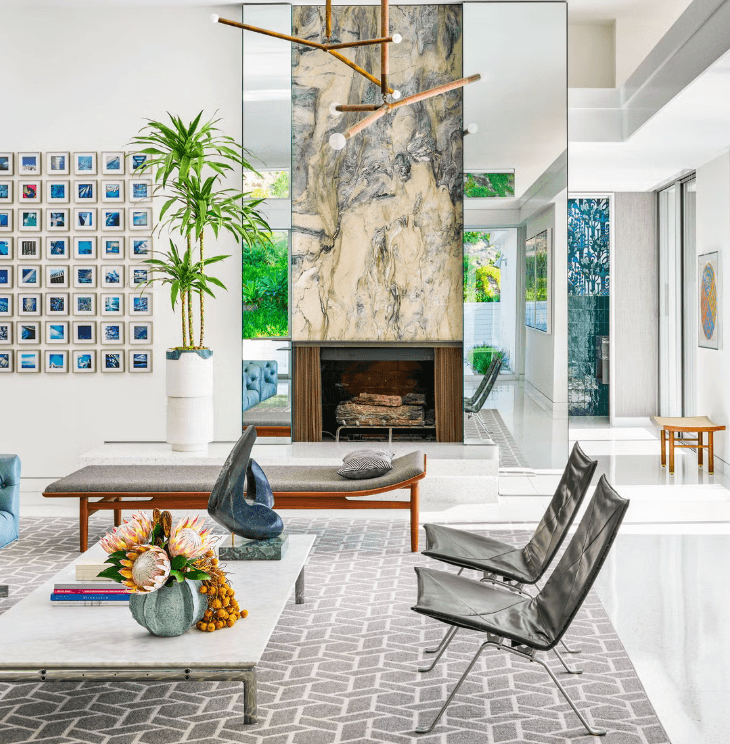
Integration of Organic and Man-Made Materials
Mid-century architects celebrated contrast.
Warm natural materials often appeared beside industrial ones.
Typical combinations included:
- walnut and steel
- teak and concrete
- stone fireplaces with glass walls
- brick paired with aluminum
- exposed wood ceilings with structural steel
Rather than hiding construction materials, architects allowed them to become part of the home’s beauty.
Function-First Design Philosophy
Perhaps no phrase better captures mid-century modern architecture than:
Form follows function.
Every design decision served a purpose.
Decorative trim disappeared.
Ornament became unnecessary.
Beauty emerged through:
- proportion
- craftsmanship
- materials
- engineering
- thoughtful planning
This philosophy extended directly into the furniture designed for these homes.
Iconic Mid-Century Modern Architecture Examples
Some buildings have become enduring symbols of the movement.
These masterpieces continue attracting architects, designers, and enthusiasts from around the world.
Farnsworth House — Ludwig Mies van der Rohe
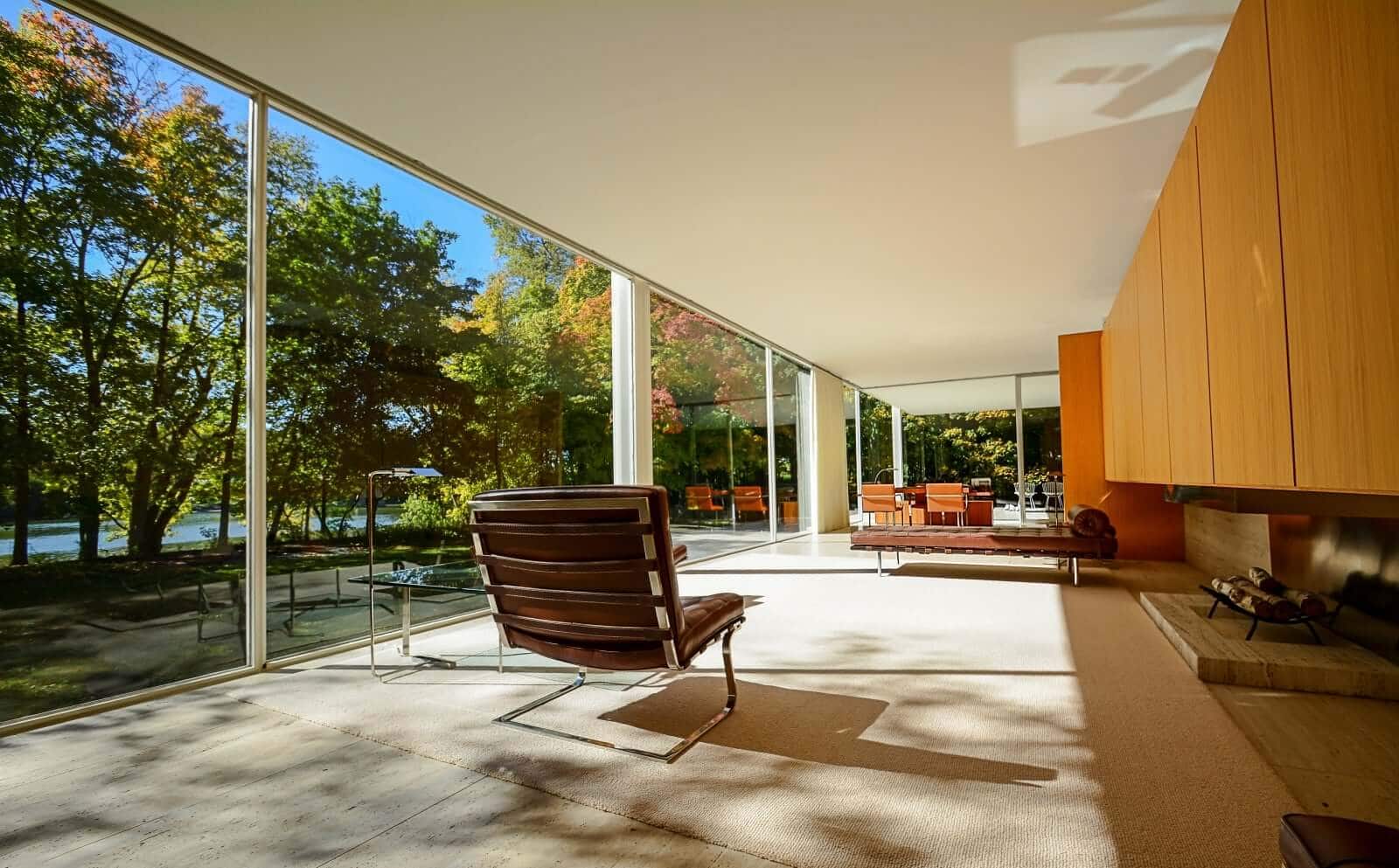
Completed in 1951 outside Chicago, the Farnsworth House reduced architecture to its purest form.
A delicate steel frame supports floating floor and roof planes wrapped almost entirely in glass.
Its radical transparency challenged traditional notions of shelter and demonstrated that simplicity could possess extraordinary elegance.
Fallingwater — Frank Lloyd Wright
Although designed slightly earlier than the classic mid-century period, Fallingwater profoundly influenced later architects.
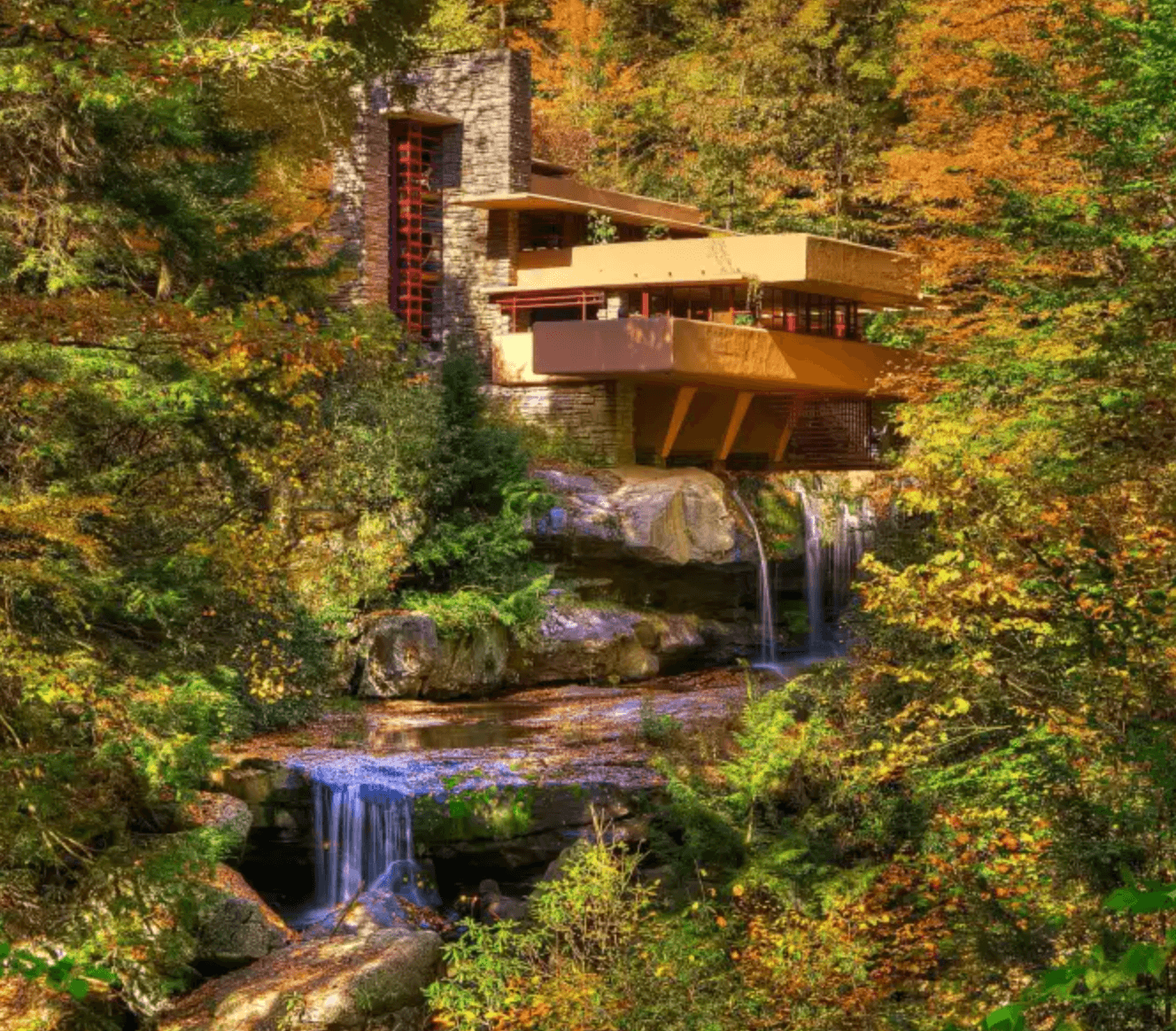
Rather than sitting beside the waterfall, Wright placed the home directly above it.
Cantilevered terraces extend dramatically into the landscape, blurring architecture and nature more completely than almost any home ever built.
Its organic philosophy became foundational to mid-century modern design.
The Glass House — Philip Johnson
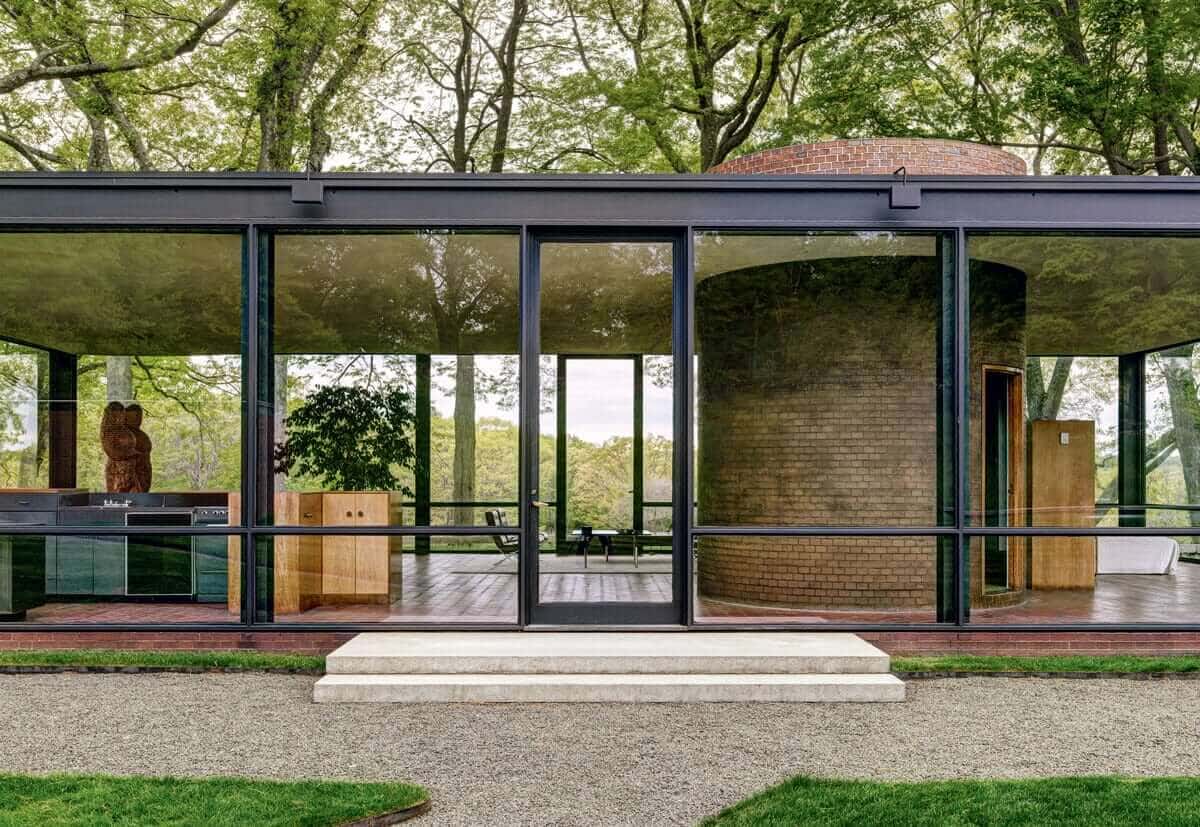
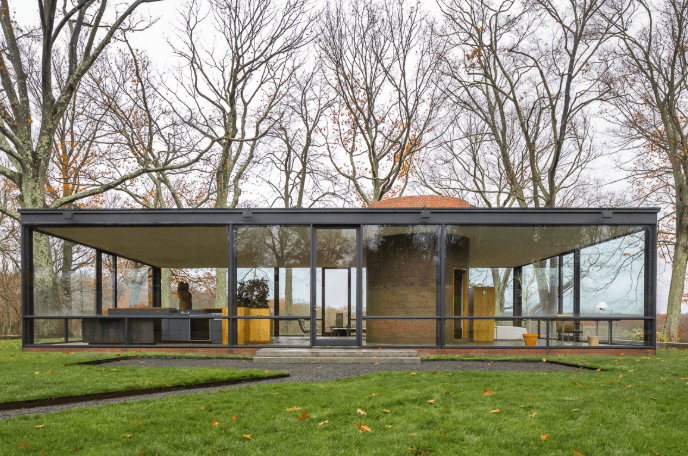
Completed in 1949, the Glass House pushed transparency even further.
Nearly every exterior wall consists entirely of glass.
The result is both sculpture and residence—a philosophical exploration of privacy, openness, and the relationship between architecture and nature.
Its influence can still be seen in countless contemporary homes.
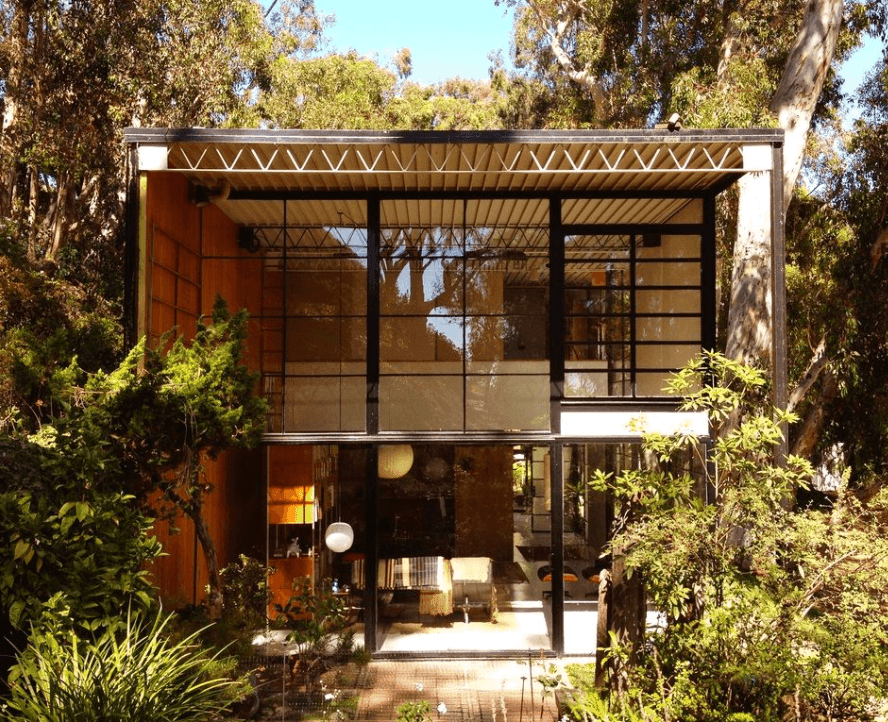
Eames House (Case Study House #8)
Perhaps no residence better embodies the spirit of mid-century modern living than the Eames House in Pacific Palisades, California.
Designed by Charles and Ray Eames in 1949, the home combines prefabricated industrial materials with extraordinary warmth and personality.
Steel framing, colorful panels, lush landscaping, and thoughtfully curated interiors demonstrate that modernism could be playful, deeply personal, and welcoming.
The house remains one of the finest examples of architecture and furniture existing in perfect harmony. You can view this property in person. Book a tour here
How to Identify a Mid-Century Modern House
Whether you’re touring a historic neighborhood or shopping for a home, several exterior features immediately distinguish authentic mid-century modern architecture.
Look for:
- Long horizontal rooflines
- Flat or low-pitched roofs
- Large expanses of glass
- Clerestory windows
- Deep roof overhangs
- Natural wood siding
- Brick or stone accents
- Minimal ornamentation
- Carports instead of traditional garages
- Strong indoor-outdoor relationships
- Asymmetrical facades
- Simple geometric forms
- Landscaping integrated into the architecture
Many homes also feature dramatic post-and-beam construction that allows for wide-open interiors without numerous structural walls.
Mid-Century Modern Interior Design Characteristics
The interiors were designed to complement the architecture—not compete with it.
Typical characteristics include:
- Open floor plans
- Built-in cabinetry
- Walnut and teak furniture
- Organic sculptural seating
- Large area rugs
- Clean-lined lighting
- Minimal clutter
- Warm wood paneling
- Natural stone fireplaces
- Colorful accent textiles
- Indoor plants
- Carefully selected artwork
Rather than filling every corner, mid-century interiors celebrate negative space.
Each piece of furniture serves both a functional and artistic purpose.
Authentic furnishings by designers such as George Nelson, Hans Wegner, Finn Juhl, Edward Wormley, Vladimir Kagan, George Nakashima, Charles and Ray Eames, and Ib Kofod-Larsen continue to define these interiors today.
Mid-Century Modern Architecture vs. Mid-Century Modern Design: Is There a Difference?
Yes.
Although people often use the terms interchangeably, they describe two related but distinct concepts.
Mid-Century Modern Architecture
Refers specifically to the design of buildings, including:
- floor plans
- rooflines
- windows
- structural systems
- materials
- relationship to the landscape
Mid-Century Modern Design
Encompasses the broader movement, including:
- furniture
- lighting
- textiles
- ceramics
- graphic design
- industrial design
- interior decoration
The two are inseparable.
A George Nelson Thin Edge dresser, Hans Wegner Papa Bear Chair, or Eames Lounge Chair makes the most sense when viewed within the architectural philosophy that inspired its creation.
Why Mid-Century Modern Architecture Still Matters
Few architectural movements remain as relevant today.
Many of the ideas pioneered during the 1950s now define contemporary residential design:
- Sustainable use of natural light
- Flexible open floor plans
- Indoor-outdoor living
- Honest materials
- Minimal environmental impact
- Functional simplicity
- Timeless aesthetics
Rather than chasing trends, mid-century modern architecture focused on enduring principles of good design.
That is precisely why these homes continue commanding extraordinary demand—and why authentic mid-century furniture remains more desirable than ever.
Living the Mid-Century Modern Philosophy
At Hobbs Modern, we believe great furniture deserves great architecture—and great architecture deserves authentic furnishings that honor its original vision.
Whether you’re restoring a classic Eichler, furnishing a Richard Neutra-inspired home, or simply bringing a touch of mid-century modern warmth into a contemporary interior, investing in authentic vintage furniture creates a connection to one of the most important design movements in history.
Every restored piece we offer has been carefully preserved to continue the legacy of the architects and designers who forever changed how we live.
If you’re looking to furnish your mid-century modern home with museum-quality vintage furniture, browse our curated collection of restored originals. From George Nelson and Hans Wegner to Charles and Ray Eames, George Nakashima, Edward Wormley, and Vladimir Kagan, every piece is selected for its craftsmanship, authenticity, and lasting design significance.
FAQs
When was the mid-century modern architecture period?
Most historians define the movement as spanning approximately 1945 to 1969, although its roots began in the late 1930s and its influence extends well beyond the 1960s.
What makes a house mid-century modern?
Key characteristics include flat or low-pitched roofs, open floor plans, expansive glass, natural materials, minimal ornamentation, and a strong connection between indoor and outdoor living.
Who were the most influential mid-century modern architects?
Notable architects include Frank Lloyd Wright, Ludwig Mies van der Rohe, Richard Neutra, Charles and Ray Eames, Pierre Koenig, Eero Saarinen, Joseph Eichler, Raphael Soriano, Craig Ellwood, and Philip Johnson.
Is mid-century modern architecture still popular?
Yes. It remains one of the most sought-after architectural styles due to its timeless aesthetics, functional layouts, and compatibility with modern
Why is authentic mid-century modern furniture important?
Original pieces were designed to complement the architecture of the period. Authentic furniture offers superior craftsmanship, historical significance, and materials that are difficult to replicate today.