Table of Contents
- Poul Kjærholm: The Designer Who Told Fritz Hansen, “It’s Him or Me.”
- Afra & Tobia Scarpa: The Couple Who Designed Just About Everything
- Peter Hvidt & Orla Mølgaard-Nielsen: The Danes Who Borrowed Technology from Tennis Rackets
- Pierre Jeanneret: The Architect Who Fell in Love with India
- Until Next Time…
- Quick Reference
- Featured Designs Mentioned
- Frequently Asked Questions
- FAQs
Volume III: Ultimatums, Tennis Rackets & the Nicest Architect in India
Welcome back to the Hobbs Modern Rumor Desk, where we uncover the stories that never seem to make it into furniture catalogs.
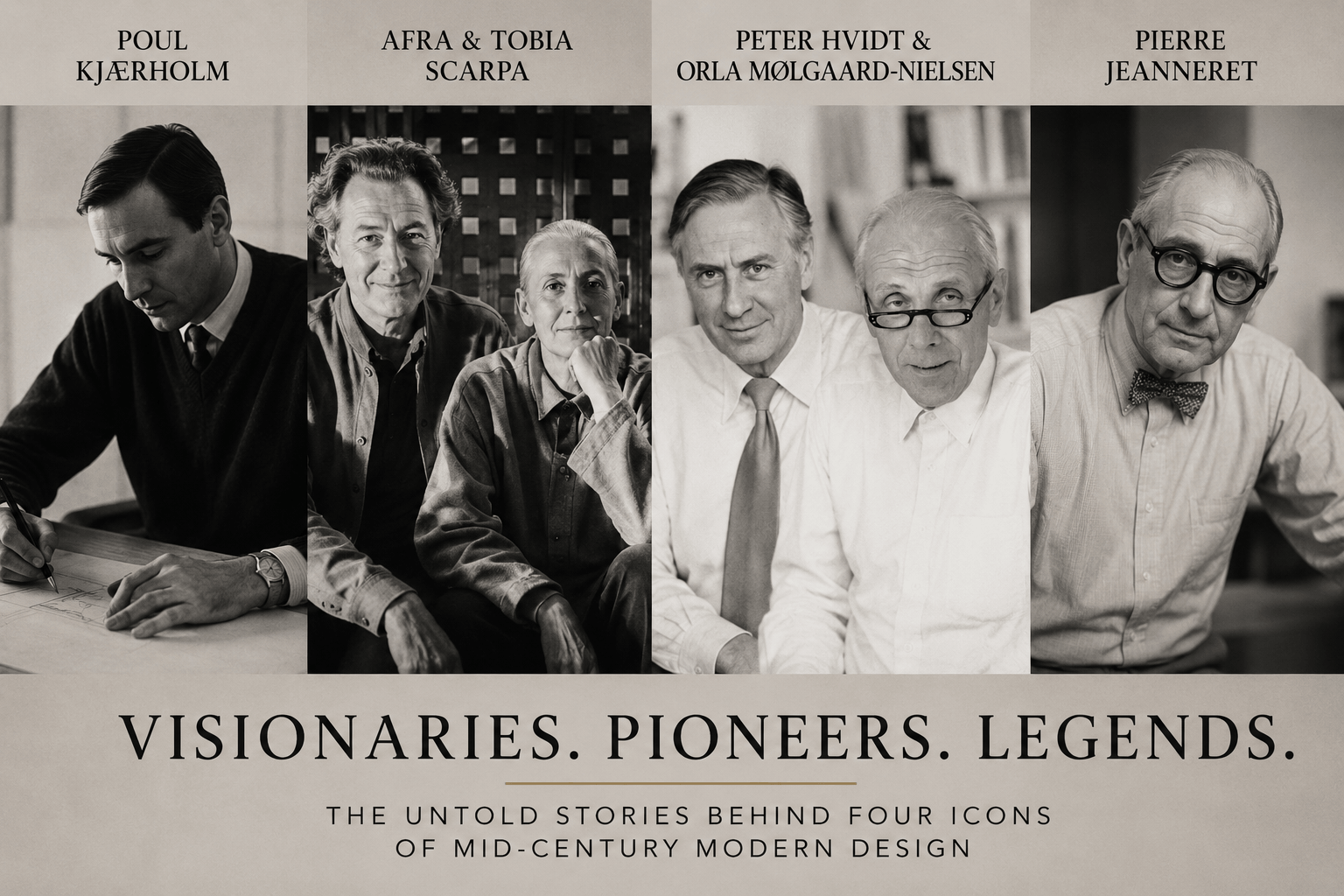
This edition has everything: a designer who gave one of Denmark’s largest furniture companies an ultimatum, an architect who quietly paid his employees’ salaries out of his own pocket, a husband-and-wife team that designed everything from sofas to department stores, and two Danes who borrowed technology from tennis rackets decades before IKEA figured out flat-pack furniture.
Let’s begin.
Poul Kjærholm: The Designer Who Told Fritz Hansen, “It’s Him or Me.”
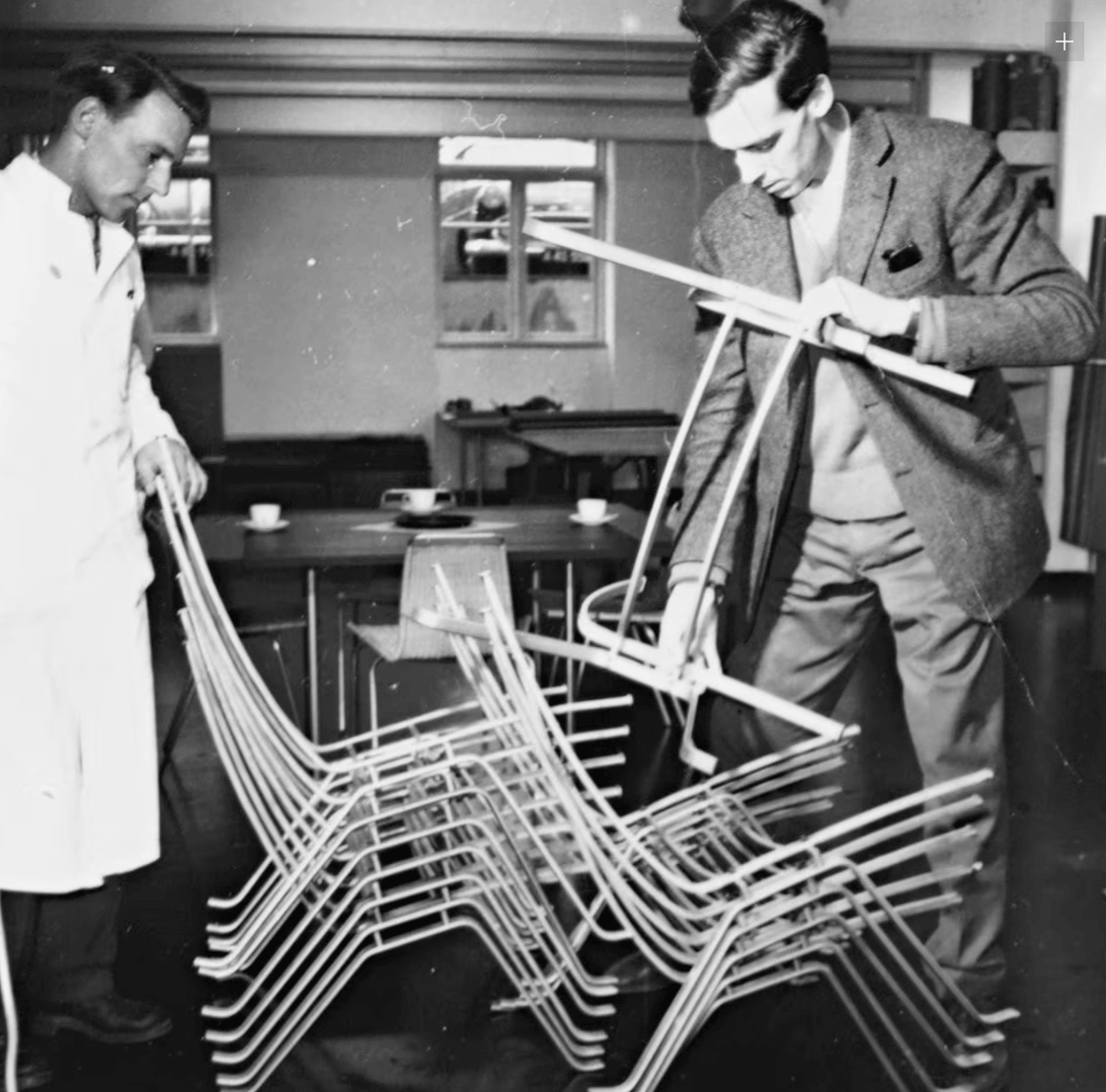
Poul Kjærholm was trained as a cabinetmaker, but wood was never quite enough for him.
While studying at Copenhagen’s School of Arts and Crafts, he became fascinated by steel, pairing it with leather, cane, marble, and—when the mood struck—wood.
In 1951, at just 22 years old, he designed the PK25, also known as the Element Chair, for his graduation project.
The chair caught the attention of Søren Hansen, grandson of Fritz Hansen and co-director of the company, who invited the promising young designer to join the firm.
There was only one problem.
Fritz Hansen had become completely preoccupied with a new chair by Arne Jacobsen. The Ant chair was a growing commercial success.
While the company poured its energy into Jacobsen’s molded plywood design, Kjærholm grew increasingly frustrated that his own experimental furniture—including early designs such as the PK0—was not moving into production.
Eventually, patience gave way to drama.
As the story goes, Kjærholm stormed into Søren Hansen’s office and demanded that the company stop working on Jacobsen’s chair.
“Either you stop working on the Jacobsen chair or I am leaving!” To which Søren calmly replied, “Well, then goodbye, Mr. Kjærholm.”
Søren Hansen chose the Ant Chair.
Kjærholm left Fritz Hansen and, in 1955, began the collaboration that would define his career with manufacturer Ejvind Kold Christensen.
Together, they produced some of the most refined and uncompromising furniture of the twentieth century.
The story eventually came full circle.
Years after Kjærholm’s death, Fritz Hansen acquired the rights to much of his collection, including the PK25 that had first caught Søren Hansen’s attention.
The rebellious young designer’s furniture had finally returned home.
It just took a few decades—and one very successful Ant—to get there.
Poul Kjaerholm Glass Coffee Table Model PK61
$3,795.00
The iconic Poul Kjærholm PK61 Coffee Table is one of the purest expressions of Danish modern minimalism—an elegant balance of industrial precision and sculptural restraint. Designed in 1956 by legendary Danish designer Poul Kjærholm for E. Kold Christensen and later… read more

Afra & Tobia Scarpa: The Couple Who Designed Just About Everything
Some designers specialize.
Afra and Tobia Scarpa apparently never got the memo.
Furniture? Of course.
Architecture? Absolutely.
Cookware? Why not?
Retail stores? Those too.
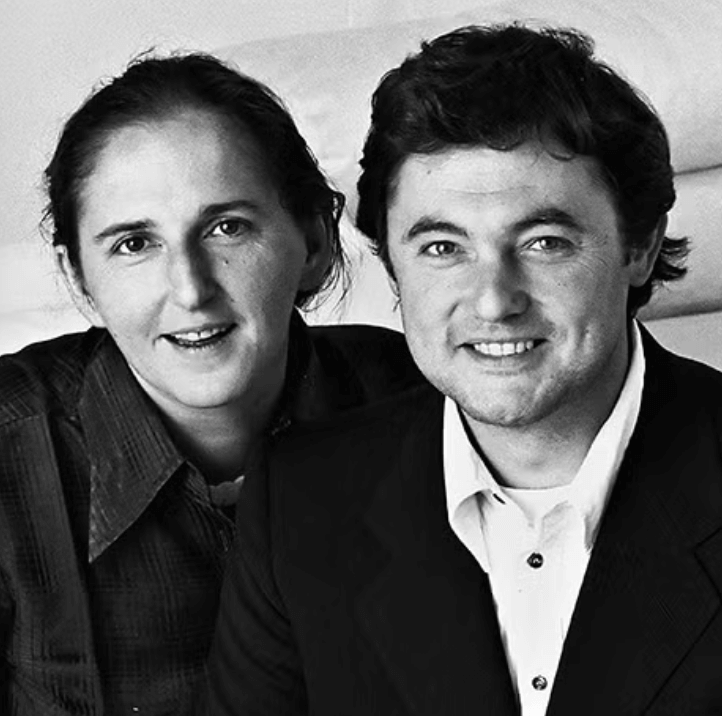
Before opening their own studio, Tobia worked at the legendary Venini glassworks in Murano, continuing a family tradition. His father was Carlo Scarpa—one of Italy’s greatest architects and a master of Venetian glass.
You could say good design ran in the family.
Afra and Tobia met while studying architecture at the University of Venice, graduating together in 1957. Just two years later, they designed their first chair—the Pigreco—for Gavina and opened their own studio.
The rest is Italian design history.
Afra & Tobia Scarpa for Cassina “Soriana” Four-Seat Sofa & Ottoman in New Burgandy Leather
$34,995.00
The Soriana Sofa and Ottoman by Afra & Tobia Scarpa for Cassina is one of the most celebrated icons of Italian Mid-Century Modern design. Originally introduced in 1969 and awarded the prestigious Compasso d’Oro, the Soriana redefined luxury seating by… read more

While most people know them for icons like the Soriana sofa and Monk chair, their work stretched far beyond furniture.
During the 1960s and ‘70s, they developed the visual identity and flagship store interiors for Benetton throughout Europe and the United States, helping shape one of the world’s most recognizable fashion brands.
Few designers have left fingerprints on as many aspects of everyday life.
Peter Hvidt & Orla Mølgaard-Nielsen: The Danes Who Borrowed Technology from Tennis Rackets
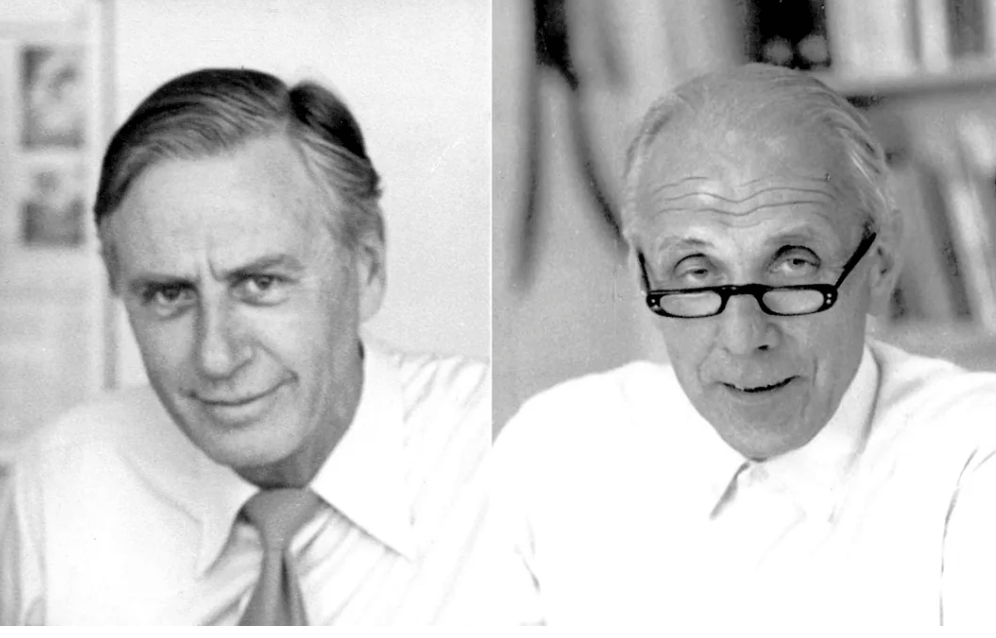
Long before they became one of Denmark’s greatest design partnerships, Peter Hvidt was actually Orla Mølgaard-Nielsen’s student.
Years later, they would become business partners…and eventually teaching colleagues.
Not a bad promotion.
Their most famous creation, the AX Chair, changed furniture manufacturing forever.
Instead of traditional joinery, they borrowed a laminated gluing technique that had previously been used to manufacture tennis rackets.
It sounds strange. It worked brilliantly.
The AX Chair became one of the first commercially successful molded plywood chairs produced in Europe and influenced generations of designers that followed.
But that’s not all.
Pair of Peter Hvidt & Orla Mølgaard-Nielsen Boomerang Chairs
$10,995.00
A striking pair of Peter Hvidt & Orla Mølgaard-Nielsen Boomerang Lounge Chairs, showcasing the sculptural elegance that made Hvidt one of Denmark’s most celebrated mid-century designers. Crafted in solid teak with beautifully tapered brass legs, these iconic chairs embody the… read more

Decades before flat-pack furniture became a household concept, Hvidt and Mølgaard-Nielsen were already designing furniture that could be disassembled, packed efficiently, and shipped economically around the world.
They were solving logistics problems before most companies realized they existed.
And if designing more than 250 furniture pieces over a 31-year partnership wasn’t enough…
Later in life, their design studio expanded into civil engineering projects, contributing to major Danish infrastructure including the Little Belt Bridge and the Vejle Fjord Bridge.
Turns out designing beautiful chairs is excellent preparation for designing bridges.
Pierre Jeanneret: The Architect Who Fell in Love with India
History often remembers Pierre Jeanneret as “Le Corbusier’s cousin.”
That hardly seems fair.
During World War II, the two found themselves on opposite sides politically. Jeanneret joined the French Resistance while Le Corbusier sought work under the Vichy government.
Their professional partnership ended for nearly a decade.
Then India brought them back together.
When commissioned to help build the new city of Chandigarh, Le Corbusier would visit only a few times each year.
Rare Pair of Pierre Jeanneret Scissor Lounge Chairs for Knoll in Moss Leather
$16,995.00
A spectacular, rare, authentic pair of Scissor chairs designed by Pierre Jeanneret in 1948 and manufactured by Knoll Model 92. This iconic design — celebrated for its striking angular profile and refined simplicity — beautifully captures the sculptural elegance of… read more

Pierre Jeanneret stayed.
For fifteen years.
He supervised construction, mentored young architects, designed hundreds of buildings and pieces of furniture, and became deeply connected to the city and its people.
One story tells you everything you need to know about him.
At one point, government delays prevented employees in Chandigarh’s architecture department from receiving their salaries for months. Jeanneret noticed morale had changed and asked architect U.E. Chowdhury what was wrong.
After learning the truth, he quietly asked her to determine how much money each employee needed to get by.
Then he paid them himself.
Out of his own bank account.
No speeches.
No publicity.
Just kindness.
His love for India ran so deep that when he died in Switzerland in 1967, he requested that his ashes be scattered in Chandigarh’s Sukhna Lake.
His family honored that wish.
Perhaps that’s why Pierre Jeanneret’s furniture feels different today.
It wasn’t simply designed for a place.
It became part of one.
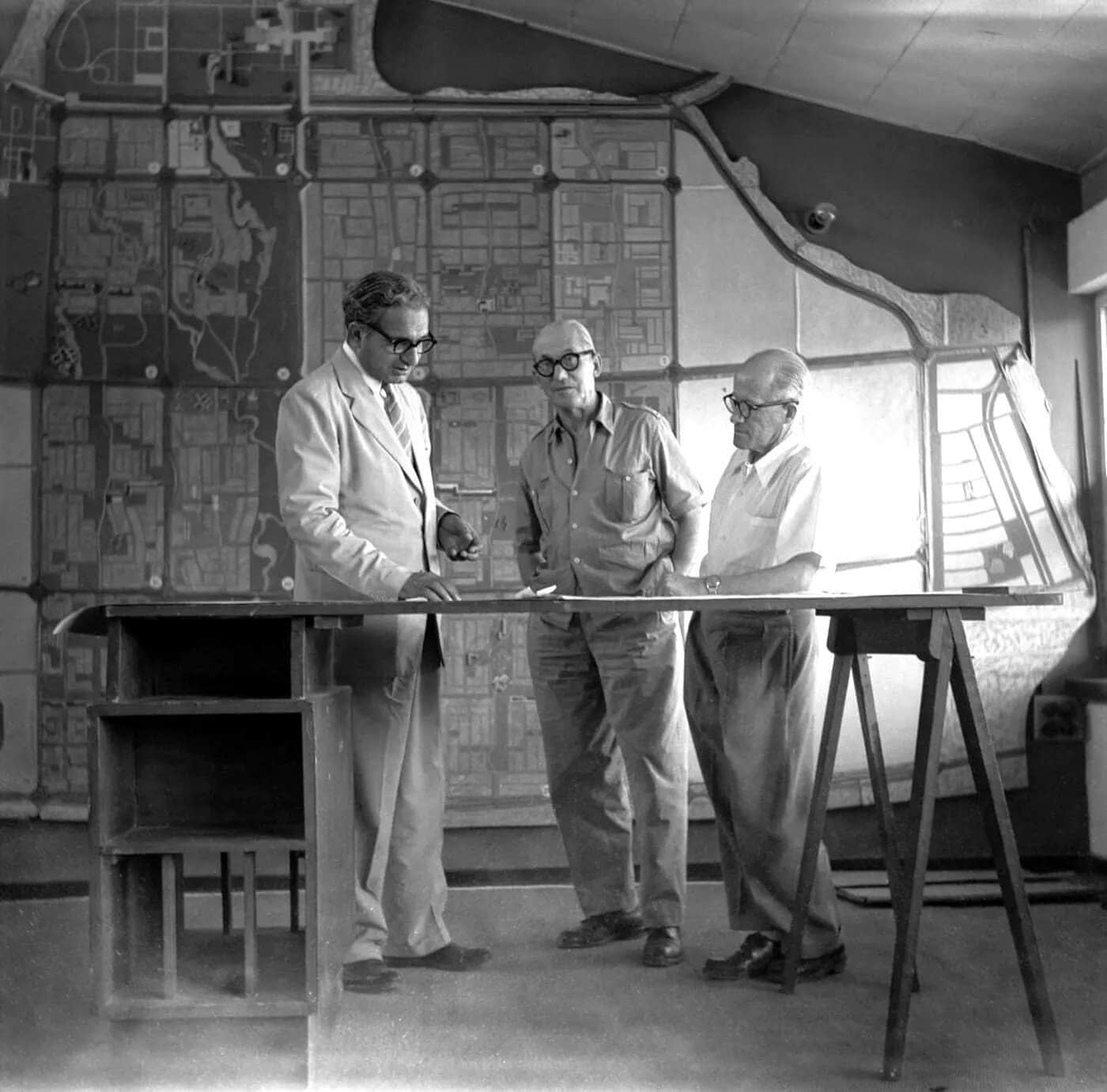 PL Varma, Le Corbusier and Pierre Jeanneret at work.
Until Next Time…
That’s all for this edition of the Hobbs Modern Rumor Desk.
An ultimatum that changed furniture history.
A husband-and-wife team that designed everything from sofas to fashion stores.
A chair inspired by tennis rackets.
An architect who quietly paid his employees’ salaries.
Proof once again that the people behind great furniture were often even more remarkable than the furniture itself.
Until next time…
Stay curious.
— The Hobbs Modern Rumor Desk
Quick Reference
Designer | Best Known For | Rumor Desk Fact |
|---|---|---|
Poul Kjærholm | PK22, PK31, PK61, PK24 | Gave Fritz Hansen an ultimatum before moving his production to E. Kold Christensen. |
Afra & Tobia Scarpa | Soriana Sofa, Monk Chair | Designed everything from furniture and architecture to Benetton’s flagship retail interiors. |
Peter Hvidt & Orla Mølgaard-Nielsen | AX Chair, Boomerang Chair | Adapted tennis racket manufacturing techniques and pioneered flat-pack furniture decades before it became mainstream. |
Pierre Jeanneret | Chandigarh Furniture | Paid struggling employees from his own bank account and chose India as his final resting place. |
Featured Designs Mentioned
- PK22 Chair
- PK24 Chaise Lounge
- PK31 Seating Series
- PK61 Coffee Table
- Soriana Sofa
- Pigreco Chair
- Monk Chair
- AX Chair
- Boomerang Chair
- Chandigarh Office Chair
- Chandigarh Cane Chair
Frequently Asked Questions
Why did Poul Kjærholm leave Fritz Hansen?
Poul Kjærholm believed his furniture should be produced exactly as he designed it. When disagreements arose over manufacturing, he chose to work with E. Kold Christensen, who agreed to build his furniture without compromise.
Who were Afra & Tobia Scarpa?
Afra and Tobia Scarpa were an Italian husband-and-wife design team known for furniture, architecture, interiors, glass, fashion retail, and industrial design. Their Soriana collection for Cassina remains one of Italy’s most celebrated furniture designs.
Why is the AX Chair important?
Designed by Peter Hvidt and Orla Mølgaard-Nielsen, the AX Chair pioneered new molded plywood construction techniques borrowed from tennis racket manufacturing and anticipated modern flat-pack furniture.
Why is Pierre Jeanneret associated with Chandigarh?
Pierre Jeanneret lived in Chandigarh for fifteen years, supervising construction, mentoring architects, and designing much of the city’s iconic furniture. He loved the city so deeply that he requested his ashes be scattered in Sukhna Lake after his death.
FAQs
Why did Poul Kjærholm leave Fritz Hansen?
Poul Kjærholm left Fritz Hansen after just one year because the company prioritized Arne Jacobsen’s Ant chair over his own PK0 lounge chair design, prompting an ultimatum that ended his employment.
Who were Afra & Tobia Scarpa?
Afra and Tobia Scarpa were an Italian husband-and-wife design team known for furniture, architecture, interiors, glass, fashion retail, and industrial design. Their Soriana collection for Cassina remains one of Italy’s most celebrated furniture designs.
Why is the AX Chair important?
Designed by Peter Hvidt and Orla Mølgaard-Nielsen, the AX Chair pioneered new molded plywood construction techniques borrowed from tennis racket manufacturing and anticipated modern flat-pack furniture.
Why is Pierre Jeanneret associated with Chandigarh?
Pierre Jeanneret lived in Chandigarh for fifteen years, supervising construction, mentoring architects, and designing much of the city’s iconic furniture. He loved the city so deeply that he requested his ashes be scattered in Sukhna Lake after his death.