Table of Contents
- American Mid-Century Modern: Walnut, Oak, Cherry, and Beyond
- Danish Mid-Century Modern: Teak, Oak, Beech, Rosewood, and Afromosia
- Brazilian Mid-Century Modern Furniture: Rosewood, Pau Ferro, and Ironwood
- How Wood Is Cut: Plain-Sawn, Quarter-Sawn, and Rift-Sawn and why it matters
- Why This Matters for Buying and Caring for Vintage MCM
- FAQs
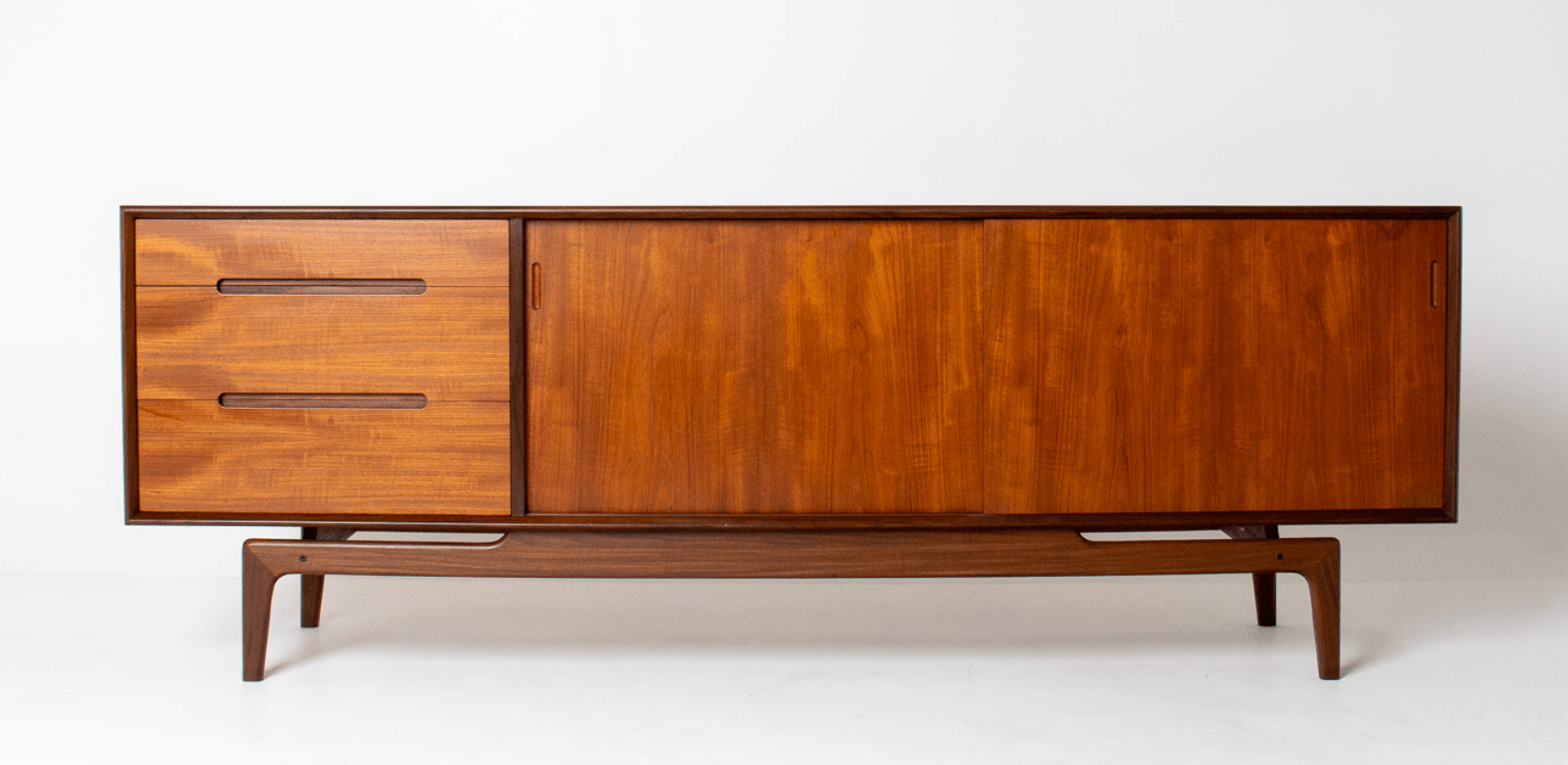 Arne Hovmand Olsen Mixed Teak Credenza featuring Afromosia (darker legs and edges) and Indochina Teak (lighter teak)
One of the most persistent myths in design is that you cannot mix woods. Another myth is vintage Danish modern furniture is made of only of teak. Some of it is. Much of it is not. Oak, beech, Afromosia, and Brazilian rosewood all appear in canonical Danish pieces — and for very specific reasons. The same applies to American and Brazilian production. Understanding why designers and manufacturers chose particular species of wood can tell you as much about a piece as the name on the label.
This guide breaks down the woods most commonly found in mid-century modern furniture by region, explains the structural and material logic behind those choices, and covers the four primary sawing methods — plain-sawn, quarter-sawn, rift-sawn, Live sawn — that determine how a board behaves over decades of use.
American Mid-Century Modern: Walnut, Oak, Cherry, and Beyond
American mid-century modern designers worked primarily with domestically available hardwoods. American walnut (Juglans nigra) was the dominant choice. It mills cleanly, takes finish well, produces a rich chocolate-brown tone with striking figure, and was readily available across the American Midwest and South. For these reasons, walnut became the signature material of American MCM production — appearing in everything from case goods to chair frames. Not all walnut is created equally. The best manufactures such of the period such as Herman Miller and Knoll used the highest quality cuts of walnut. Glenn of California also sourced exceptional walnut for there dressers and credenzas.
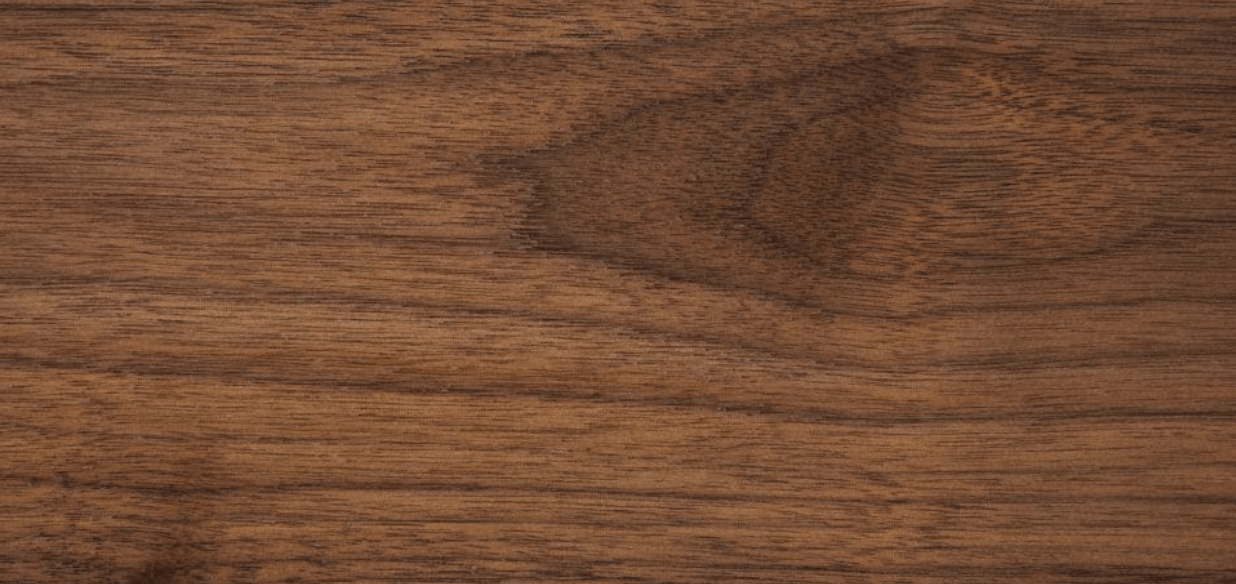 Close up of American Walnut grain
Oak was widely used for drawer interiors, structural components, and secondary wood throughout American furniture. Its tight interlocking grain provides exceptional strength and resistance to wear, making it the practical choice for parts that needed to perform rather than be seen.
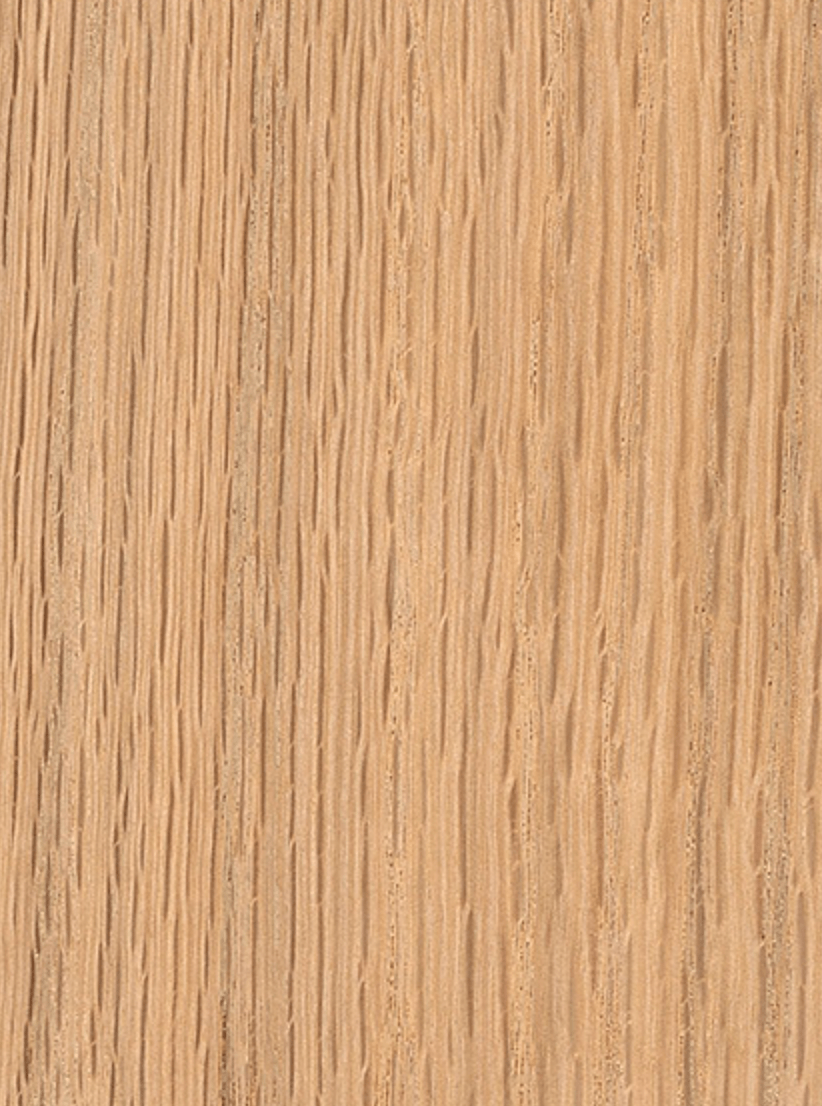 Oak wood grain
Maple appears less frequently in mid-century production. Paul McCobb'sPlanner group was primarily made in solid Maple which was unusual for the time. Maple was also used particularly for lighter-finish pieces, and cherry was used by manufacturers who wanted warmth and color depth without walnut's price point.
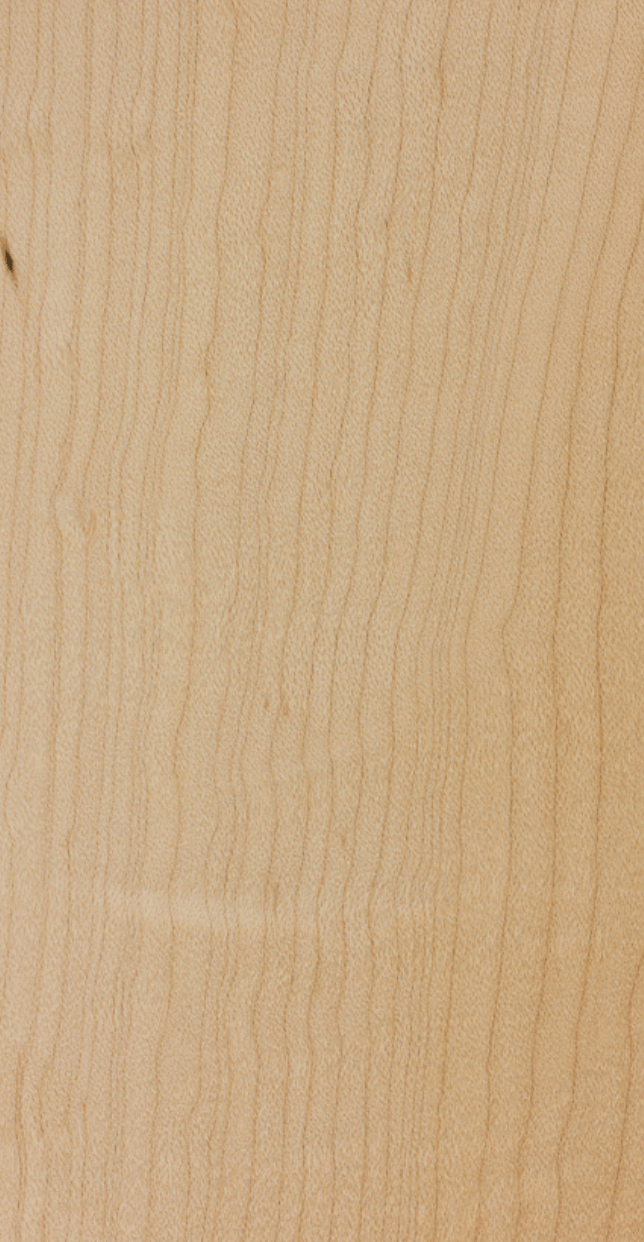 Close up of Maple. Maple is a hardwood that has a closed grain so its generally very smooth to the touch.
 Pecan — a species in the hickory family — appears in American MCM to a lesser degree, valued for its hardness and distinctive grain character often toned and colored to look like walnut during factory production. Broyhill Brasilia used Pecan for the legs and curved edges of the case pieces.
Birch- Manufactures like Haywood Wiefield used solid Northern Yellow birch
 Close up of Birch
 Mahogany - Some American designers looked to traditional cabinetmaking materials rather than the regionally available hardwoods. Edward Wormley, who designed for Dunbar Furniture from the late 1940s through the 1960s, used mahogany extensively. Mahogany was a fine furniture standard long before mid-century design emerged — it machines predictably, holds detail, and produces a refined surface. Wormley's use of it reflected his connection to traditional craft rather than the regionalist material logic of his contemporaries. In addition early designs by Gilbert Rohde for Herman Miller often used traditional woods like Mahogany and birds eye maple.
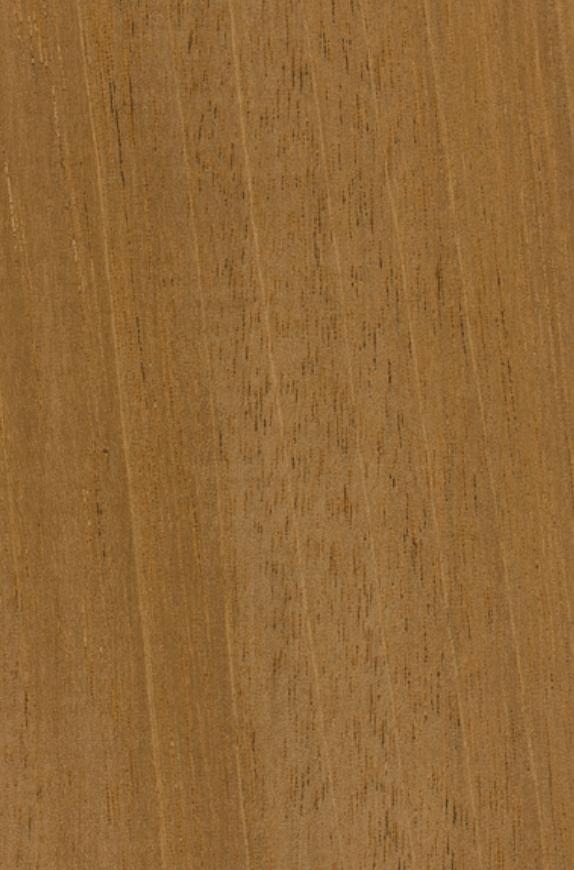 Close up of Honduran Mahogany often used in Edward Wormley Designs
Herman Miller- Eames Lounge Chair and Brazilian Rosewood
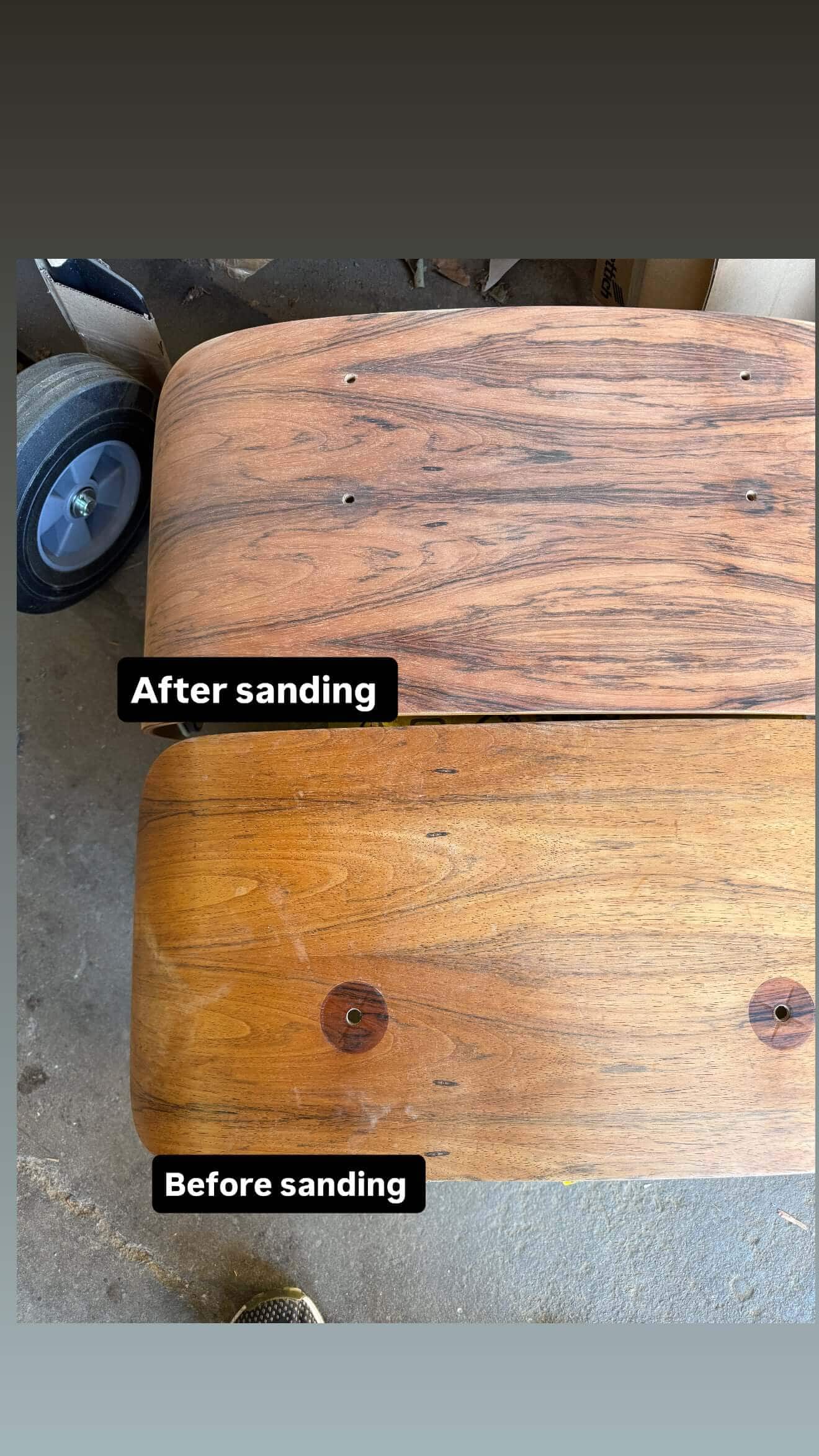
At the higher end of American production, Herman Miller used Brazilian rosewood — Dalbergia nigra — on the new standard of luxury, the Eames Lounge Chairs and George Nelson Thin Edge Dresser and credenzas. Brazilian rosewood is among the most visually dramatic hardwoods in the world: deep chocolate tones, black figuring, and a naturally oily surface that polishes to an extraordinary depth. In addition, Brazilian rosewood is highly resistant to insect attacks. Termits and other pesist do not like its naturally oily characteristics. Lastly, itwas also a genuinely rare and expensive import even in the 1950s and 1960s, which is why it appeared on the highest-tier production only.
Brazilian rosewood is now no longer available commercially to import or export making the vintage Brazilian rosewood furniture all we have left. Authentic rosewood Eames Lounge Chairs are among the most sought-after pieces in mid-century collecting. In addition, Knoll dining tables and case pieces done in rosewood are sought after by collectors.
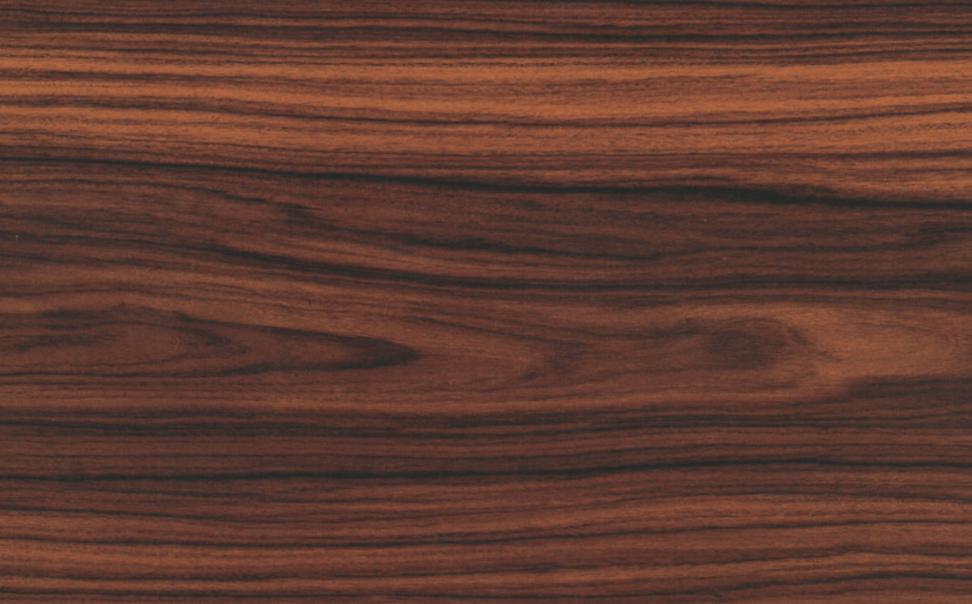 Brazilian Rosewood
 George Nakashima and the Walnut Slab
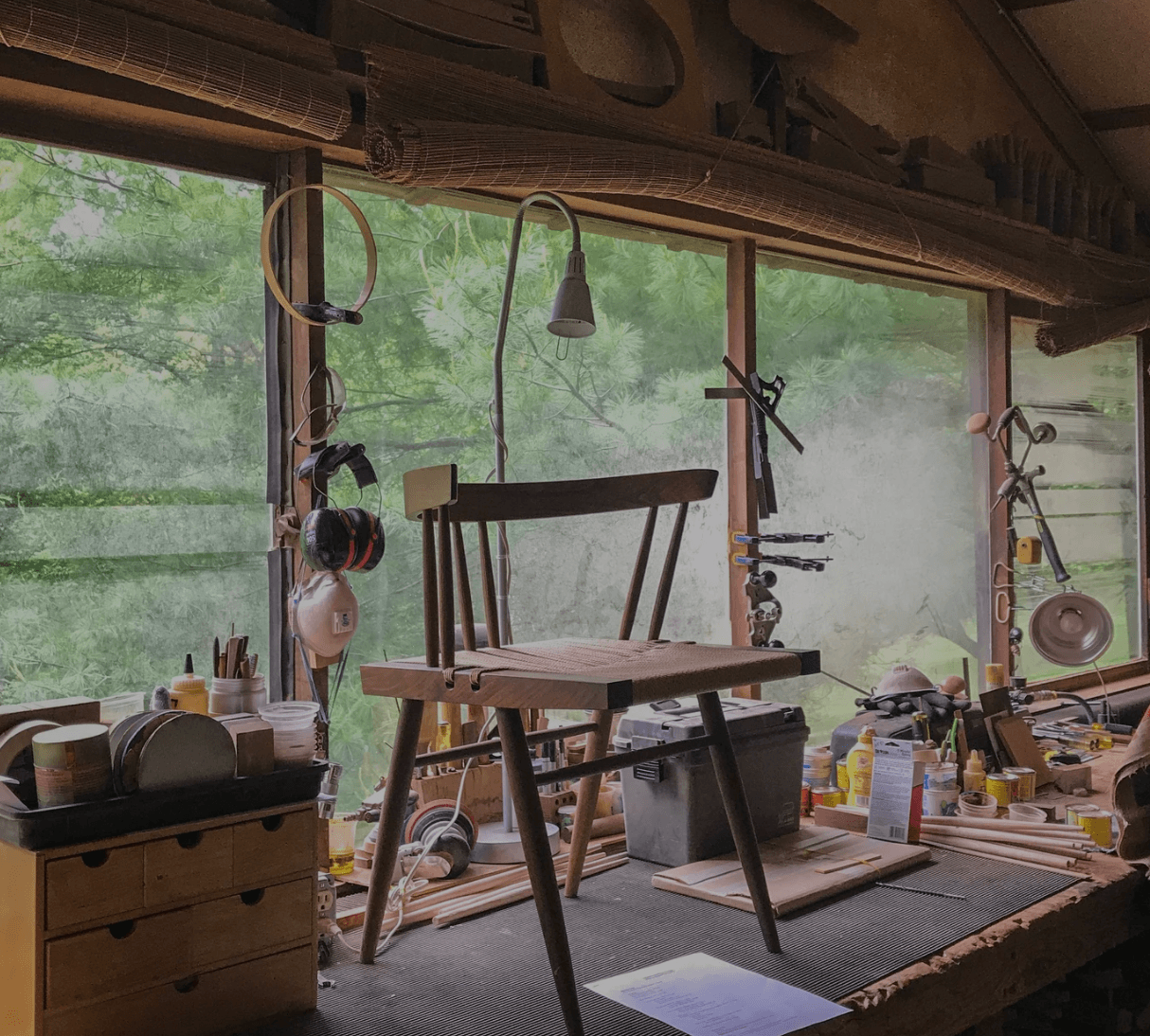
George Nakashima built his design philosophy around the walnut slab. Rather than milling walnut into uniform dimensioned lumber, Nakashima preserved the natural edge — the live edge — of the tree, treating each slab as a singular object with its own character. His Conoid tables, coffee tables, and benches are essentially collaborations between the craftsman and each specific tree. Nakashima sourced exceptional walnut slabs and let them dry out over decades. Nakashima became one of the most important voices in American studio furniture. His work remains some of the most recognizable and valuable American MCM on the market today.
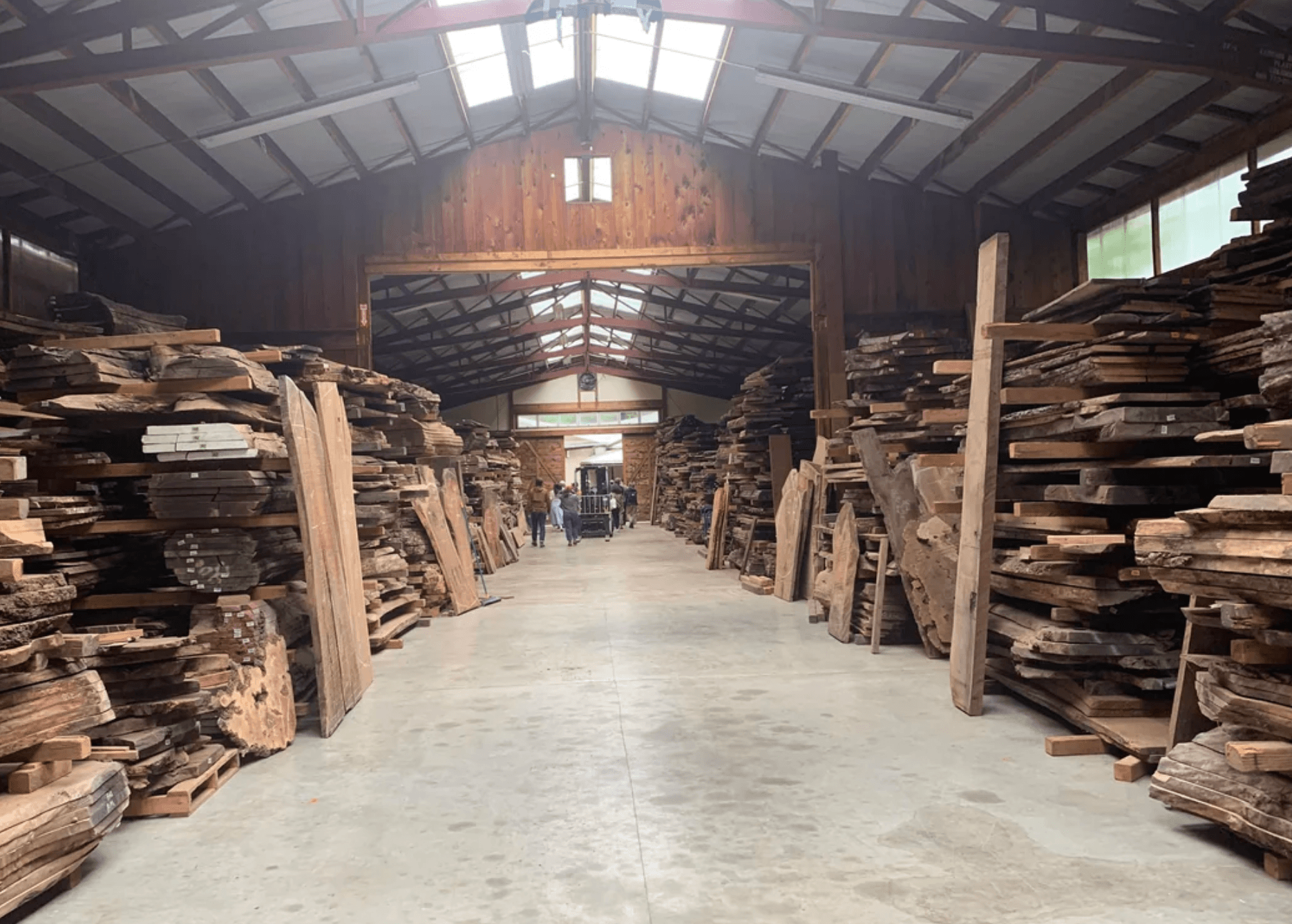 George Nakashima's Lumber Shed. Walnut Slabs and other high quality woods dry out over many years before they are ready to be turned into furniture
Danish Mid-Century Modern: Teak, Oak, Beech, Rosewood, and Afromosia
Danish mid-century furniture used a more varied material palette than the popular shorthand of "teak" suggests. The major Danish manufacturers — including Fritz Hansen, Carl Hansen & Søn, and A.P. Stolen — worked across multiple species, selecting wood based on structural requirements, and design intent.
Why the Danes Used Teak
Teak's association with Danish furniture is not arbitrary. Teak (Tectona grandis) is one of the most water-resistant hardwoods in the world. It is naturally high in silica and oils, which give it exceptional resistance to moisture, warping, and biological degradation. In Scandinavia — a seafaring culture with a long tradition of boatbuilding — teak was already a known and trusted material. Teak has been used in marine construction for centuries precisely because it performs where other woods fail. After World War II, Denmark’s strong diplomaitic and bussines ties to Thailand gave them access to large amounts of teak wood. Danish artisans needed raw materials. Thailand exported pre-cut teak boards directly to Denmark.
For Danish furniture makers, teak's moisture resistance made it ideal for dining tables, sideboards, and case goods that would live in homes with varying humidity. A well-made teak piece can be neglected for years and then restored with teak oil — the natural oils in the wood allow it to recover in ways that more porous species cannot. This resilience is part of why Danish teak furniture from the 1950s and 1960s survives in such volume today.
Teak was not a domestic species for Denmark. It was imported — primarily from Southeast Asia. The Danes were importing it as a premium material, which is why it was used for surfaces like tables and credenzas rather than structural components.
Why the Danes Used Oak — And the Wishbone Chair Myth
Oak is native to Denmark. It was readily available, well understood by Danish craftsmen, and offers a combination of strength, stability, and open grain character that teak cannot match for structural applications.
The most common misconception in Danish Modern furniture is that the Hans Wegner Wishbone Chair (Model CH24, designed 1949 for Carl Hansen & Søn) is made of teak. It is not. The Wishbone Chair's defining feature is its bent top rail — a continuous curved arc that forms the back and arm support in a single piece. That rail is produced by steam bending.
Teak cannot be reliably steam bent. Teak's tight, interlocking grain and high silica content make it prone to splitting along the grain when subjected to the heat and pressure of the steam bending process. Oak, by contrast, has an open, straight grain structure that allows it to flex under steam and hold its new shape once cooled. This is why the Wishbone Chair has been produced in oak since its introduction — oak is structurally necessary for that bent rail to exist at all.
This distinction matters for authentication. If someone is selling you a "teak Wishbone Chair," they they are mistaken about the wood species.
In addition, Hans Wegner and Børge Mogensen mixed teak and oak often. Hans Wegner's famous Papa Bear Chair is typically made with oak legs and teak paws. Børge Mogensen often mixed Teak and oak for his dresser, credenzas, and table designs. Oak used for strong supportive structural compenents and teak used for large surfaces that will be more seen.
Beech is a workhorse of Danish mid-century production. It is abundant in Denmark, machines predictably, steam bends reliably, and takes color toner well. Beech appears throughout Danish furniture as a structural material and as a primary species for chairs and seating that required bent or curved components. Its pale, even tone also made it popular for pieces intended to be toned with tinted laqcer. Beech is also a less expensive wood do it was a great choice for making less expensive furniture. Many of IB Kofod Larsen's variety of arm chair and Poul Jenson Z chairs by Selig chairs were made of beech stained and toned to look like walnut.
Afromosia: African Teak
Afromosia (Pericopsis elata) is a West African hardwood that was widely used in Danish furniture during the 1950s and 1960s as a substitute for and complement to teak. It shares many of teak's visual characteristics — similar but darker brown tone, straight grain, and a surface that develops a pleasant patina — while being more readily available. Afromosia is sometimes called African teak, though it is not botanically related to true teak. Many pieces labeled or described as teak in this era are actually Afromosia, which is worth knowing for both authentication and restoration purposes. Hans Olsen was a designer famous for mixing Indo-China Teak with Afromosia. His famous Rondette table and Chairs is a combination of Teak table top and Afromosia side aprian on the table and matching Afromosia Chairs.
Brazilian Rosewood in Danish Production
The major Danish manufacturers also used Brazilian rosewood on their highest-end production. Hans Wegner's chairs, Arne Jacobsen's pieces for Fritz Hansen, and case goods by leading Danish makers appear in rosewood in the design literature and in period catalogs. As with American production, rosewood versions command significant premiums today and require care around international export regulations.
The Tungsten Carbide Saw Blade and Danish Mass Production
A lesser known factor in Danish furniture history is a manufacturing innovation: the adoption of the tungsten carbide-tipped saw blade. Tungsten carbide is dramatically harder than conventional steel, allowing saw blades to maintain a sharp edge through dense tropical hardwoods like teak that would quickly dull conventional tooling. This technology enabled Danish manufacturers to process imported teak at production scale — efficiently, consistently, and with the precision that Danish furniture's reputation for quality required. It was part of what made Danish mid-century production both artistically significant and commercially viable.
The designer Finn Juhl was desperate to find a way to machine teak his favourite timber on an industrial scale. Teak has a very high gum content, previous attempts to machine it industrially had failed as the saw would be dull after a dozen uses. In 1953 Charles France introduced an industrial technique that revolutionised the Danish furniture industry. He developed the use of a tungsten-carbide alloy saw which did not dull when sawing teak wood. With this new method Charles France worked with Finn Juhl to launch the first industrially manufactured furniture produced from teak, the Model 133 Spadestolen chair.Teak furniture became synonymous with the Danish Modern style and the furniture industry would never be the same again. France & Daverkosen/Son would be the biggest importer of teak timber from Thailand for a number of years.
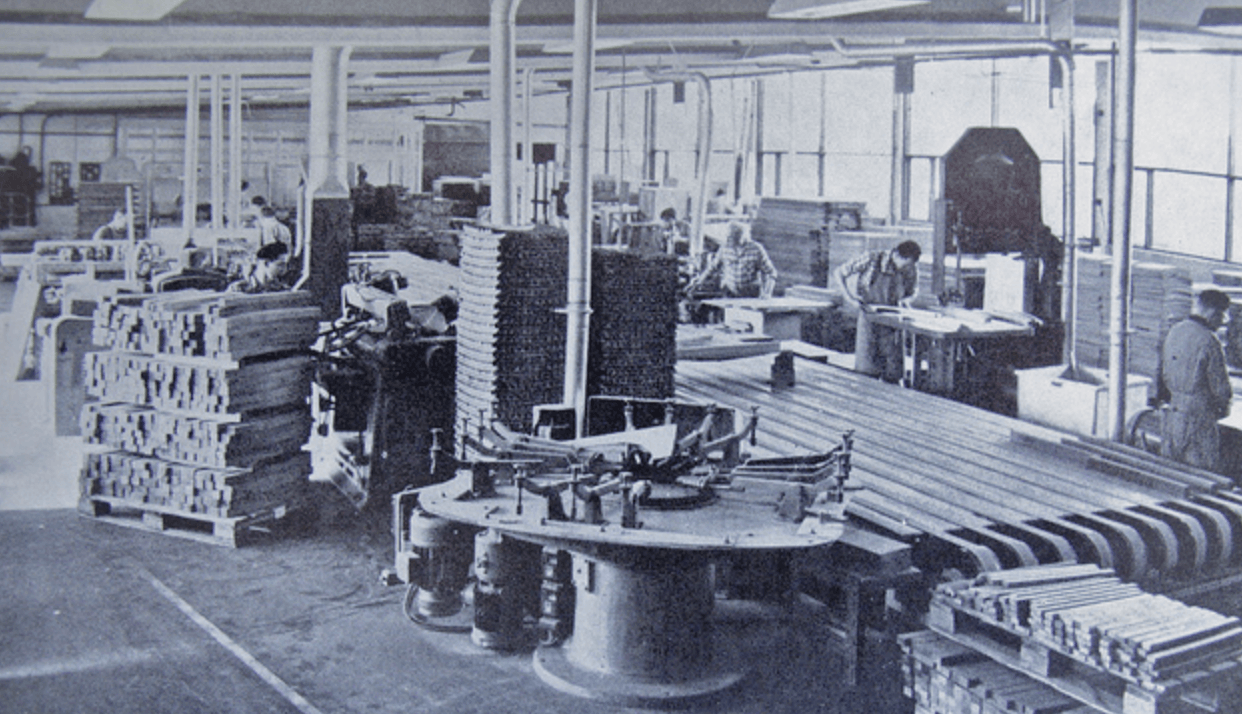 In 1953 Charles France introduced an industrial technique that revolutionised the Danish furniture industry. He developed the use of a tungsten-carbide alloy saw which did not dull when sawing teak wood.
Brazilian Mid-Century Modern Furniture: Rosewood, Pau Ferro, and Ironwood
Brazilian mid-century design and manufacture worked with the extraordinary hardwoods native to the Atlantic Forest and broader Brazilian tropical biome. These are among the densest, most visually complex woods in the world.
Brazilian rosewood (Dalbergia nigra) was the prestige material of Brazilian production. Designers including Sérgio Rodrigues used rosewood extensively — the Mishievoius Chairs and other iconic Brazilian pieces were made with it as a matter of course, because the species was domestically abundant at the time. The wood's dramatic figure, deep color range, and natural oil content made it an obvious choice for designers who wanted their furniture to announce itself.
Pau Ferro — also called Bolivian rosewood or morado — is another dense Brazilian hardwood with visual similarities to rosewood: rich brown tones with black figuring, at greater abundance and lower cost. It appears in Brazilian furniture and has become more prominent as a rosewood alternative in contemporary production.
Ironwood rounds out the Brazilian material palette, used in heavy structural applications where permanence and density were required.
Importing authentic Brazilian rosewood pieces across national borders now requires documentation and permitting.
How Wood Is Cut: Plain-Sawn, Quarter-Sawn, and Rift-Sawn and why it matters
The species of a board tells you what tree it came from. The cut tells you how it will behave. Three primary sawing methods were used in mid-century furniture production, each producing different grain patterns, different stability characteristics, and different visual results.
Plain-Sawn (Flat-Sawn)
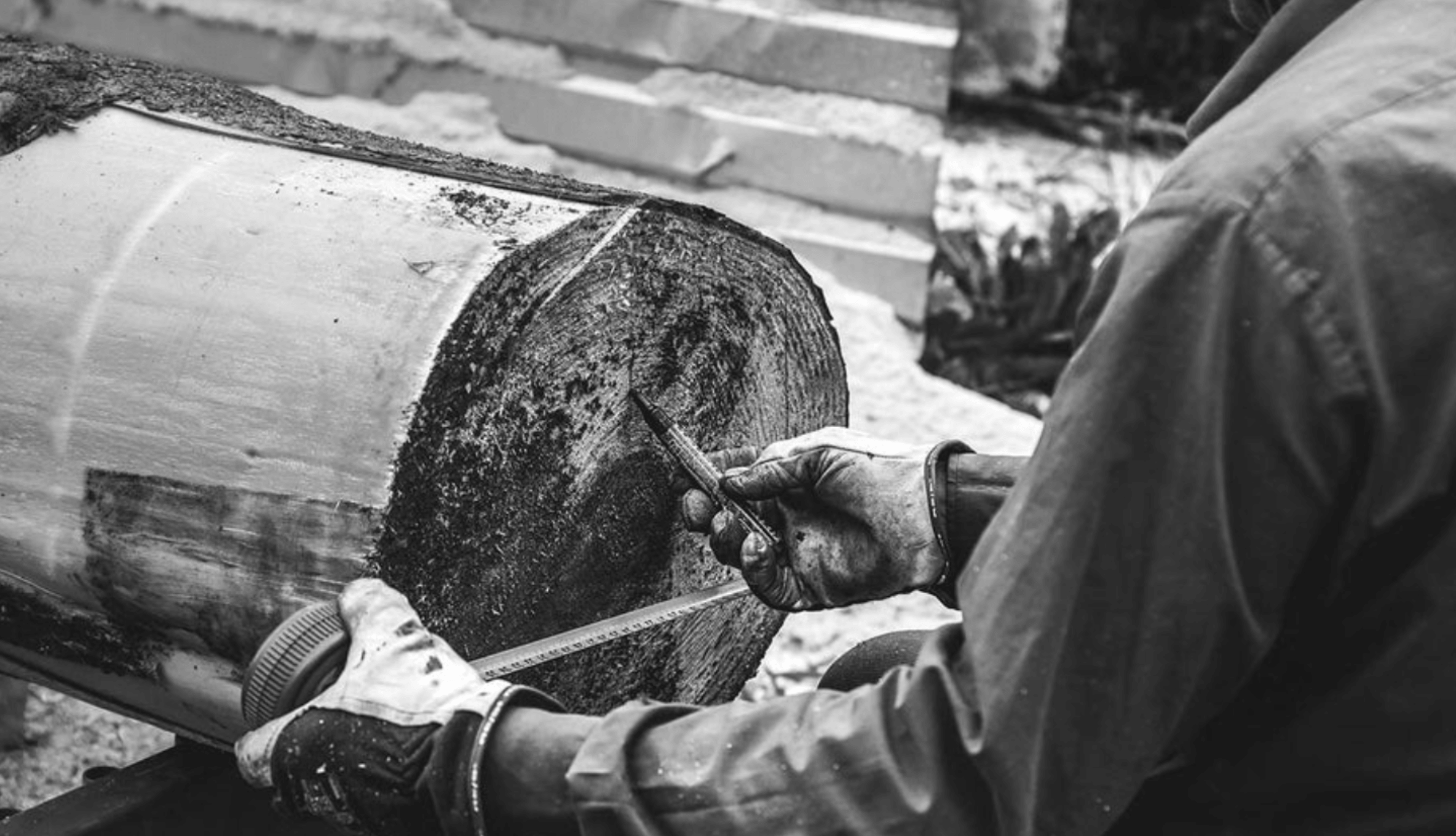
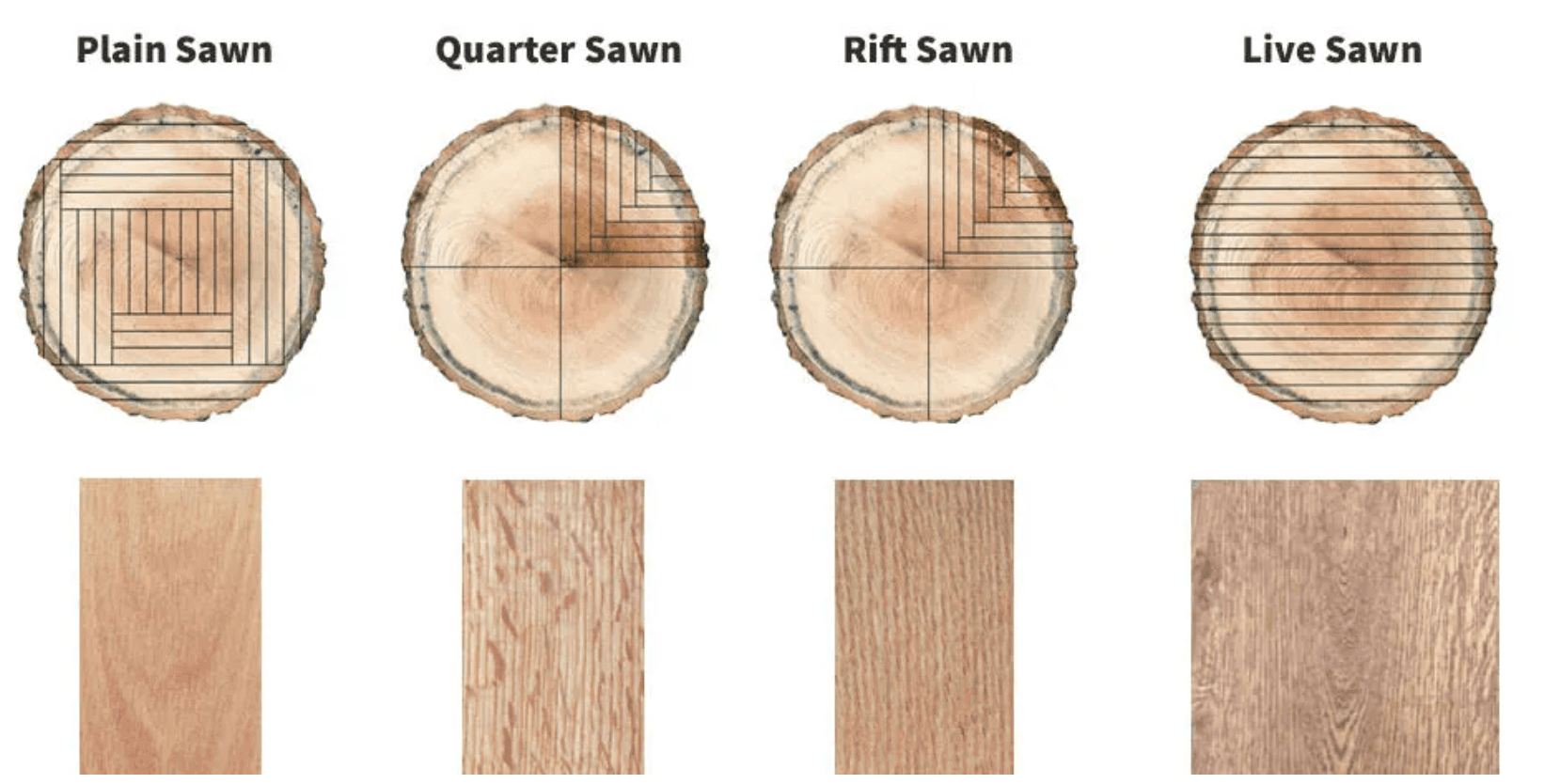
Plain-sawn lumber, also called flat-sawn, is produced by slicing straight through the log in parallel cuts. It is the most common and most economical milling method because it produces the highest yield of usable lumber from a given log with minimal waste and setup time.
Plain-sawn boards show the characteristic cathedral arch grain pattern — the sweeping, curved lines produced when the saw passes through the growth rings at a tangential angle. This figure is visually dynamic and was used to great effect in mid-century furniture tops and panels. The trade-off is stability: because the growth rings run roughly parallel to the face of the board, plain-sawn lumber has a greater tendency to cup, bow, and warp as humidity changes. For large tabletops and panel doors in vintage furniture, plain-sawn construction often shows movement over the decades.
Quarter-Sawn
Quarter-sawn lumber is produced by first quartering the log — splitting it into four wedge sections — and then sawing boards from each quarter with the growth rings oriented roughly perpendicular (at approximately 90 degrees) to the face of the board. This produces boards with straight, consistent vertical grain lines rather than the cathedral arch of plain-sawn wood.
Quarter-sawn lumber is significantly more stable than plain-sawn. With the growth rings running perpendicular to the face, moisture-induced movement is expressed as slight thickening and thinning of the board rather than cupping or bowing. This is why quarter-sawn stock was specified for tabletops, drawer fronts, and any application where dimensional stability mattered.
Quarter-sawing also unlocks a visual feature specific to certain species: medullary ray fleck. In quarter-sawn oak, the medullary rays — cellular structures that run radially through the log — are exposed on the face of the board, producing the distinctive silver, satin, or "lace" figure that makes quarter-sawn white oak one of the most visually striking furniture materials available. Danish and American manufacturers used quarter-sawn oak in case goods, tabletops, and panels precisely to showcase this figure.
The trade-off for quarter-sawing is yield and cost. The method produces narrower boards and more waste than plain-sawing, which is reflected in the price of quarter-sawn lumber.
Rift-Sawn
Rift-sawn lumber is produced by cutting boards at a consistent 45-degree angle to the growth rings — between the tangential angle of plain-sawing and the radial angle of quarter-sawing. This produces the most consistent, comb-like grain of the three methods: perfectly parallel, straight grain lines with minimal figure and essentially no ray fleck.
Rift-sawn boards are extremely stable — comparable to quarter-sawn — and their uniform grain made them the preferred choice for leg stock in high-end mid-century furniture. A rift-sawn walnut table leg shows clean, uninterrupted vertical lines that read as precise and refined. The minimalist aesthetic of mid-century design — Hans Wegner, Finn Juhl, Paul McCobb — was well served by rift-sawn material where consistency of grain was part of the visual grammar.
Rift-sawing is the most labor-intensive and wasteful of the three methods. Each board requires individual positioning relative to the log center, and the angular cuts produce more off cut material than either plain or quarter-sawing. This is reflected in the cost of rift-sawn stock, and in why it was used selectively — typically for legs and exposed structural members — rather than for entire pieces.
Live Sawn
Live Sawn: The mill slices straight through the log from top to bottom without turning it. This uses the whole log and produces less waste. Boards show a mix of three styles: straight grains (rift), flecked grains (quarter), and swirling grains (plain). The center of the board looks like plain sawn, while the edges look like quarter sawn. Because the cut includes a high mix of vertical (quartered) growth rings, the boards are very strong and stable.
At a Glance: The Three Cuts
| Cut | Growth Ring Angle | Grain Pattern | Stability | Ray Fleck | Relative Cost |
|---|---|---|---|---|---|
| Plain-Sawn | 0–30° | Cathedral arch, varied figure | Lower — prone to cupping | Minimal | Lowest |
| Quarter-Sawn | ~90° | Straight, linear with ray fleck | High — resists cupping | Prominent in oak | Higher |
| Rift-Sawn | ~45° | Even, comb-like, no figure | Highest — most consistent | None | Highest |
Why This Matters for Buying and Caring for Vintage MCM
Species and cut affect how a piece ages, how it responds to restoration, and what it is worth. A quarter-sawn oak sideboard from a Danish maker is a different object — materially and financially — than a plain-sawn teak version of the same form. Knowing the difference is part of what separates an informed buyer from someone relying on a dealer's description.
At Hobbs Modern, we examine every piece in our workshop before it goes to market. Ryan evaluates species, grain orientation, finish condition, and structural integrity hands-on — not from photographs. When we describe a piece as quarter-sawn oak or Brazilian rosewood, that identification comes from direct examination. If you have questions about the material makeup of any piece in our collection, ask us. We are happy to help.
FAQs
Is all Danish mid-century modern furniture made of teak?
No. Teak is one of several woods used in Danish mid-century modern furniture. Oak, beech, Afromosia (African teak), and Brazilian rosewood all appear regularly in canonical Danish pieces. Teak was used primarily for visible surfaces like tabletops and credenza fronts because of its exceptional moisture resistance and connection to Scandinavian boatbuilding tradition. Oak was used for structural components and steam-bent parts because of its strength and flexibility. Beech was a common choice for painted or lacquered pieces. The shorthand of "Danish = teak" is a significant oversimplification.
What wood is the Hans Wegner Wishbone Chair made of?
The Hans Wegner Wishbone Chair (Model CH24) is made of oak — not teak. The chair's defining feature is its steam-bent top rail, and teak cannot be reliably steam bent. Teak's interlocking grain and high silica content cause it to split under the heat and pressure required for steam bending. Oak's open, straight grain structure allows it to flex and hold its new shape. The Wishbone Chair has been produced in oak since its introduction in 1949 and is also available in beech, ash, cherry, and walnut — but never in teak. A "teak Wishbone Chair" is either a finish description or a species misidentification.
Why did American mid-century designers use walnut so frequently?
Black walnut was the dominant wood in American mid-century modern furniture because it was domestically abundant, easy to mill, and produced a rich, chocolate-brown tone with striking figure that suited the aesthetic of the period. It takes finish well, machines cleanly, and was available at scale across the American Midwest and South. Walnut did not need to be imported, which kept costs manageable even for mid-range producers. Its combination of visual appeal and practical workability made it the default choice for American MCM case goods, chair frames, and tabletops.
What is Afromosia and how does it differ from teak?
Afromosia (Pericopsis elata) is a West African hardwood that was widely used in Danish furniture to complement teak during the 1950s and 1960s. It shares many of teak's visual characteristics — a golden-brown tone, straight grain, and a surface that develops a pleasant patina — while being more accessible. Afromosia is sometimes called African teak, though it is not botanically related to true teak. Practically speaking, the two species respond differently to oils and finishing products, which matters for restoration.
Can I still buy or sell Brazilian rosewood furniture?
Brazilian rosewood (Dalbergia nigra) is listed under CITES Appendix I, which means it is no longer commercially available for import or export. Buying and selling vintage Brazilian rosewood furniture within the same country is generally permissible, but crossing international borders — including shipping a piece from the US to a buyer in Europe — requires CITES documentation and permitting from both the exporting and importing countries. The timeline for obtaining permits can be several months. If you are purchasing a rosewood piece with the intention of international resale or export, research the regulatory requirements thoroughly before completing the transaction.
What is the difference between quarter-sawn and plain-sawn wood?
Plain-sawn (also called flat-sawn) lumber is cut by slicing straight through the log in parallel passes. It produces the most wood from a log with the least waste, and shows the characteristic cathedral arch grain pattern. However, it is less dimensionally stable than other cuts and more prone to cupping and warping with humidity changes. Quarter-sawn lumber is produced by first quartering the log and then sawing boards with the growth rings perpendicular to the face of the board. This produces straight, vertical grain, significantly better stability, and — in species like oak — the distinctive medullary ray fleck figure. Quarter-sawn lumber costs more due to greater waste in the milling process, but performs better over time and is generally more valuable in vintage furniture.
How can I tell what wood my mid-century modern furniture is made of?
Species identification in vintage furniture requires examining grain pattern, pore structure, color, weight, and surface texture — ideally in an unfinished or lightly finished area. Open-grained species like oak, teak, and rosewood have visible pores you can often feel through a finish. Walnut has a distinctive chocolate-brown heartwood with a slightly coarser texture than cherry. Teak and Afromosia are visually similar but Afromosia tends to be slightly darker and denser. Maple is very pale and tight-grained. For high-value pieces, hands-on examination by someone with direct workshop experience — not photographs alone — is the only reliable method. At Hobbs Modern, Ryan evaluates every piece in the workshop before it goes to market.
Why did George Nakashima use live-edge walnut slabs instead of milled lumber?
George Nakashima's approach was philosophical as much as material. He believed each tree had a singular character that conventional milling destroyed by reducing it to uniform, interchangeable boards. By preserving the live edge — the natural, uncut edge of the slab — Nakashima kept the tree's original form visible in the finished piece. Every Nakashima table or bench is therefore a specific, unrepeatable object tied to a specific tree. He sourced exceptional walnut slabs and air-dried them over years before working them, allowing the wood to reach equilibrium and reveal its full figure. This approach placed him in the tradition of Japanese craft philosophy (wabi-sabi, respect for natural material) as much as American studio furniture.
Is it acceptable to mix different wood species in mid-century modern furniture?
Yes — and the best mid-century designers did it deliberately. Mixing woods was standard practice rather than an exception. Danish manufacturers routinely paired teak surfaces with oak structural frames. Hans Olsen's Rondette dining set combines a teak tabletop with Afromosia aprons and matching Afromosia chairs. American manufacturers used walnut for show surfaces and oak for drawer interiors and structural components because each species was chosen for what it did best. The myth that you cannot mix woods in a room or in a single piece is a modern retail oversimplification. The original furniture itself proves otherwise.
How do I care for a vintage teak or walnut piece?
For teak: if the piece has an oil finish, periodic application of teak oil or Danish oil will replenish the wood's natural oils and restore color and sheen. Avoid silicone-based polishes, which can seal the surface and prevent the wood from breathing. For walnut with an oil or wax finish, paste wax or furniture oil applied sparingly will maintain the surface. For pieces with lacquer or varnish finishes — common on American production — avoid oils entirely and use a clean, slightly damp cloth for cleaning. In all cases, keep wood furniture away from direct sunlight and heating vents, which cause uneven drying and cracking. If a piece needs more than surface care, a restorer who works hands-on with the wood is always preferable to DIY refinishing.